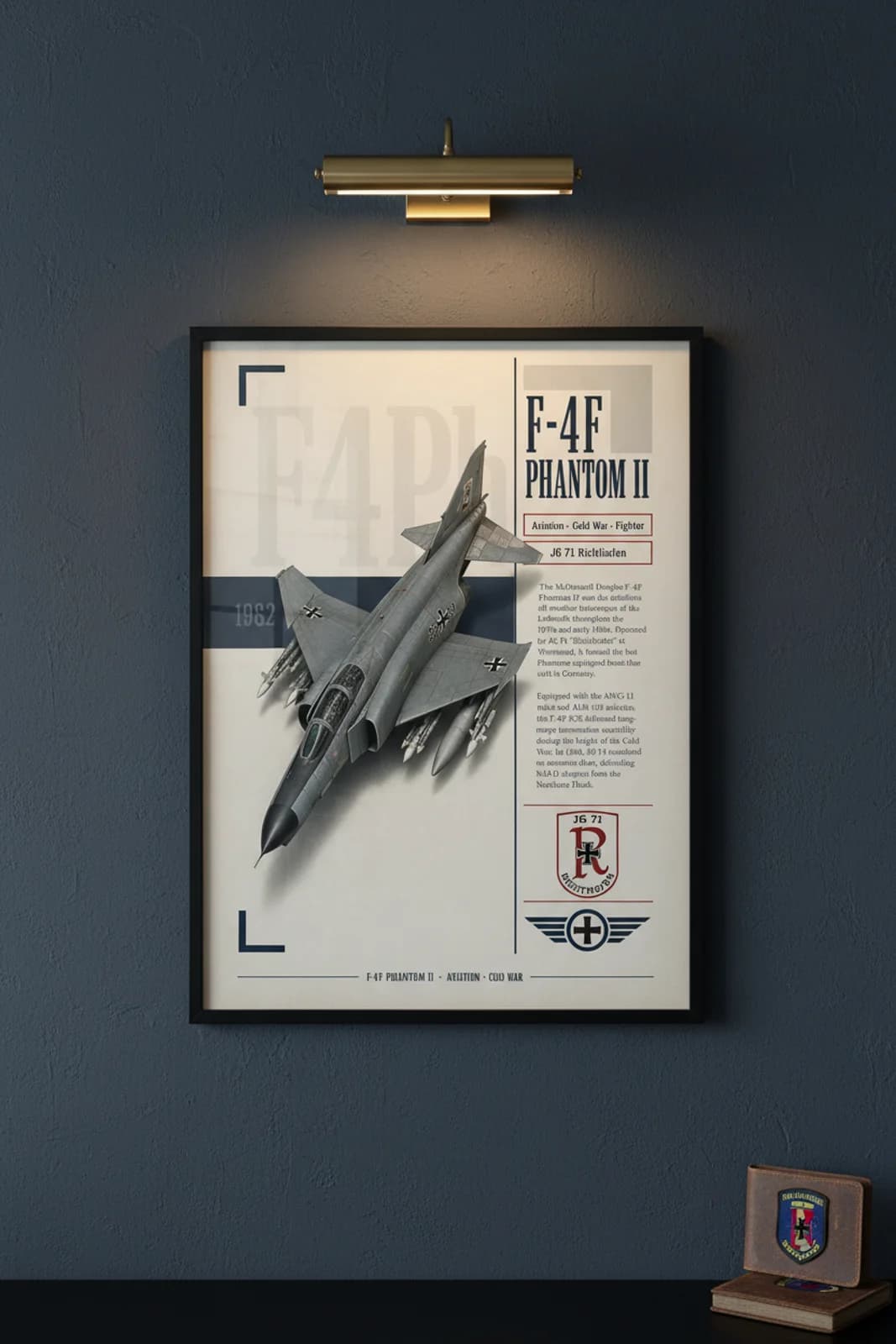
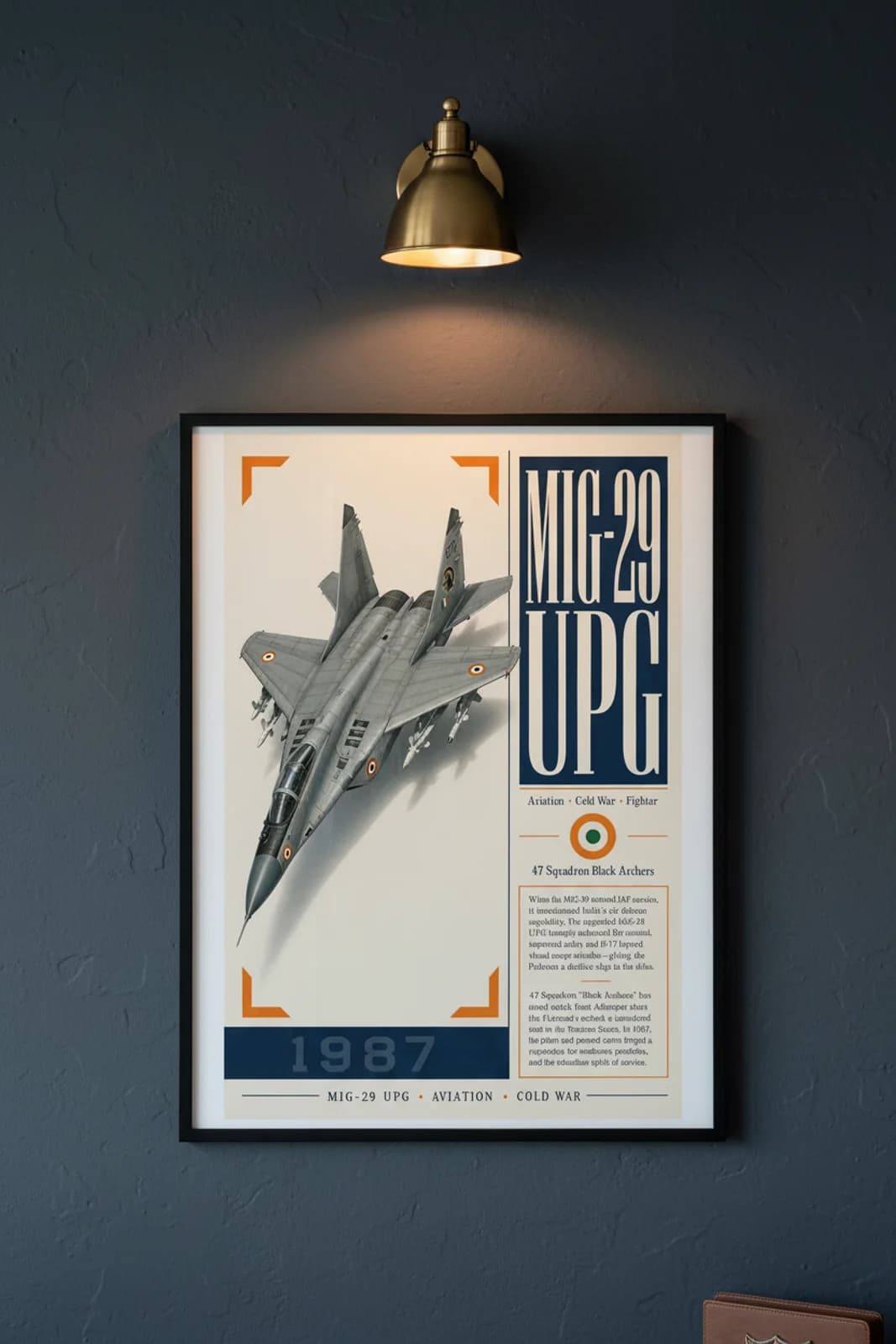
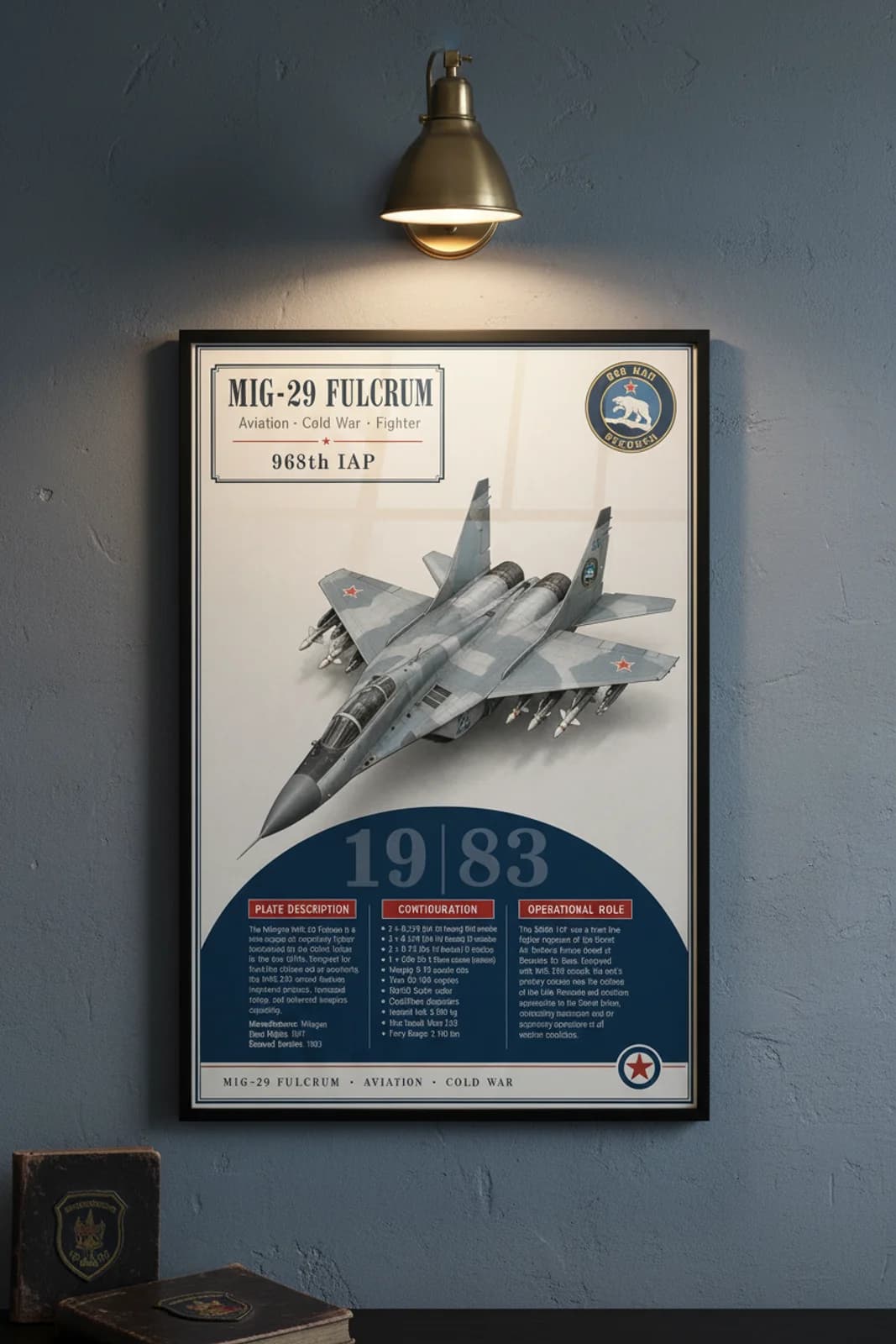
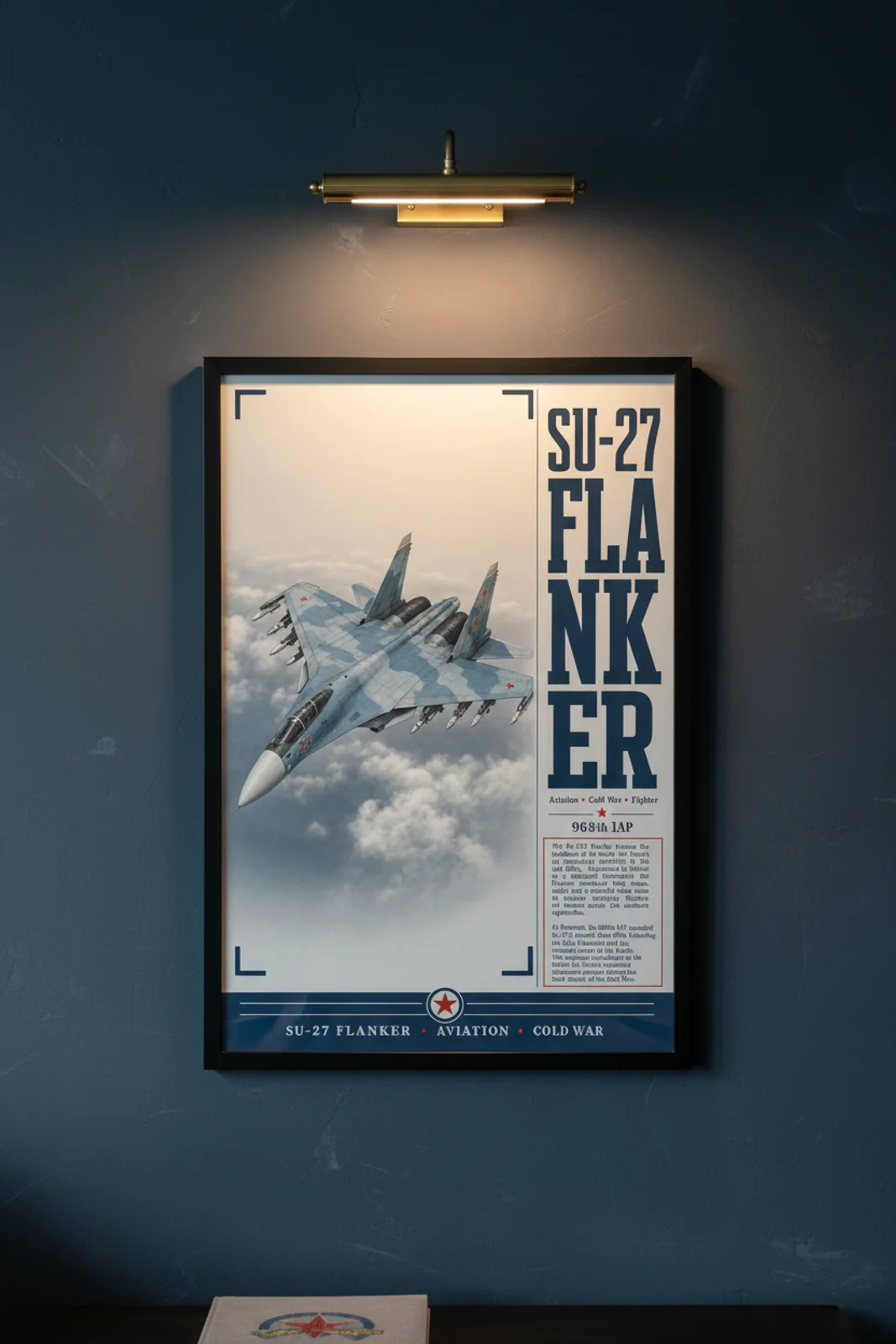
Cold War Fighter Prints — 6 museum-grade prints on the theme. The F-4F was a Luftwaffe-specific derivative of the F-4E Phantom II — roughly eleven percent lighter, without the seventh internal fuel tank or USAF-style aerial refuelling probe, but fitted with leading-edge slats for improved manoeuvrability in the interceptor role. Jagdgeschwader 71 "Richthofen" at Wittmundhafen Air Base was Germany's last operational Phantom wing, flying grey Norm 90J camouflage Phantoms through farewell ceremonies in 2013 before transitioning to the Eurofighter Typhoon. The MiG-29 entered Soviet service in 1983 as a twin-engine counter to Western lightweight fighters, pairing high angle-of-attack agility with the R-73 Archer and N019 Sapfir radar family. The 968th Fighter Aviation Regiment — Sevastopolskiy Red Banner, order of Suvorov — took delivery of its first MiG-29 in November 1983 and became the type's instructor-research hub at Lipetsk, where test and instructor pilots developed combat manoeuvre guidelines that shaped Fulcrum employment across the VVS and PVO. The Sukhoi Su-27 entered Soviet Air Force service in the mid-1980s as a twin-engine, supermaneuverable air-superiority fighter designed to counter Western fourth-generation types such as the McDonnell Douglas F-15 Eagle and Grumman F-14 Tomcat. Powered by paired Saturn AL-31F turbofans and armed with R-27 semi-active radar missiles and R-73 high-off-boresight dogfight weapons, the original Flanker established the large twin-tail silhouette that later spawned Su-30, Su-33, and Su-35 derivatives.