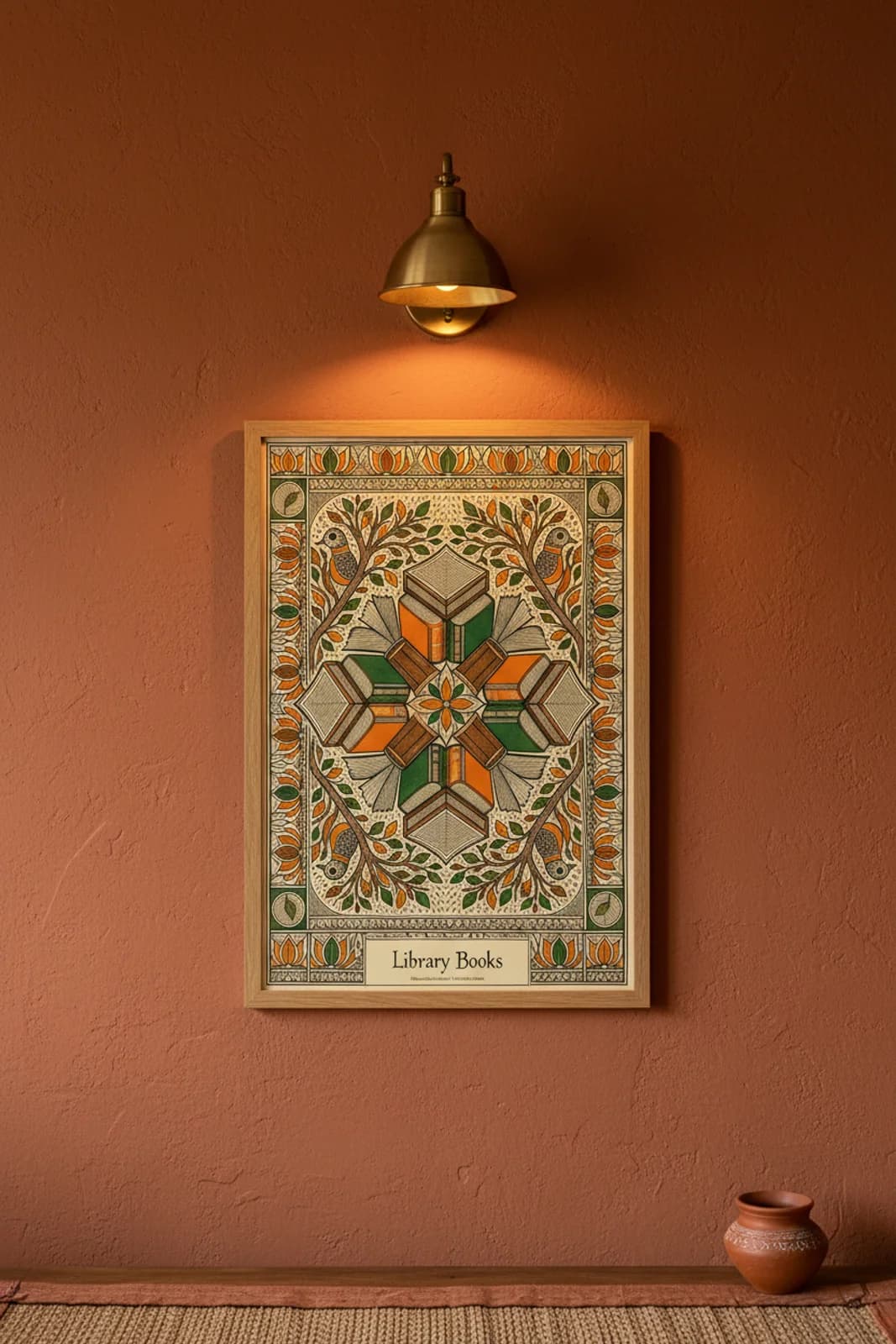
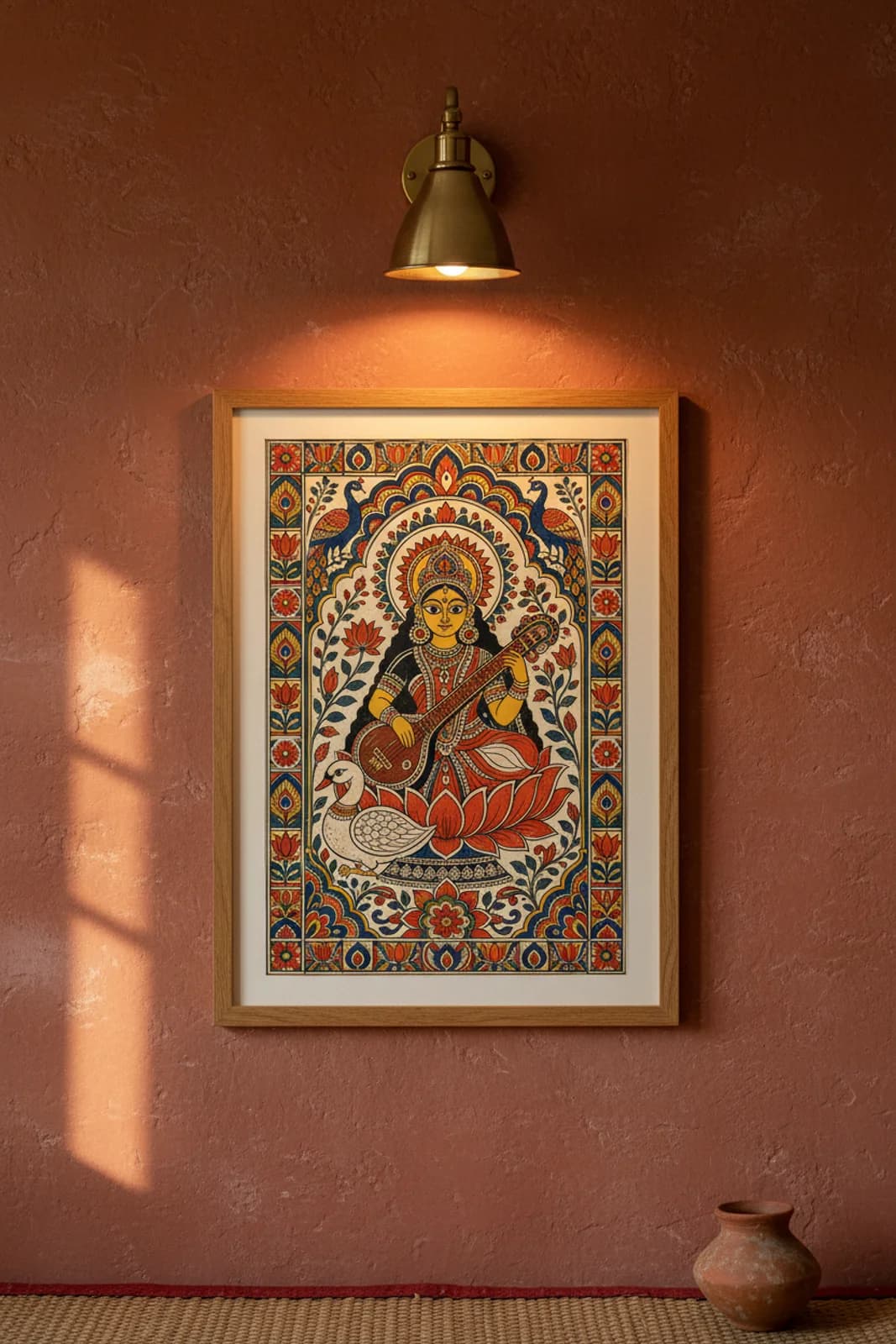
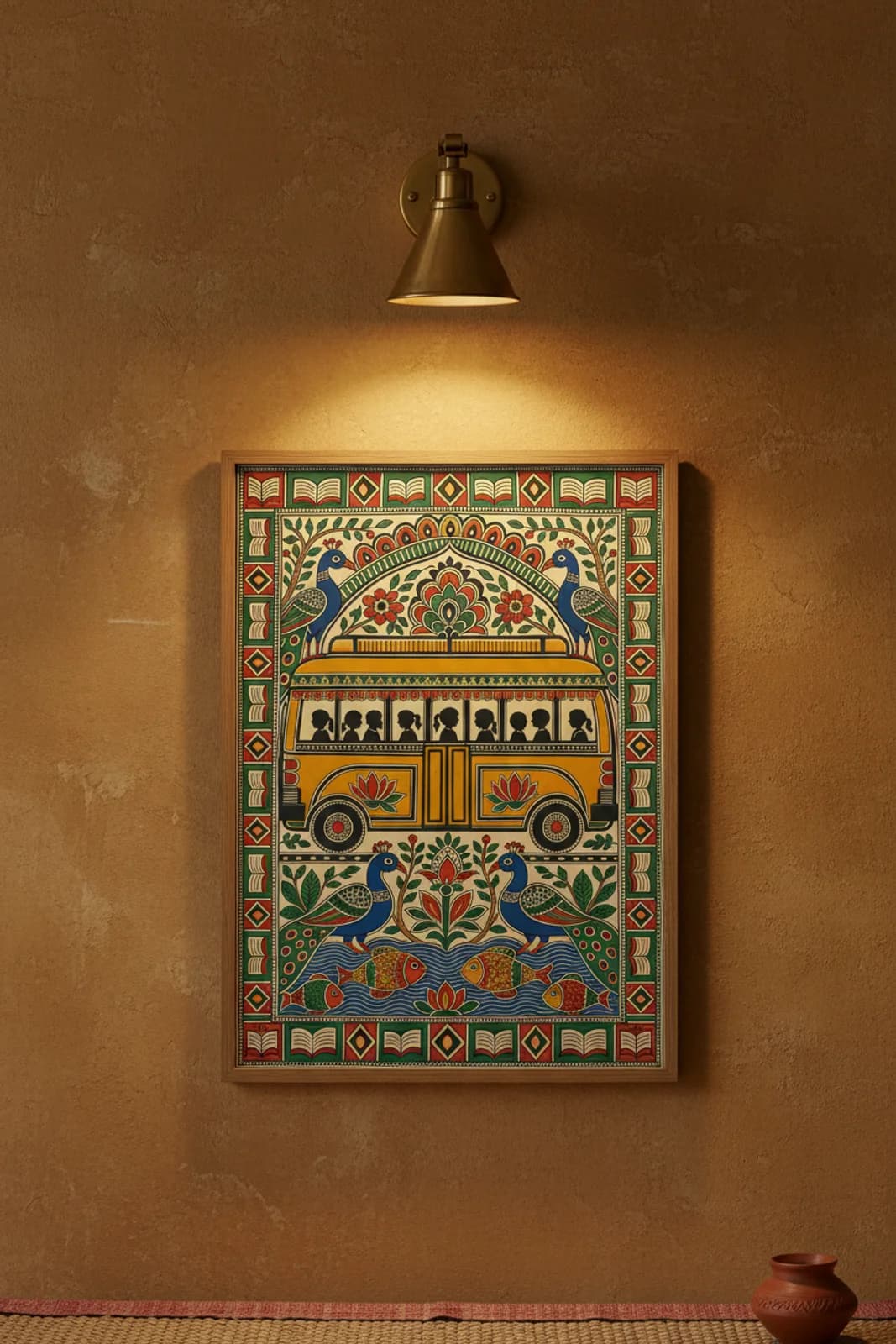
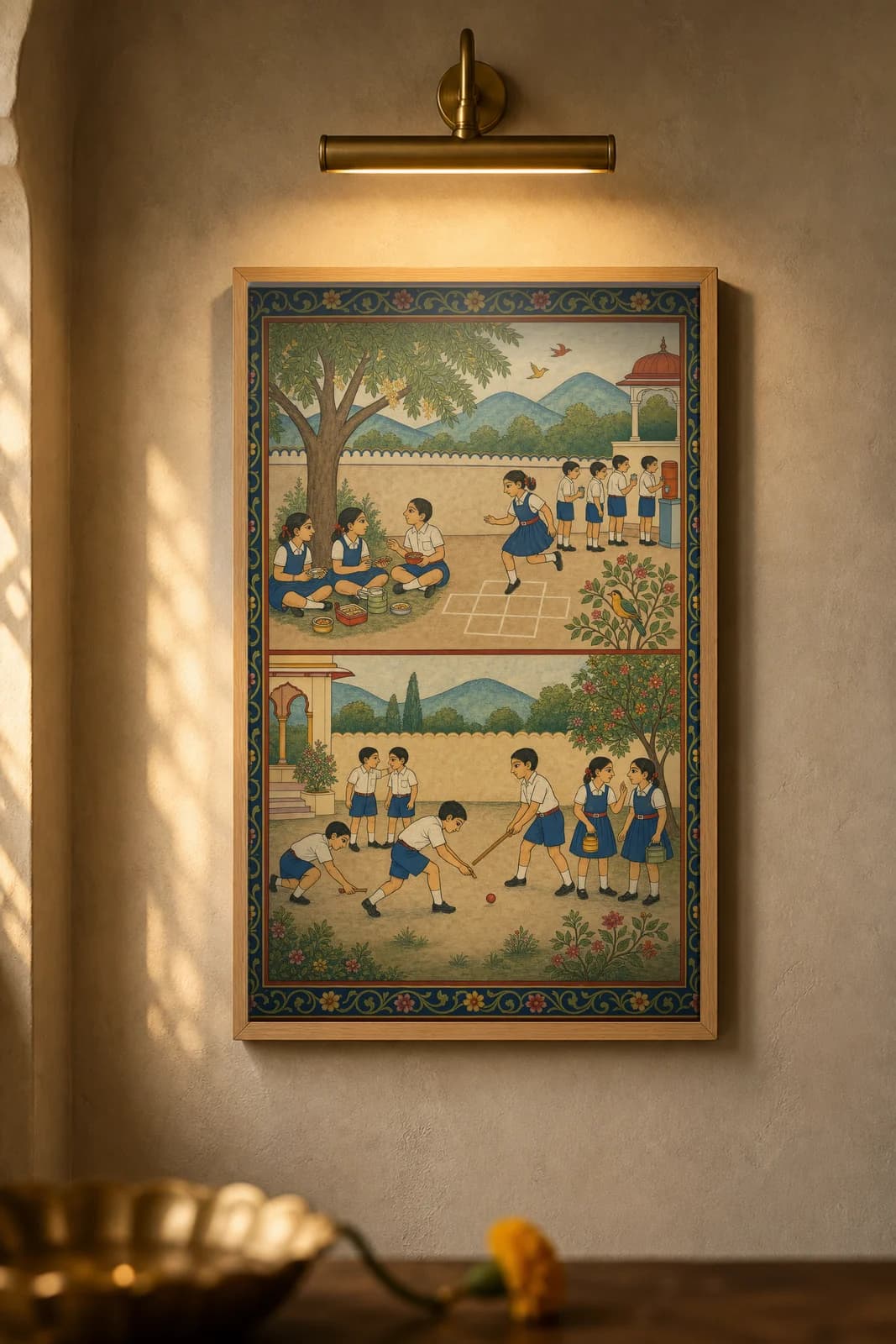
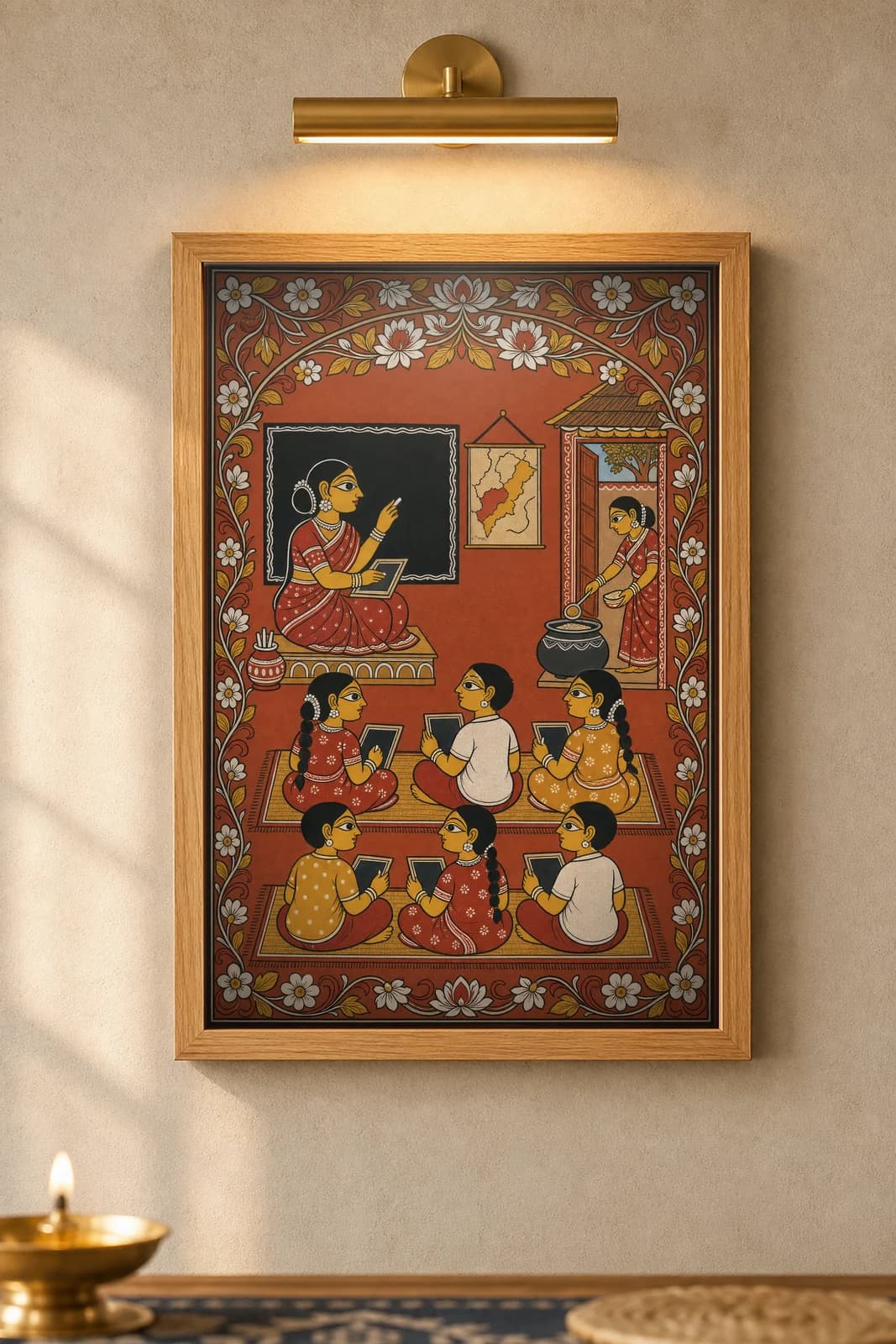
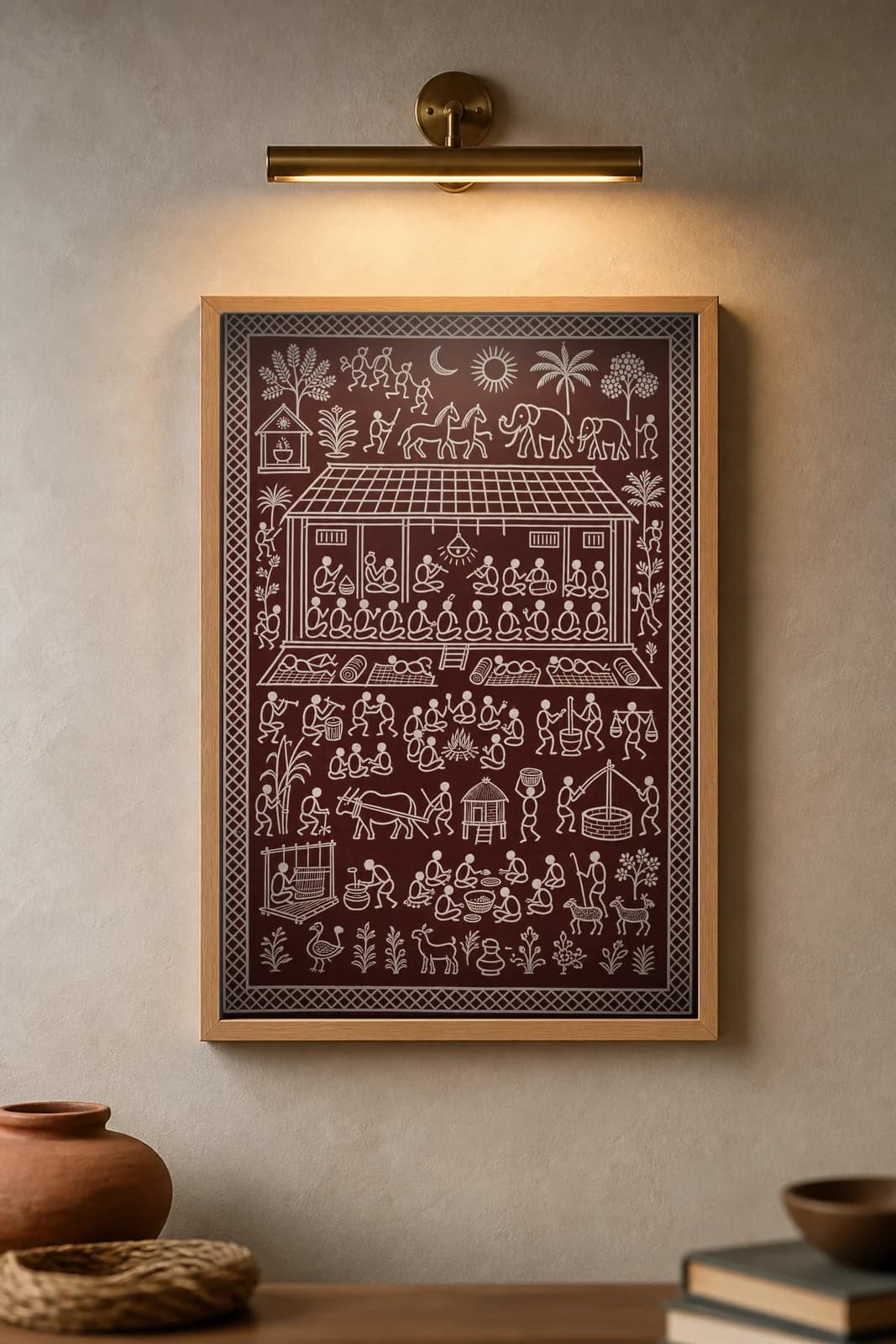
Classroom — 6 museum-grade prints sized and toned for the room. Bharni — from the Hindi word for filling — is the Madhubani style associated with Brahmin women's ritual wall painting in the Mithila region, distinct from Kayastha Kachni line hatching and Dusadh Godna tattoo dot work. Bharni artists in villages like Jitwarpur and Ranti applied bold flat vermillion, turmeric, indigo, and lampblack within double outlines to depict festival deities, garden birds, and auspicious symbols on cow-dung-washed walls during Saraswati Puja, Durga Puja, and wedding seasons. DESIGN BRIEF: the brief was the communal youth hall, an interior crowded with seated figures, so we cut its front wall away and drew the rows of young people straight on under one wide roof, a standing elder with a raised hand at the centre, and set the village day around it — ploughing, weaving, cooking, the well. We held the fill to medium and kept the fish-net frame open rather than a packed mesh, so even with the hall full the oxblood ground threads through and each seated row and chore stays legible. Kachni — meaning line — is the Kayastha women's tradition within Madhubani painting: figures and motifs built from dense parallel hatching, cross-hatch, and stippling inside double black outlines, historically associated with fine narrative detail on cream or cow-dung-washed grounds rather than Bharni flat colour floods. Manuscript and palm-leaf folio pages appear in classical Mithila panels as path-line texture fields; open books in folk grammar extend that reading without importing Mughal miniature perspective.