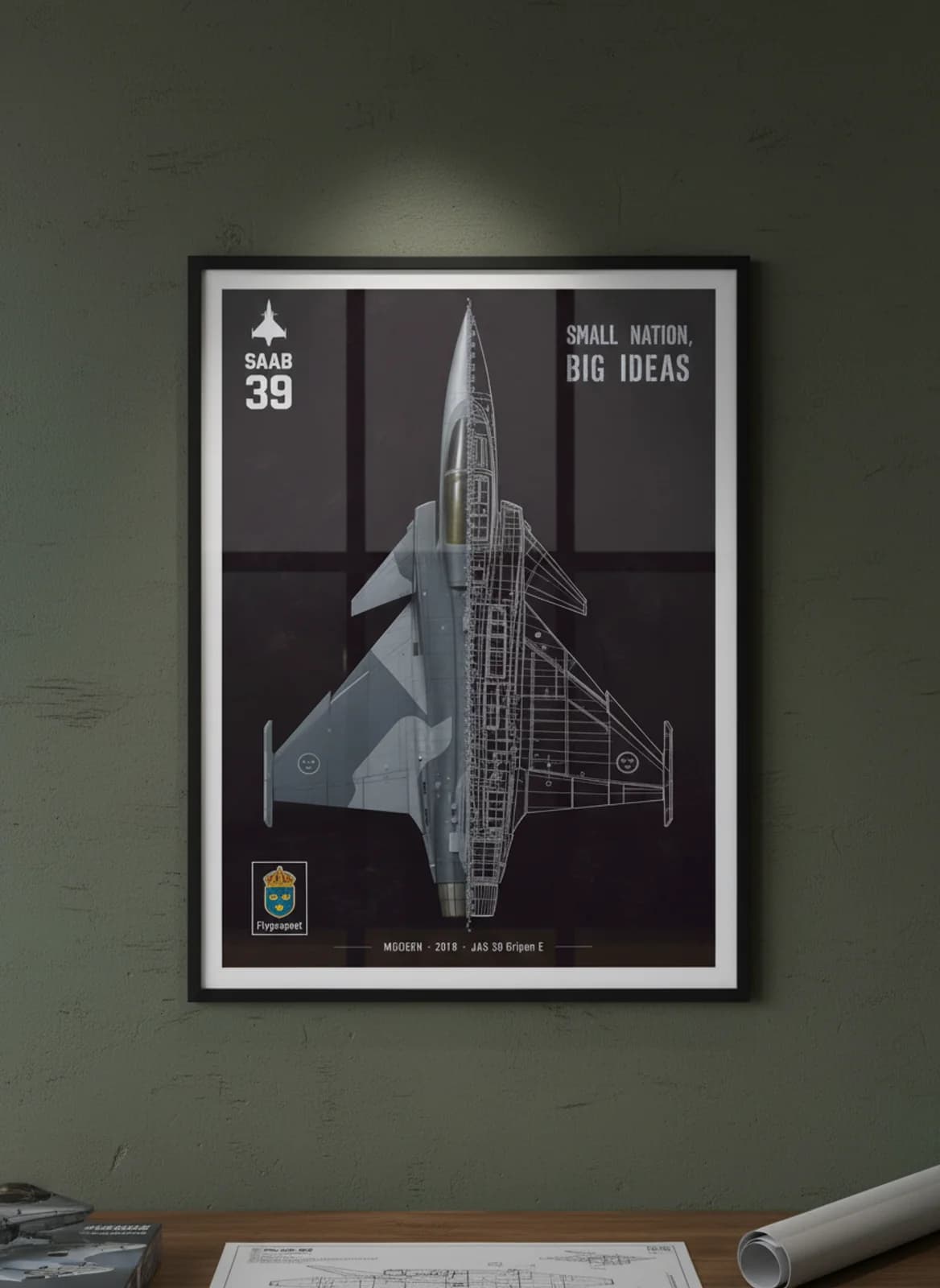
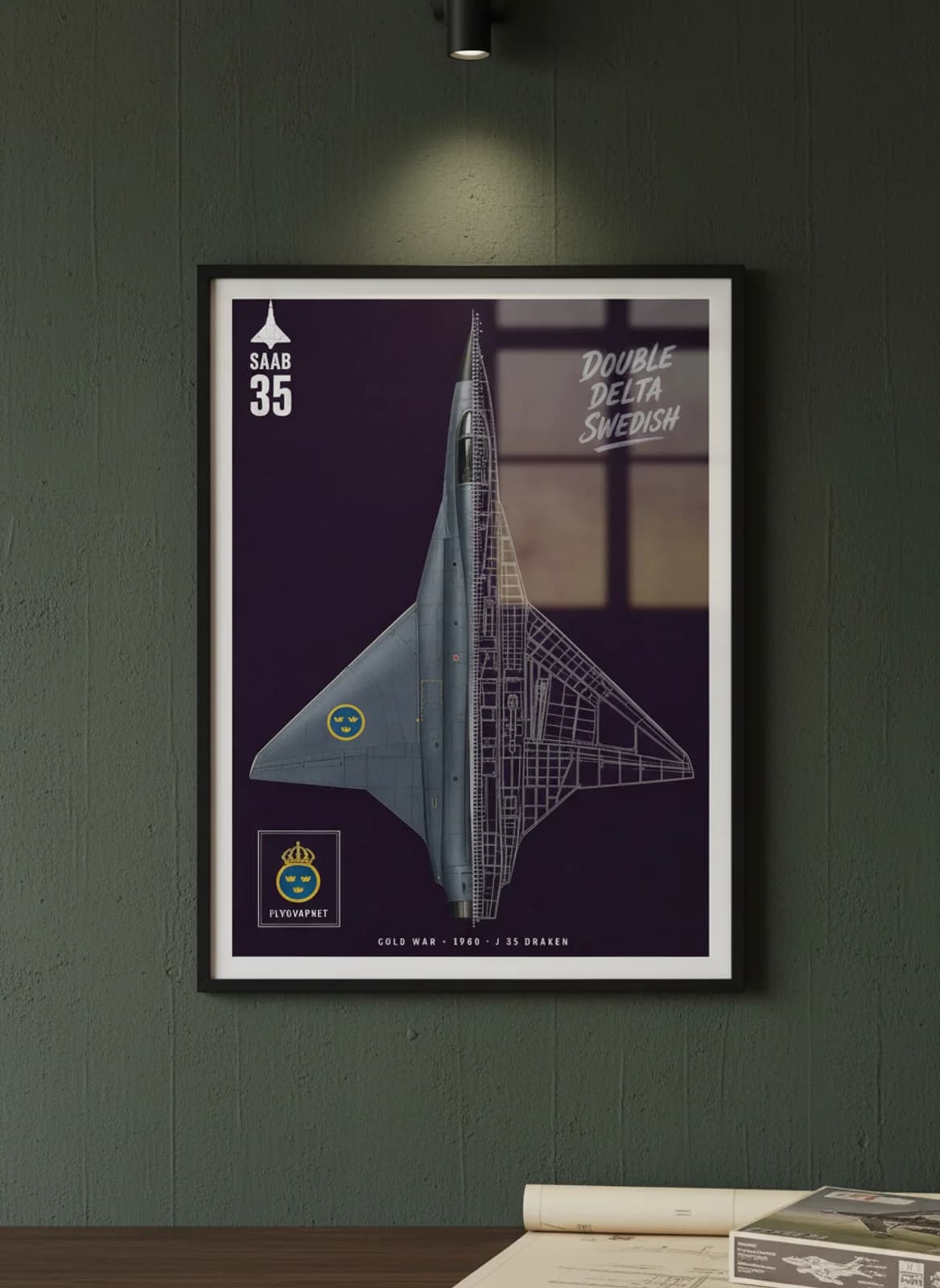
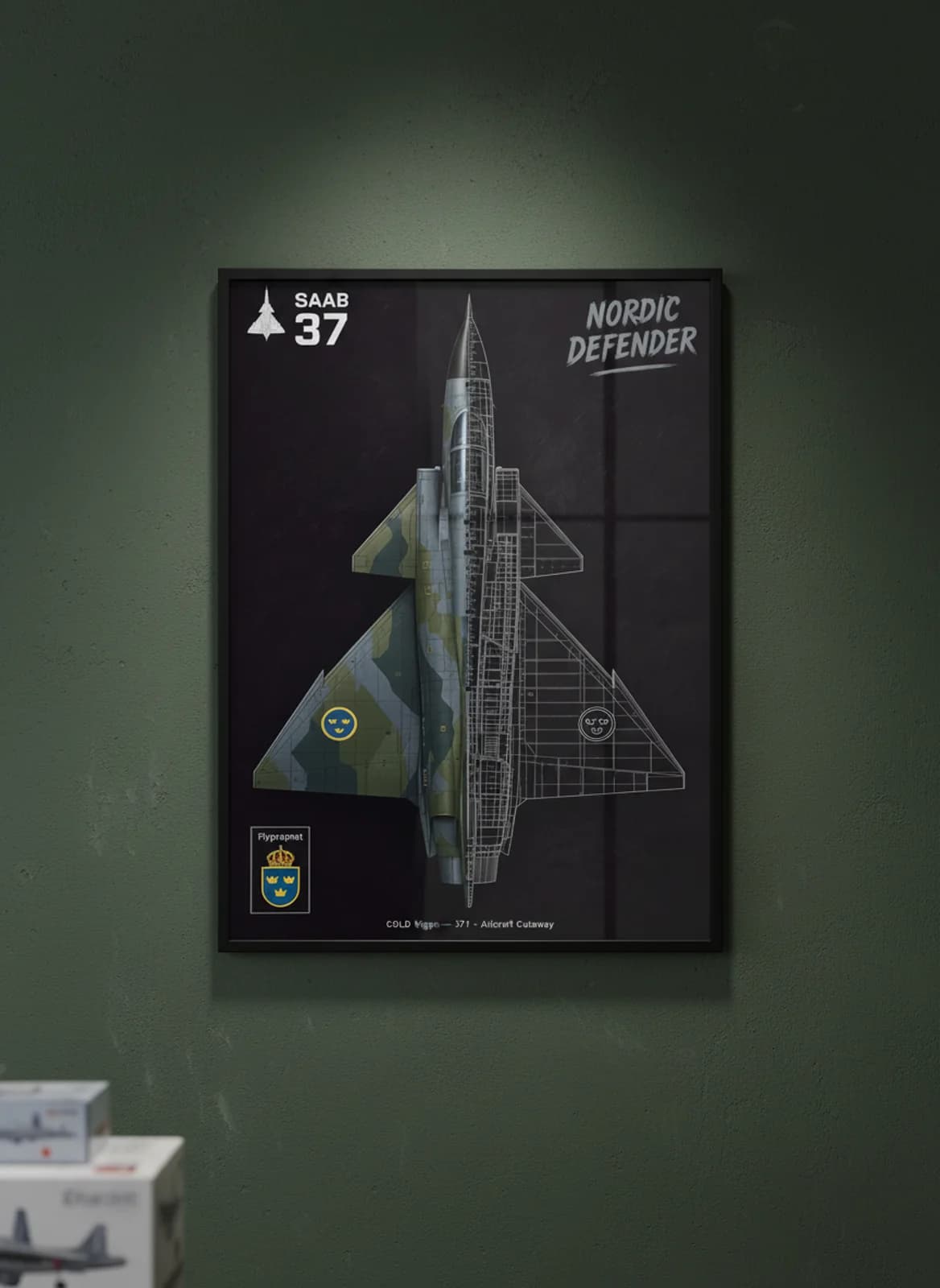
Sweden — 3 museum-grade prints from this operator. The Saab Draken's double-delta wing solved the conflicting demands of supersonic intercept and short-field operations that Sweden's dispersed basing doctrine required during the Cold War. Flygvapnet Drakens stood alert against Soviet Tu-16 and Tu-22 bomber streams across the Baltic while Austrian and Finnish export operators kept the type flying into the twenty-first century. The Saab Gripen programme embodies Sweden's doctrine of dispersed road-base operations — fighters designed to sortie from highway strips with minimal ground crew and survive in a Baltic theatre where fixed airbases are vulnerable. Gripen E exports to Brazil and ongoing campaigns for NATO and Indo-Pacific customers position Saab as the Western alternative to heavier F-35 and Rafale procurement. The Saab Viggen programme delivered Sweden's first canard-delta combat aircraft and pioneered reverse-thrust landings on short dispersal strips — a capability no NATO contemporary matched at equivalent payload. Flygvapnet Viggens armed with anti-ship missiles stood as Sweden's primary deterrent against Soviet Baltic Fleet amphibious scenarios throughout the 1970s and 1980s.