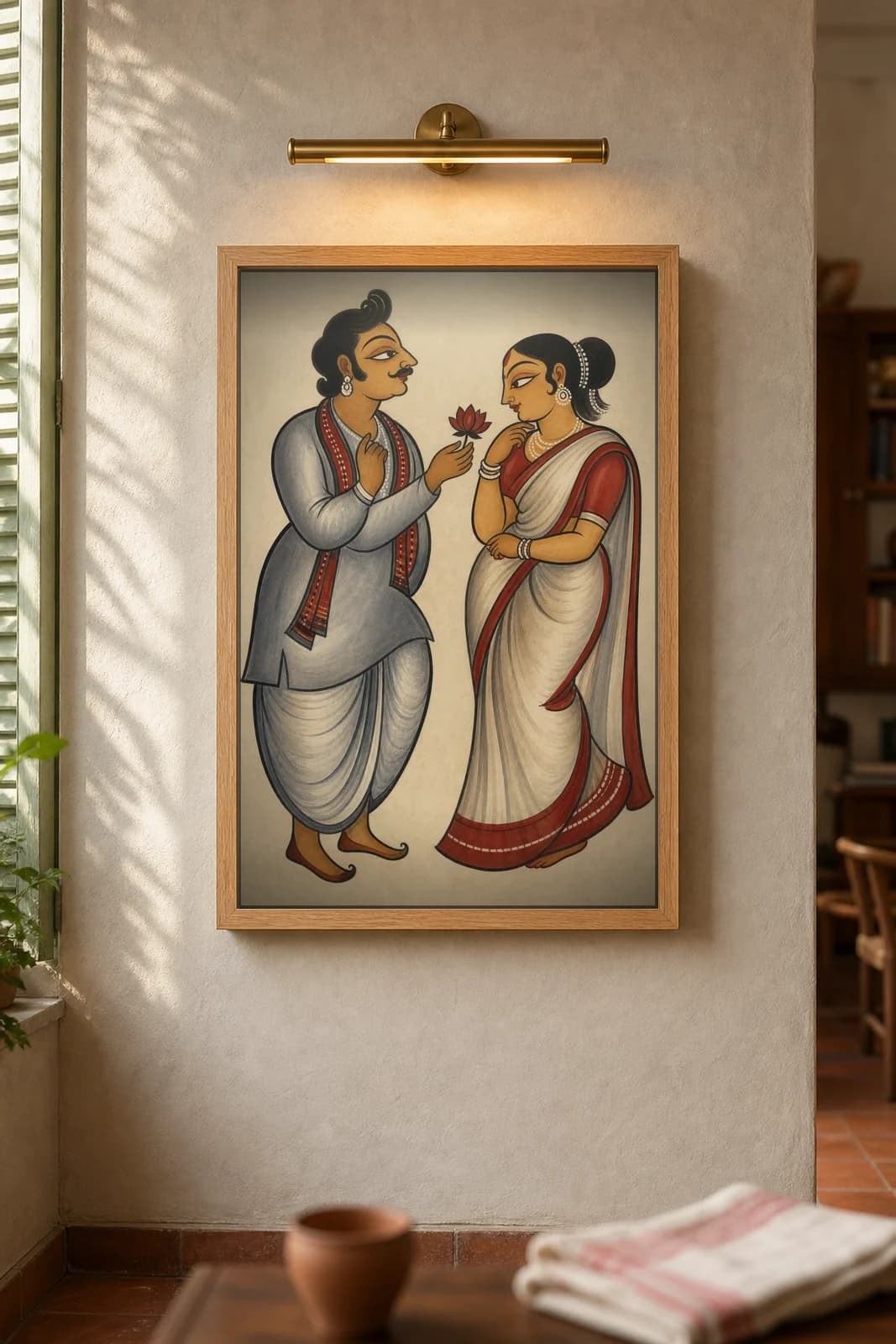
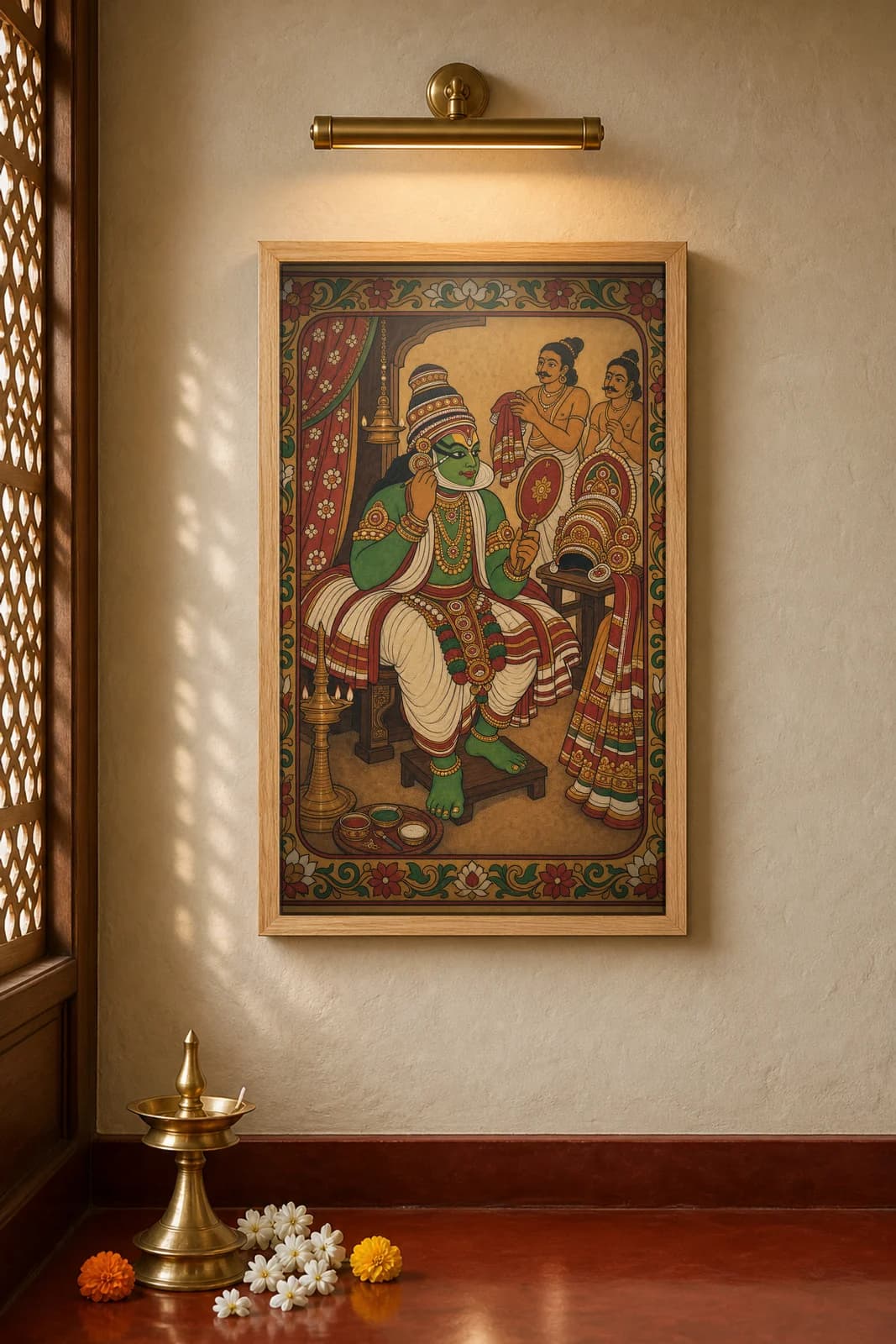
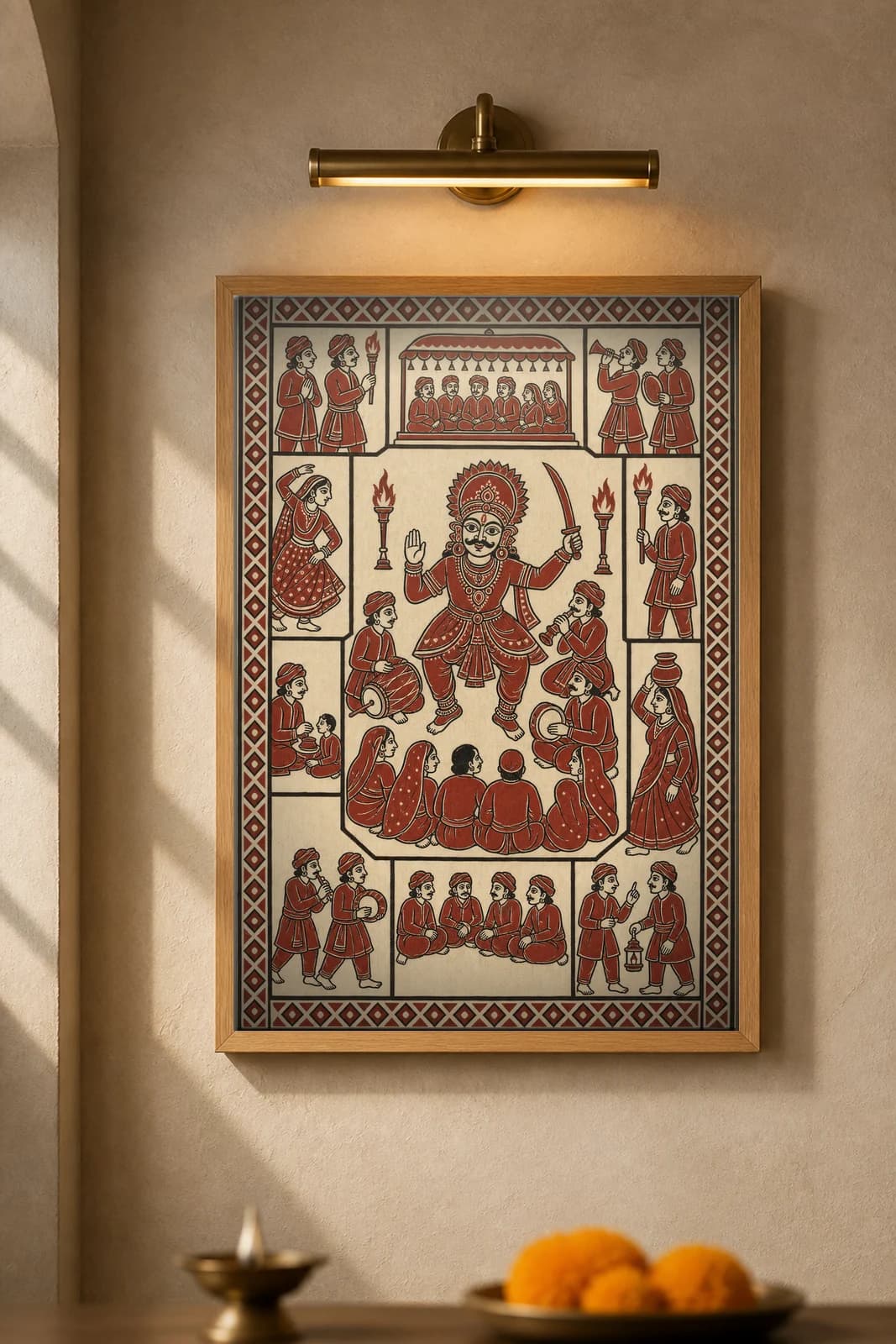
Theatrical — 3 museum-grade prints that set the mood. Kalighat Pat grew up in 19th-century Kolkata, painted by migrant patua (chitrakar) scroll-painters who settled near the Kalighat Kali temple and sold quick watercolour souvenirs to pilgrims. Working on mill-made paper with a bold single black brush outline and soft 'boneless' shaded strokes on a plain ground, they painted gods and goddesses alongside what is often called India's first modern social satire — sharp, affectionate caricatures of the colonial 'babu' and the hypocrisies of Calcutta life. Kathakali is Kerala's classical dance-drama, famous for its elaborate green Pacha makeup, towering crowns and the white chutti frame built up around the face, with hours of preparation before a night-long performance. This print sets that backstage moment inside bhitti chitra, Kerala's temple-mural tradition that flourished roughly from the 16th to 19th century and is still painted today: flat panchavarna pigments (red, yellow, green, black, white over an ochre ground), a bold lamp-black outline and the school's elongated lotus-shaped eyes. Mata ni Pachedi means 'the cloth of the Mother Goddess' — a shrine textile of the Vaghri / Devipujak community of Ahmedabad and north Gujarat, who, historically barred from temples, painted the Goddess on cloth to create their own portable shrine. Bhavai is the traditional all-night folk theatre of Gujarat, performed on open ground by torchlight, its plays often enacting the legends of the goddess; here the form is retold in the cloth's flat three-tone grammar.