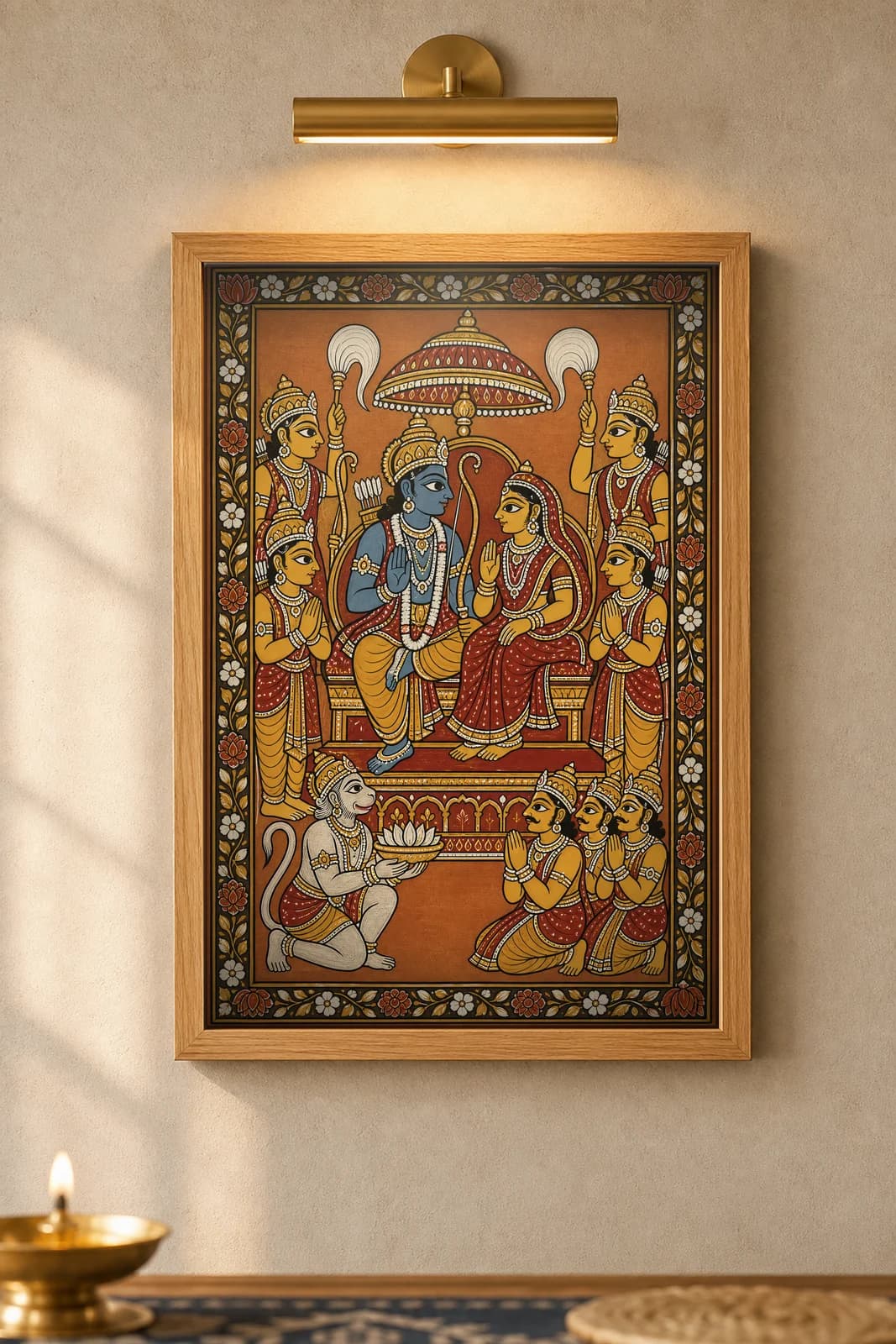
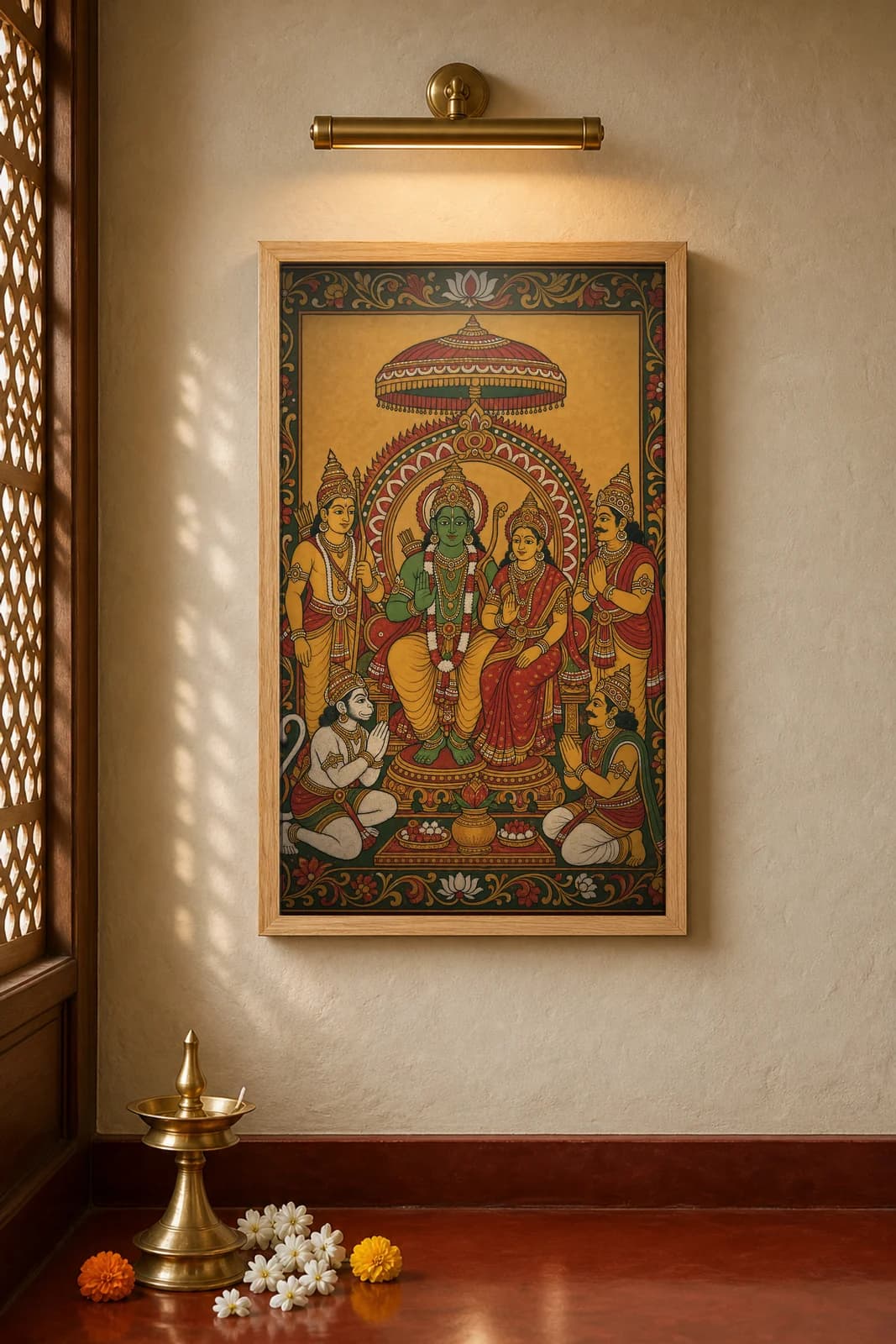
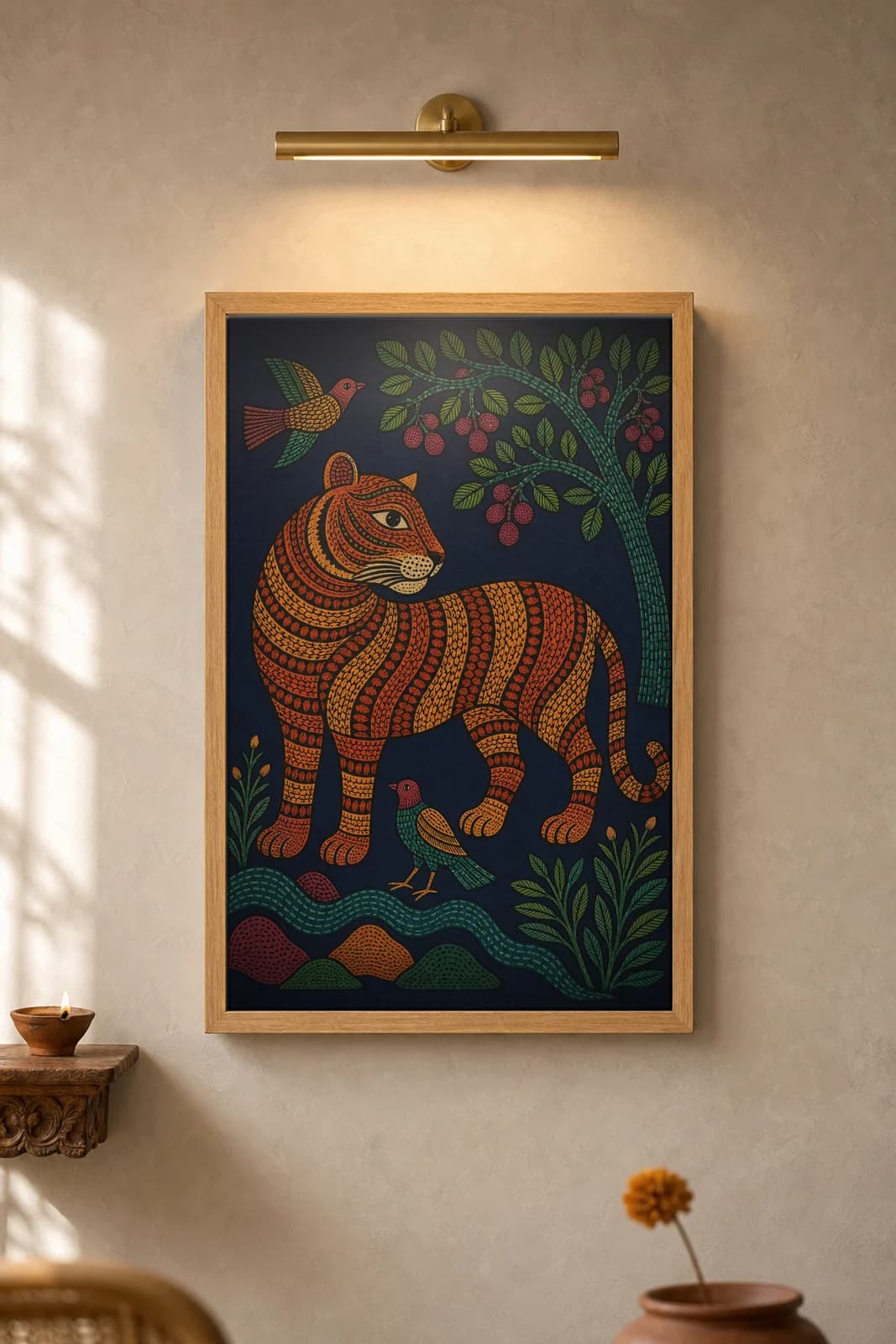
Regal Calm — 4 museum-grade prints that set the mood. The Pattabhishekam is the coronation of Rama at the close of the Ramayana — his return to Ayodhya and enthronement with Sita after exile and the war against Ravana, the establishment of the just reign remembered as Rama Rajya. Hanuman, the devoted vanara, kneels at the throne, asking only to stay in Rama's service. Gond painting comes from the Gond Adivasi communities of central India, with its best-known school formed by the Pradhan Gond of Patangarh and the wider Dindori region of Madhya Pradesh — tiger country, home to Kanha and Bandhavgarh. The contemporary form is largely the legacy of Jangarh Singh Shyam (1962–2001), whose line-and-in-fill manner — every form bounded by a bold outline, then filled with rows of dots, dashes, commas and scales — became known as Jangarh Kalam and was carried on by his family and students. Pattachitra is the cloth-painting tradition of Odisha, tied to the Jagannath temple at Puri and the chitrakar families of Raghurajpur, painted on patta (cotton treated with tamarind-seed paste and chalk) in five mineral colours — conch-white, lamp-black, haritala yellow, hingula red and geru brick-orange. The Ramayana is a core Pattachitra subject; the Pattabhisheka — Rama's coronation at Ayodhya after his return from exile — is its triumphant close, with Hanuman's devotion central to the Odia depiction.