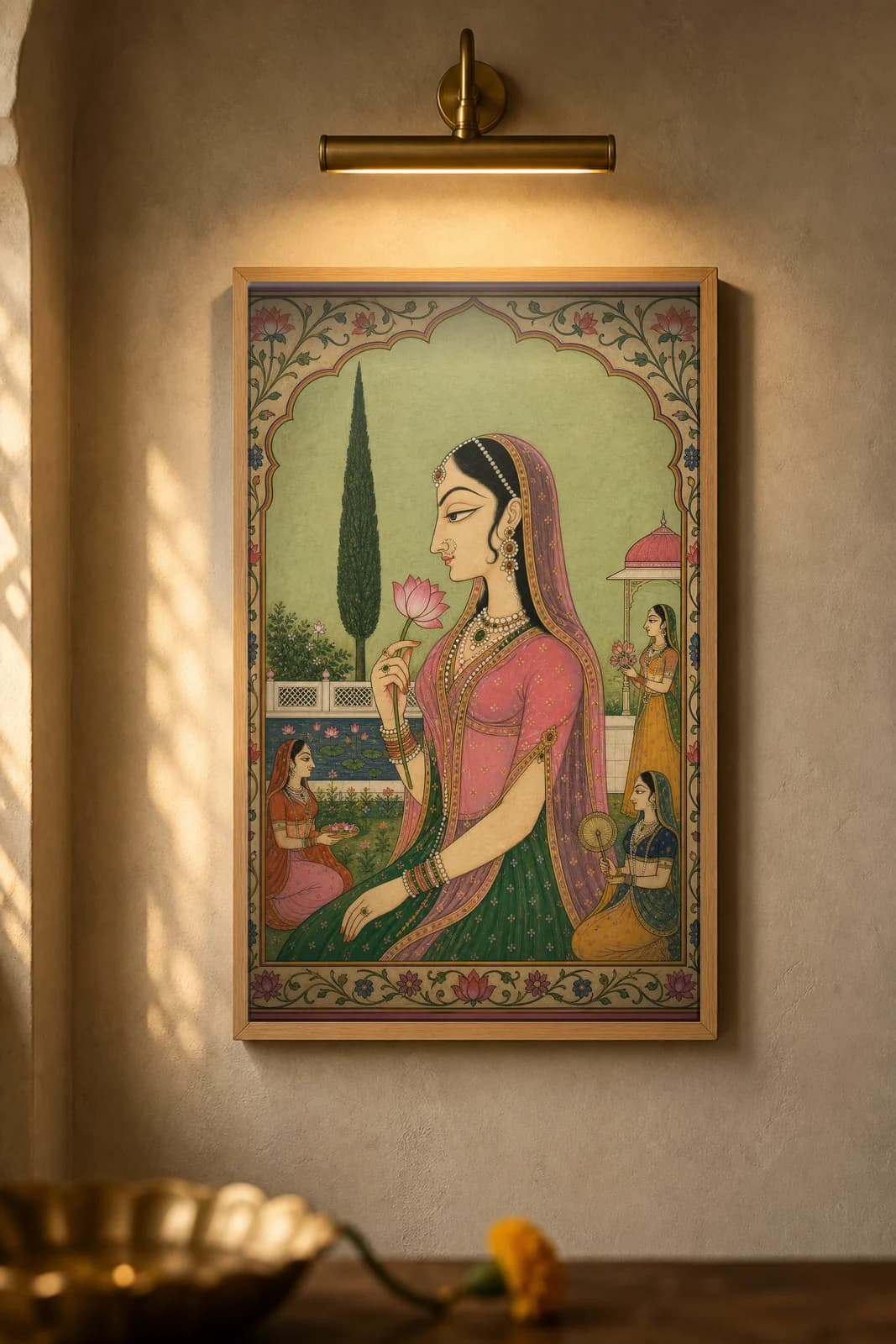
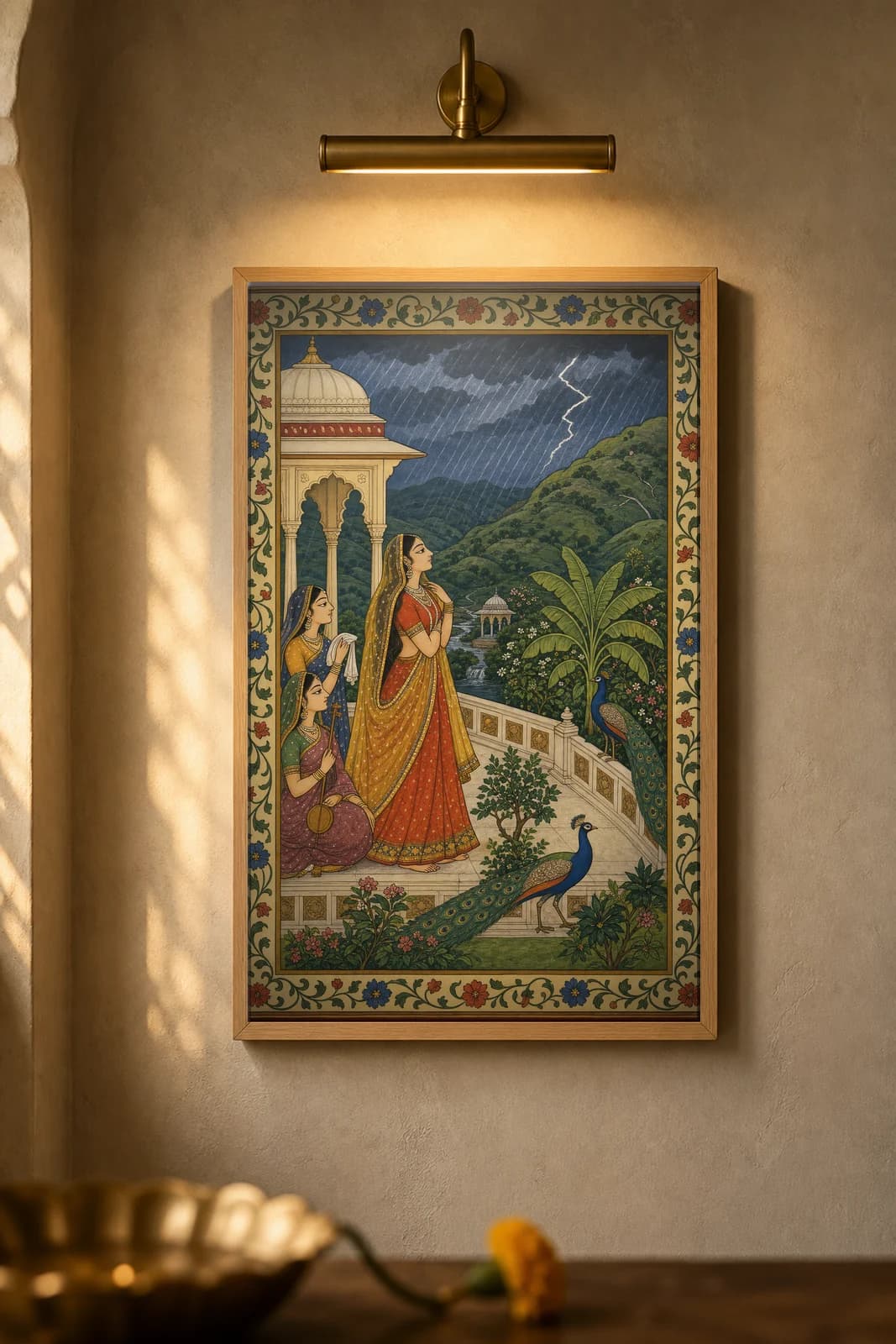
Quietly Romantic — 2 museum-grade prints that set the mood. The Kishangarh school flourished in the mid-18th century under Raja Sawant Singh (the poet-prince 'Nagari Das'), whose master painter Nihal Chand fixed the idealized feminine profile now universally called Bani Thani — a name borrowed from a court singer-poet in the raja's circle. It belongs to the Rajput miniature umbrella of Rajasthan alongside Mewar, Bundi, Marwar, Amber and the Pahari Kangra school, all painted in mineral pigments — lapis, malachite, hingul vermillion, orpiment — and ochre 'gold' on burnished wasli paper, in flat symbolic perspective. The Baramasa ('twelve months') is a poetic cycle pairing each month with a mood of love; Sawan, the height of the monsoon, is conventionally the month of viraha — the longing of a woman for her absent beloved — shown with rain clouds, lightning, swollen rivers and dancing peacocks. This treatment follows the Kangra school of the Himachal foothills, which flourished in the late 18th and early 19th centuries under Raja Sansar Chand and is prized within the Rajput miniature umbrella for its lyrical naturalism and tender skies.