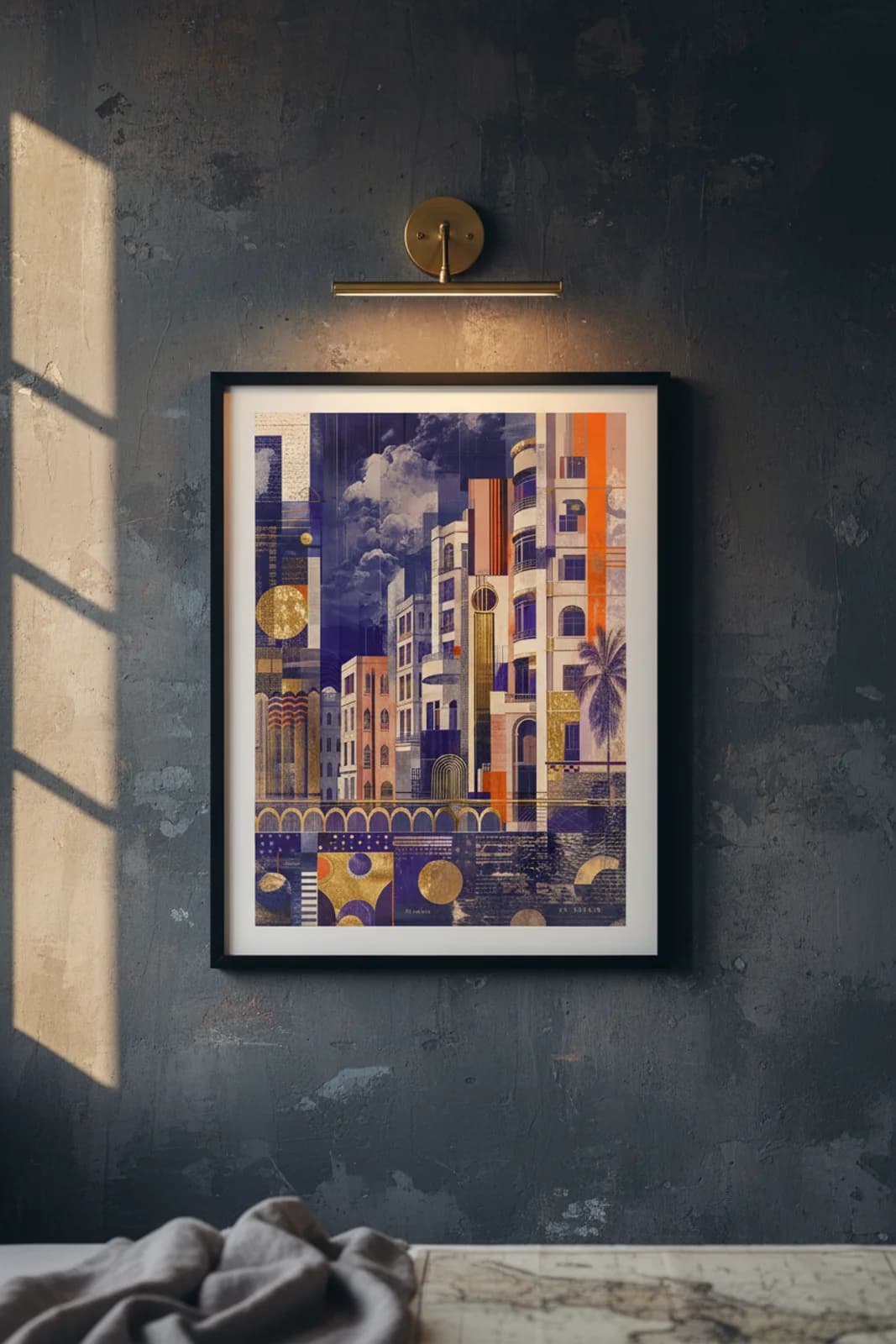
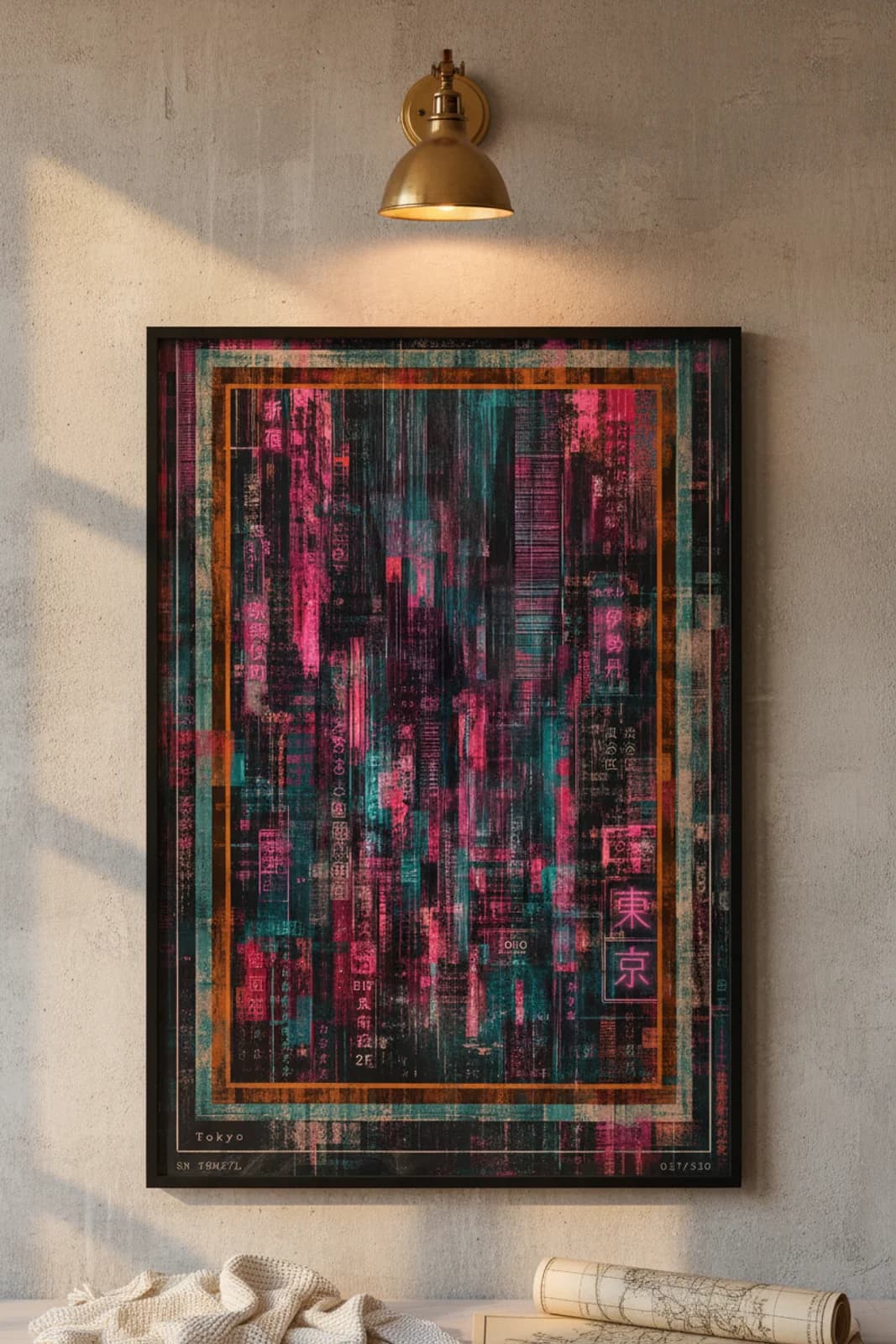
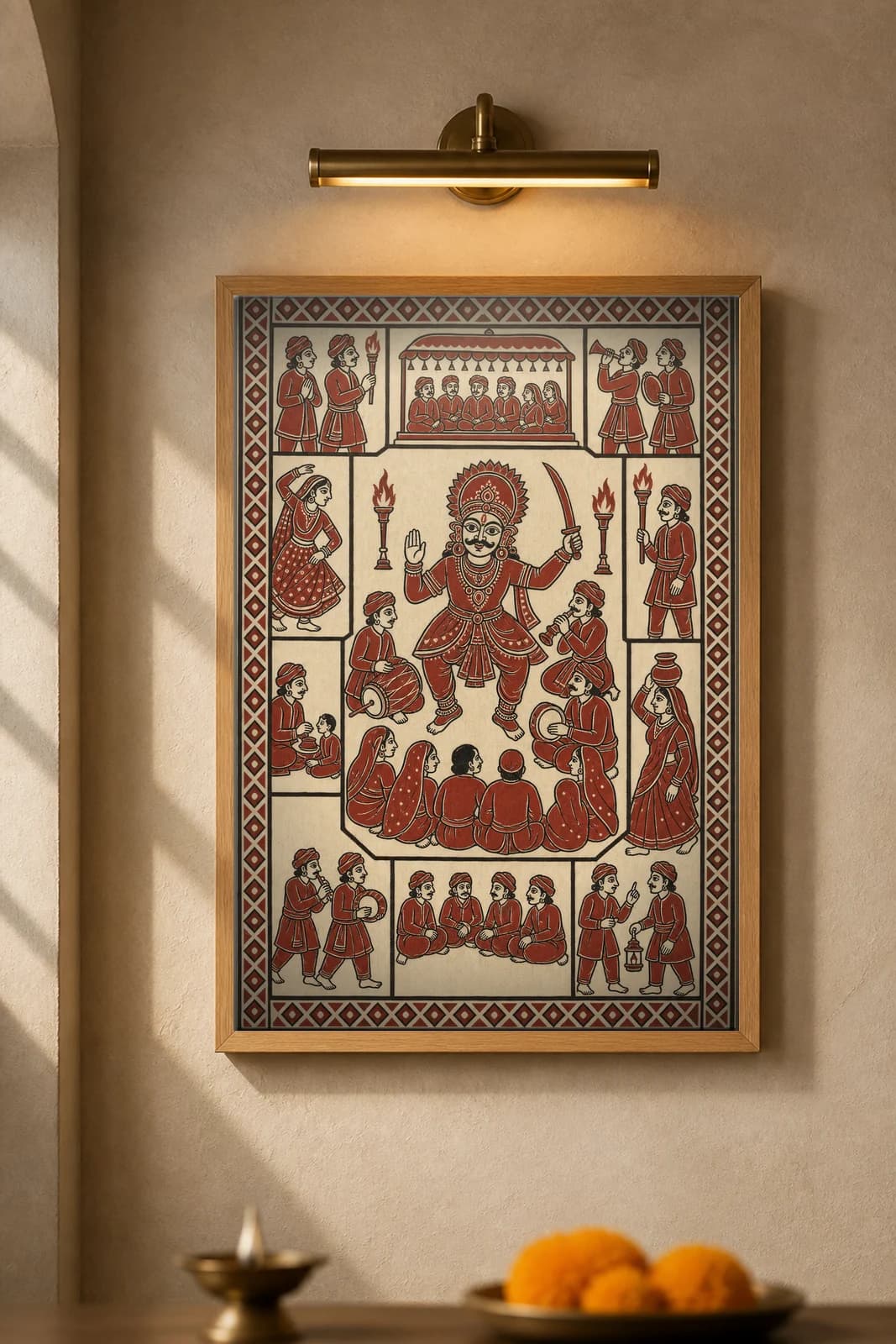
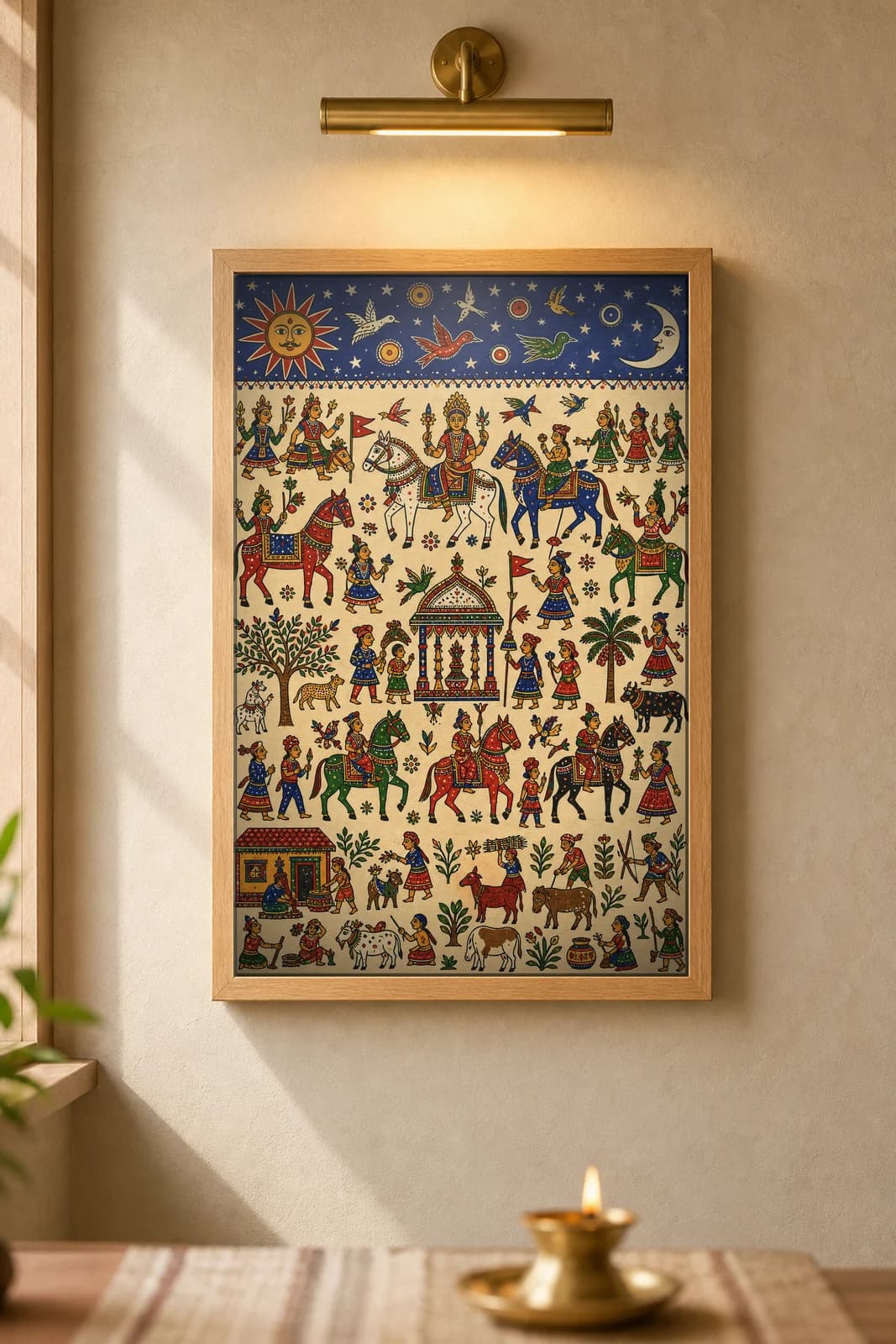
Nocturnal — 14 museum-grade prints that set the mood. Mumbai's Art Deco heritage — especially along Marine Drive and the Oval Maidan precinct — ranks among the world's largest collections of interwar deco architecture outside Miami Beach. The style arrived with Bombay's commercial boom of the 1930s and still defines the city's silhouette against the Arabian Sea, a counterpoint to Victorian Gothic and the glass towers of today's Bandra-Kurla skyline. Mata ni Pachedi means 'the cloth of the Mother Goddess' — a shrine textile of the Vaghri / Devipujak community of Ahmedabad and north Gujarat, who, historically barred from temples, painted the Goddess on cloth to create their own portable shrine. Bhavai is the traditional all-night folk theatre of Gujarat, performed on open ground by torchlight, its plays often enacting the legends of the goddess; here the form is retold in the cloth's flat three-tone grammar. Tokyo's ward system clusters famous nightlife and retail districts — Shinjuku and Kabukicho for neon entertainment, Shibuya for youth culture and crossing mythology, Isetan for department-store retail heritage. The glitch aesthetic mirrors how visitors experience the capital: vertical signage, stacked scripts, and light that never quite resolves into a single skyline silhouette.