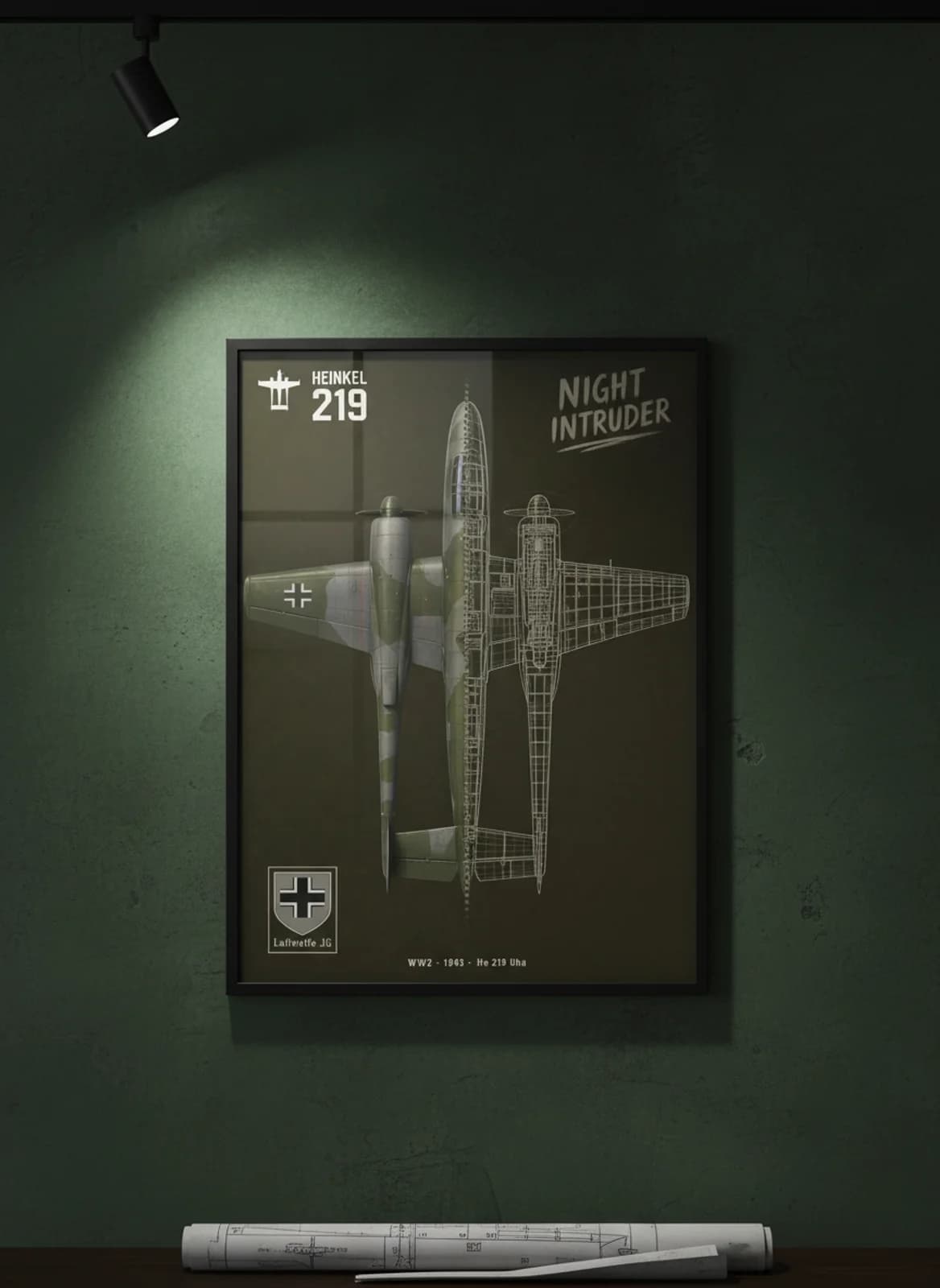
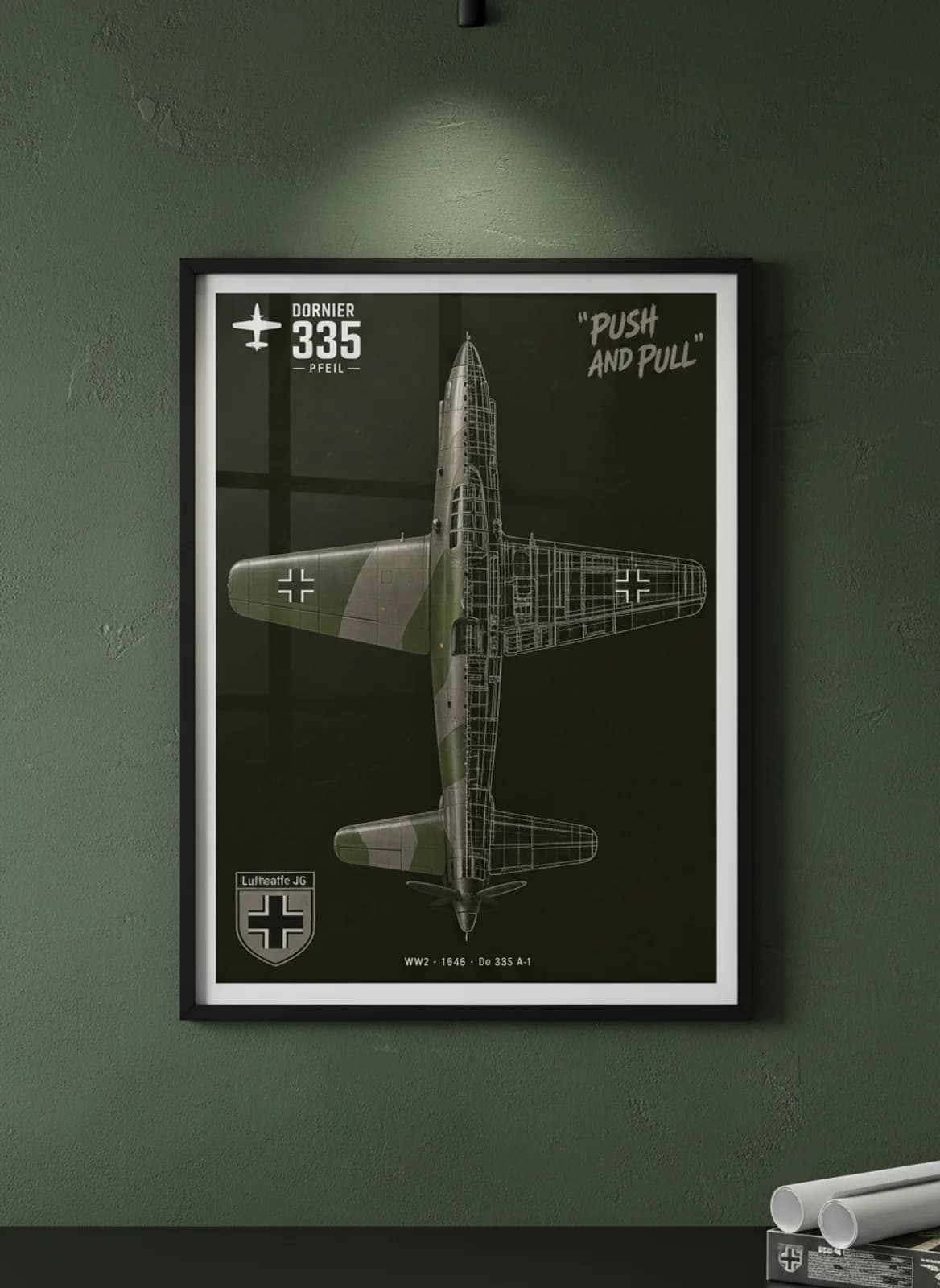
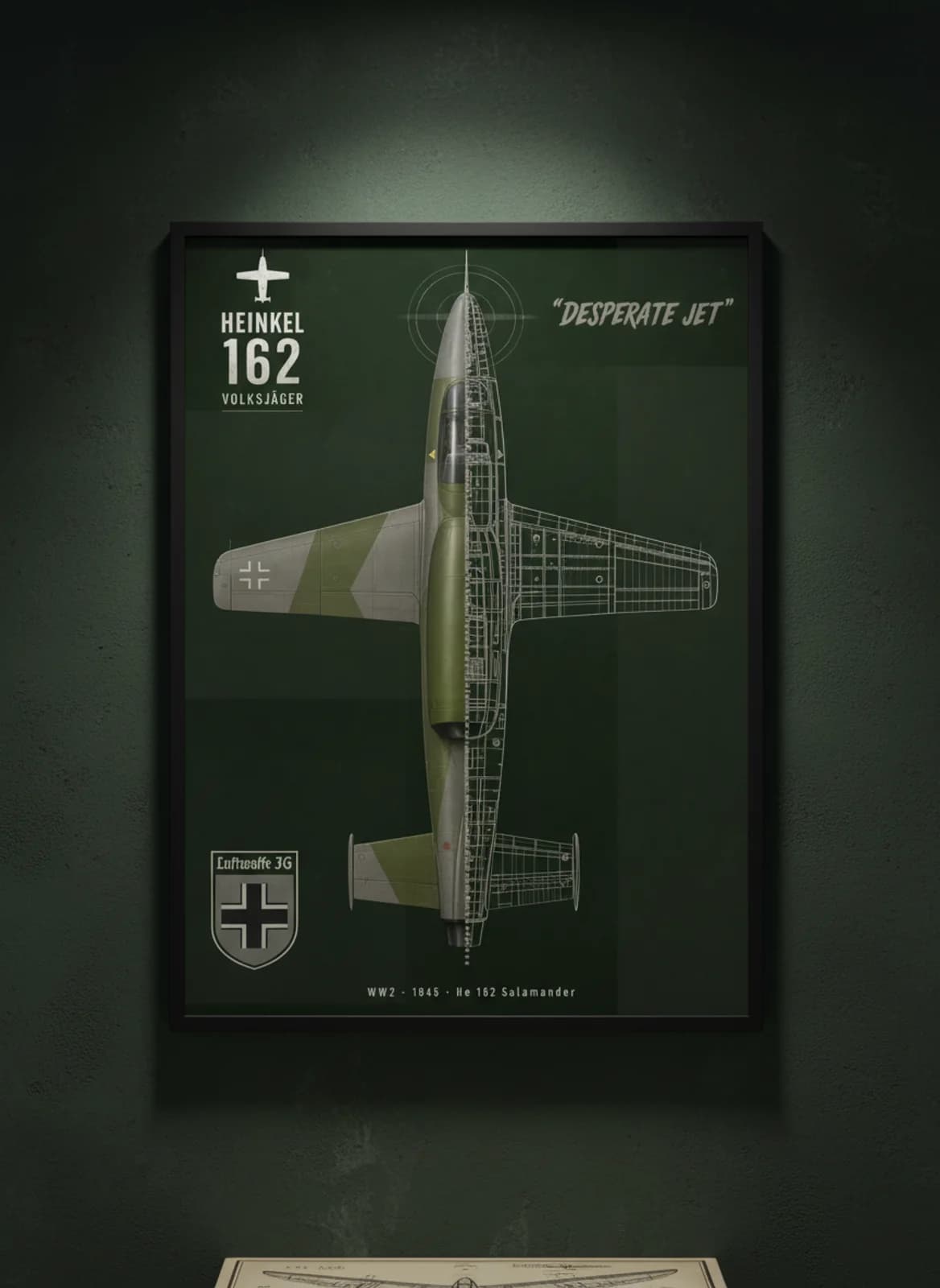
Luftwaffe Heritage — 3 museum-grade prints that set the mood. The He 162 Volksjäger embodied Germany's desperate attempt to mass-produce a jet fighter with non-strategic materials and simplified assembly when conventional aircraft production had collapsed. The Salamander nickname and top-mounted engine layout made the type visually distinct from the Me 262, though operational history proved the Volksjäger concept prioritized production speed over pilot survivability. The He 219 Uhu represented the Luftwaffe's most advanced dedicated night-fighter design of the mid-war period, combining tricycle gear, pressurization, and SN-2 radar in an airframe that could outrun and outgun earlier Do 217 and Ju 88 conversions. Production delays and factory disruption limited the type's operational impact, but Nachtjagd pilots who flew the Uhu reported superior handling and firepower compared with twin-engine predecessors. The Dornier Do 335 Pfeil remains the fastest piston-engine fighter Germany produced in quantity-ready form, with American test pilots at the end of the war documenting speeds no Allied propeller fighter could match in level flight. The push-pull configuration solved asymmetric thrust problems that plagued conventional twin-engine fighters while preserving a slim fuselage cross-section.