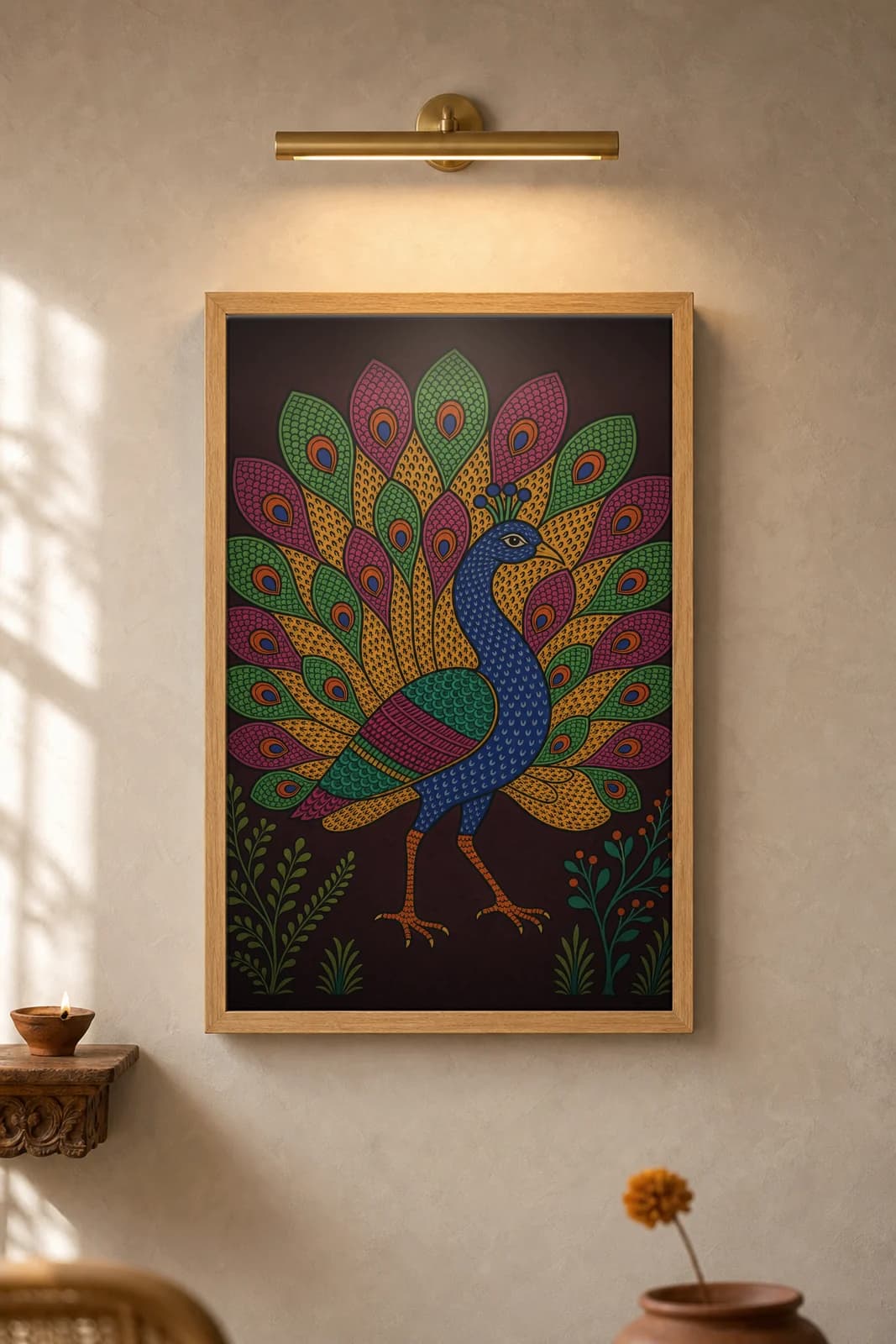
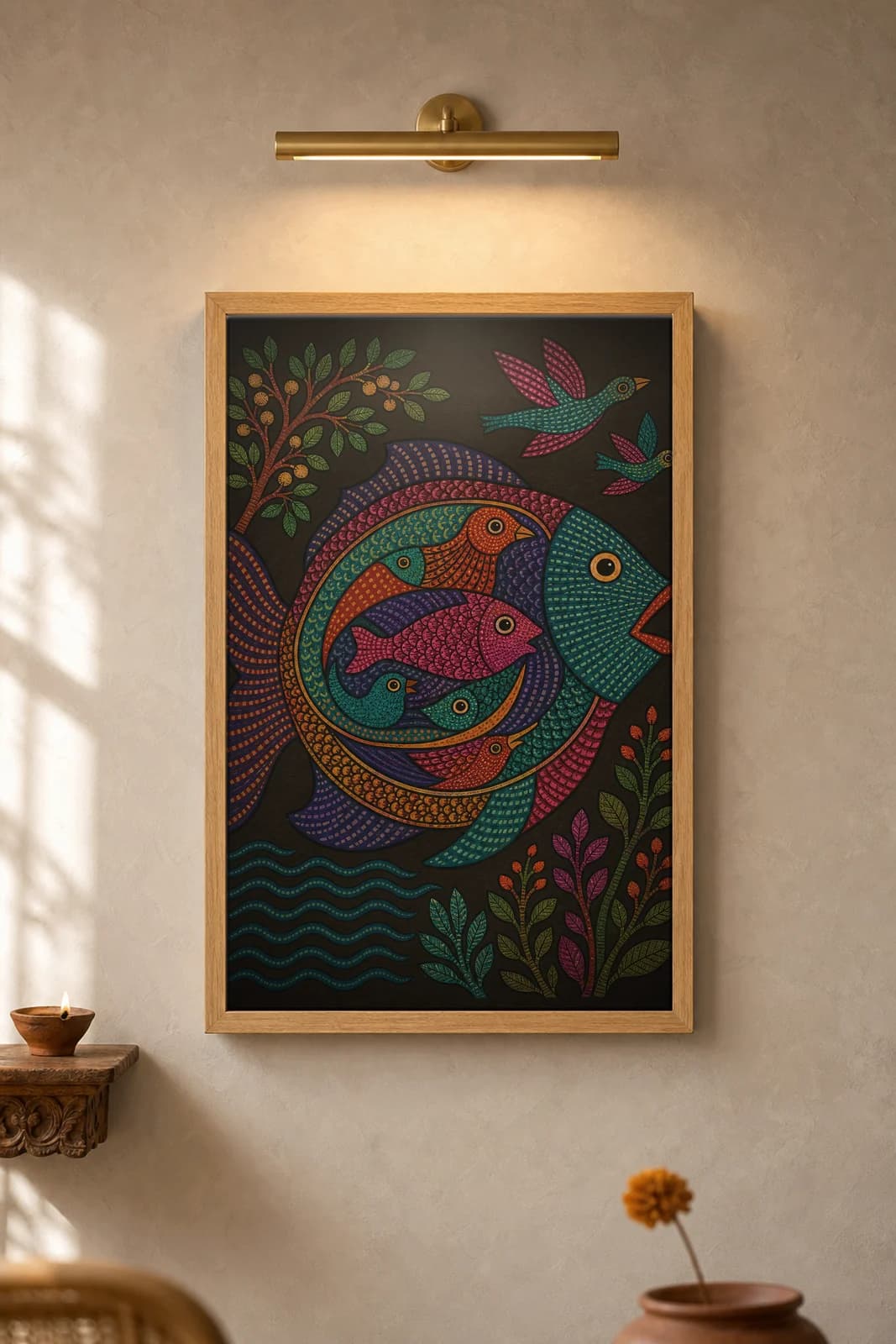
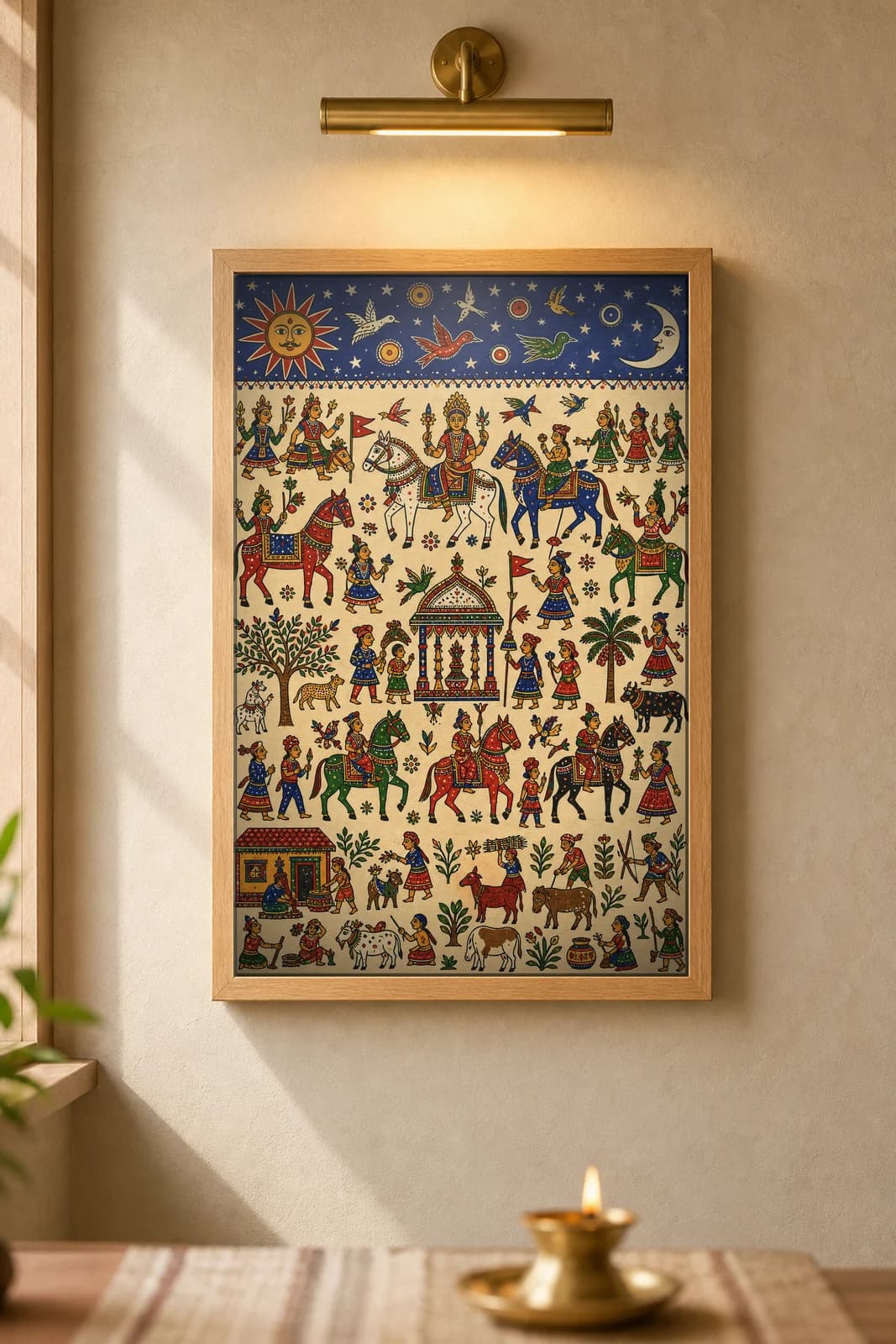
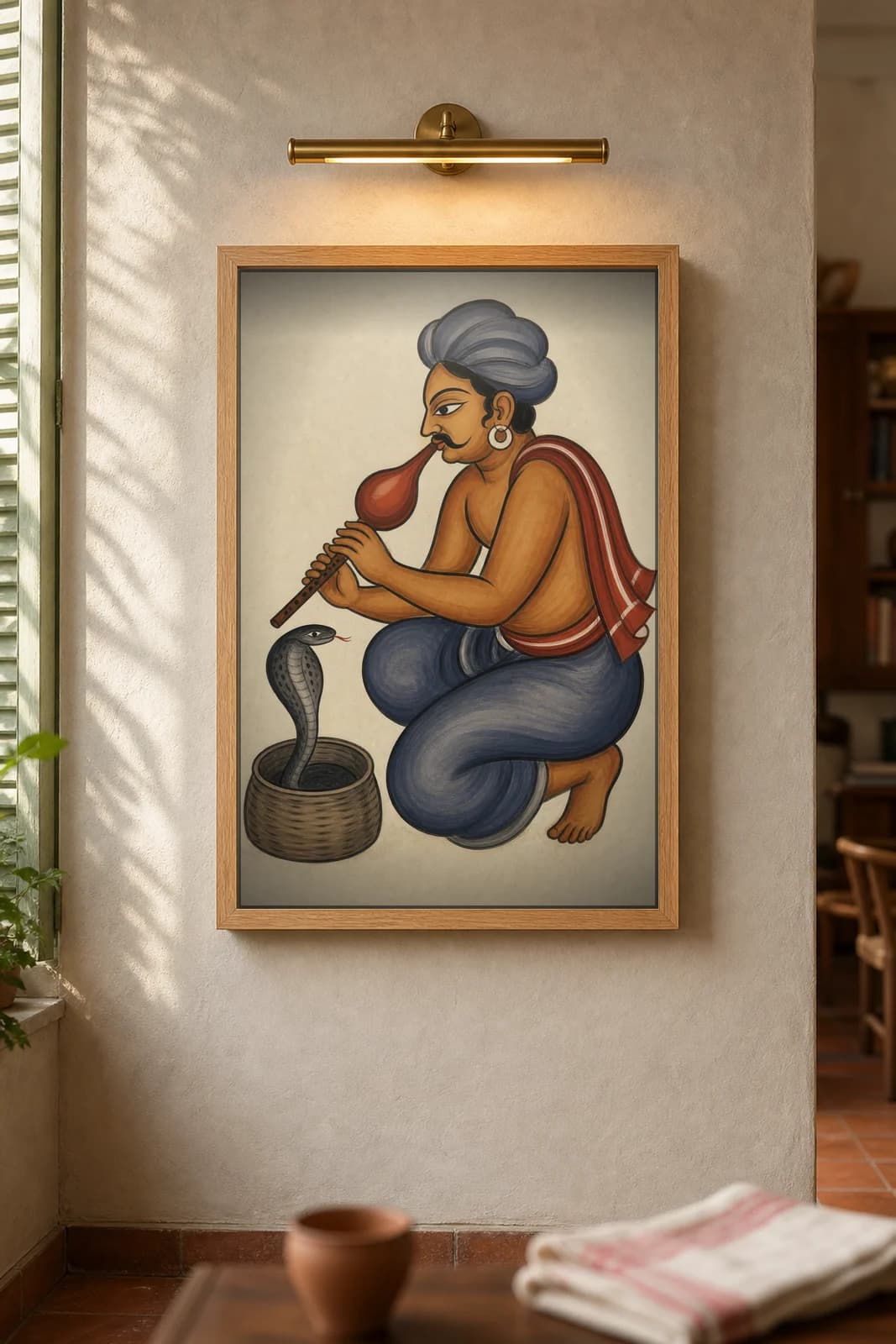
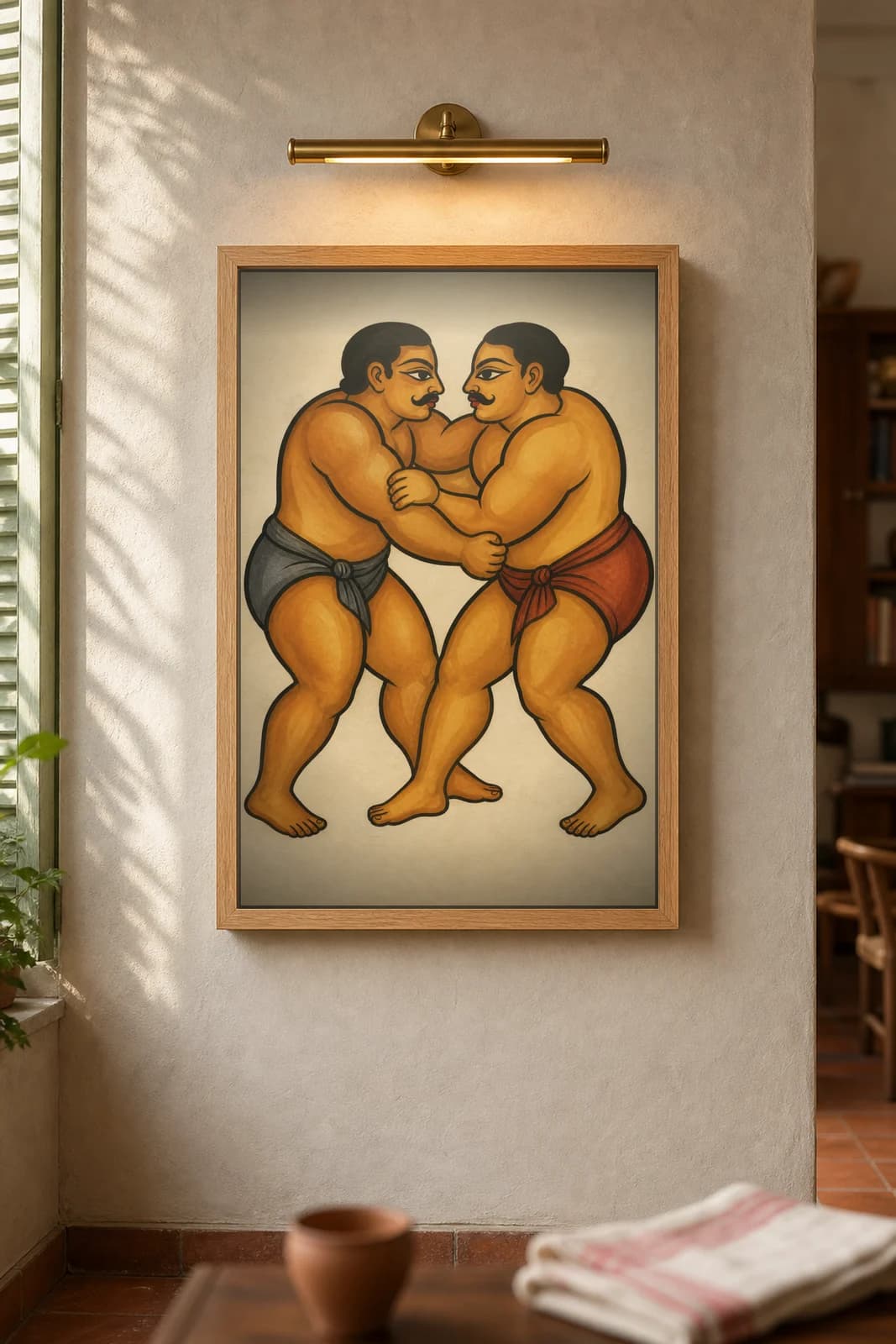
Graphic — 5 museum-grade prints that set the mood. Kalighat Pat grew up in 19th-century Kolkata, painted by patua (chitrakar) scroll-painters who settled near the Kalighat Kali temple and sold quick watercolours to pilgrims. Alongside gods and goddesses they painted the everyday and itinerant people of Calcutta — snake charmers, milkmaids, musicians and dandies — in the same economical brush, which is why the form is often called India's first modern popular art. Gond painting comes from the Gond Adivasi communities of central India, with its best-known school formed by the Pradhan Gond of Patangarh and the wider Dindori region of Madhya Pradesh. The contemporary form is largely the legacy of Jangarh Singh Shyam (1962–2001), whose distinctive line-and-in-fill manner — every form bounded by a bold outline, then filled with rows of dots, dashes, commas and scales — became known as Jangarh Kalam and was carried on by his family and students. Pithora is the ritual wall-painting tradition of the Rathwa, Bhil and Bhilala Adivasi communities of Chhota Udepur in eastern Gujarat and the adjoining belt of Madhya Pradesh and Rajasthan. The Lakhara priest-painter opens the sacred wall with the sun and the moon, the first marks that orient the cosmos before the gods, the wedding and the earthly world are added below.