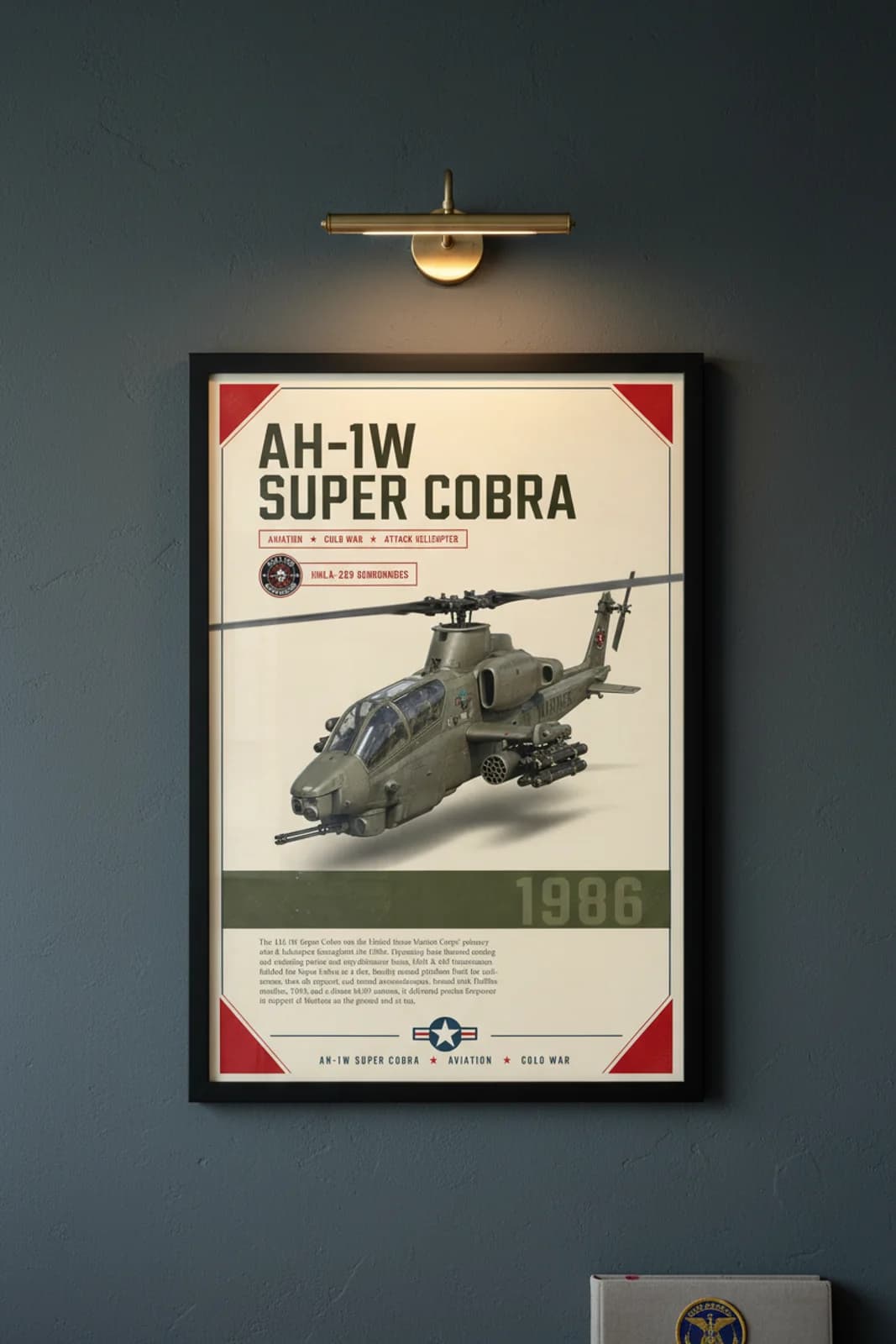
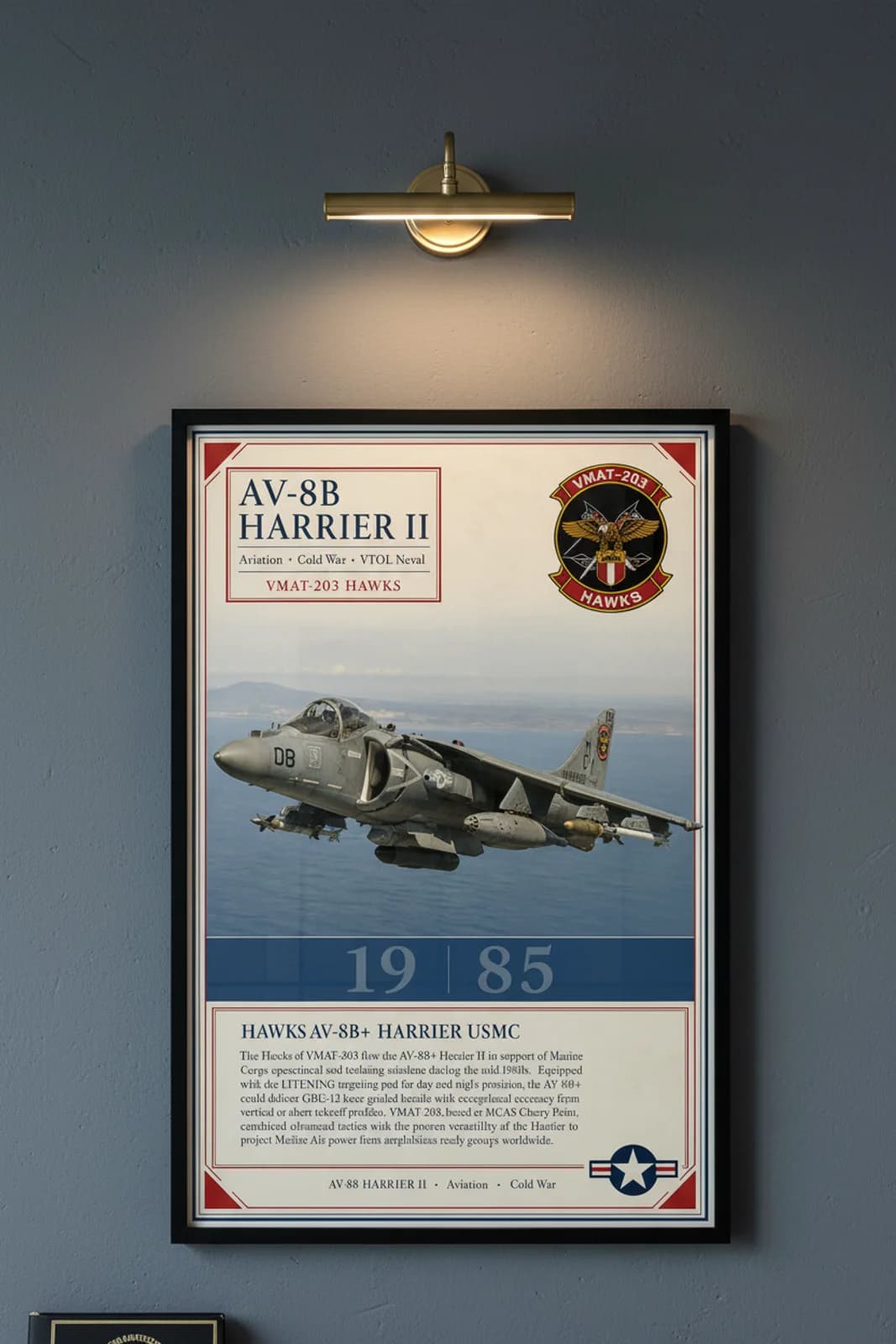
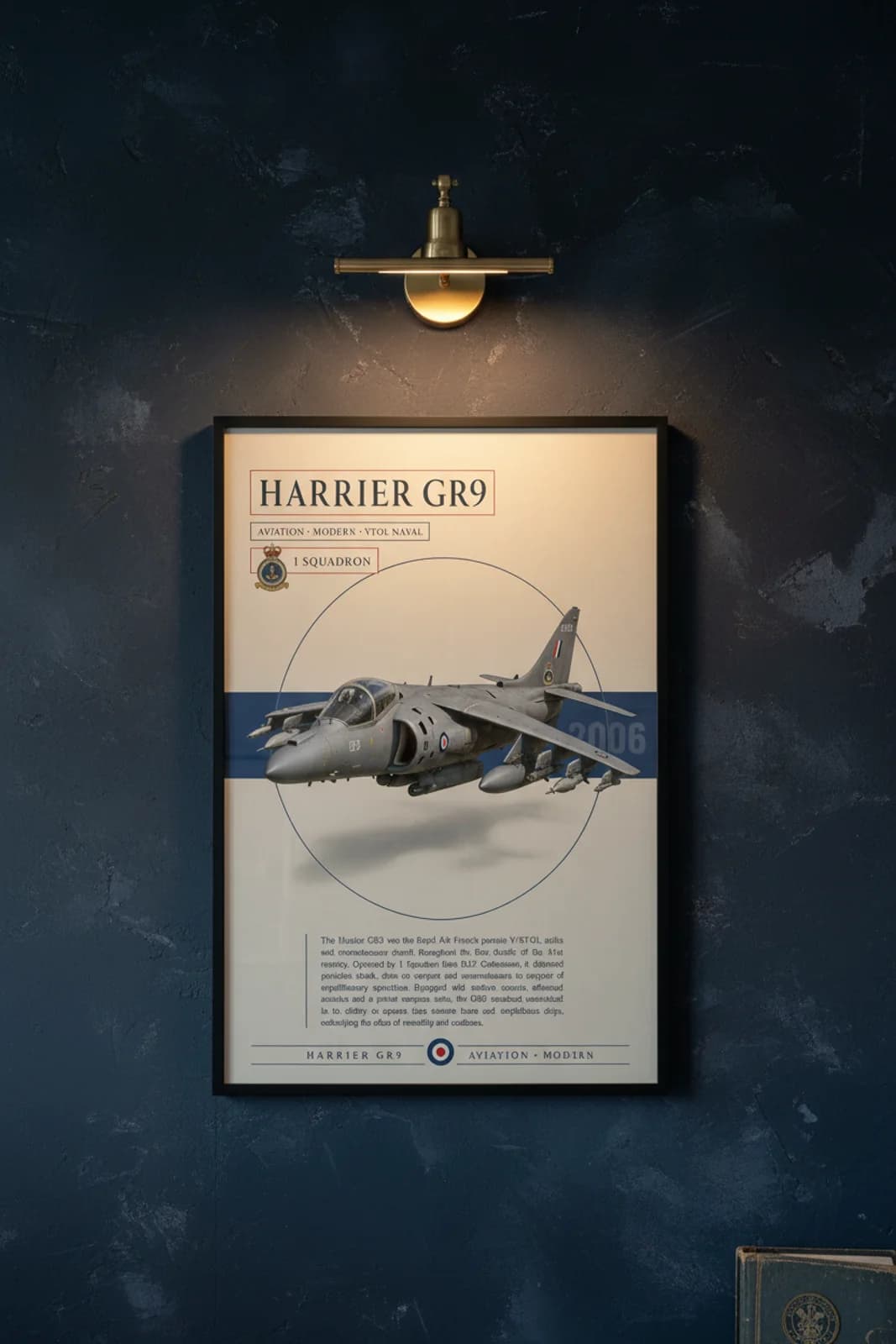
Expeditionary — 3 museum-grade prints that set the mood. The McDonnell Douglas AV-8B Harrier II extended the British Hawker Siddeley Harrier into a second-generation ground-attack platform capable of vertical or short takeoff and landing from amphibious assault ships. VMAT-203 trained USMC and allied naval aviators at Cherry Point for decades; the squadron was redesignated as a Fleet Replacement Detachment in 2021 as the Corps wound down AV-8B operations in favour of the F-35B. Marine Light Attack Helicopter Squadron 269 — the Gunrunners — stood up at Marine Corps Air Station New River, North Carolina, and spent decades as a composite H-1 squadron flying the AH-1W alongside UH-1 Huey variants before the AH-1Z Viper and UH-1Y Venom transition. The AH-1W Super Cobra itself evolved from Bell's Vietnam-era AH-1 lineage, adding twin-engine reliability, improved night targeting, and heavier Hellfire/TOW loads that kept Marine attack crews relevant through Cold War expeditionary deployments and post-9/11 close-air-support tasking. The British Aerospace Harrier GR9 represented the final RAF iteration of the world's first successful V/STOL combat jet, evolved from the GR7 through upgraded Pegasus Mk 107 engines, improved cockpit displays, and integration of Paveway IV precision-guided bombs. One Squadron — the same unit that first flew the Harrier into RAF service in 1969 — operated GR9s from RAF Cottesmore through Afghanistan-era deployments until the type's retirement in December 2010, when the RAF and Royal Navy transitioned carrier strike toward the F-35B Lightning II.