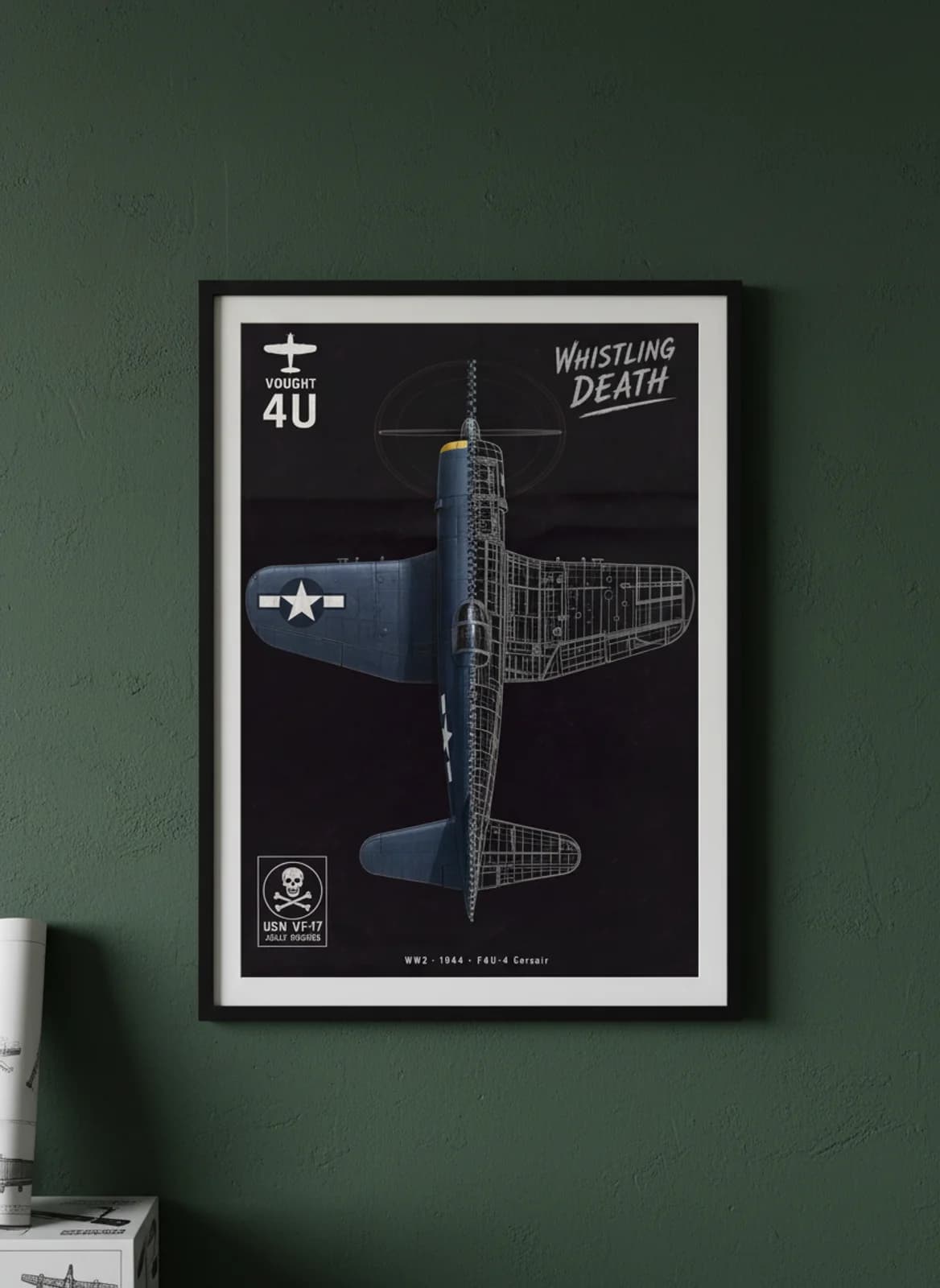
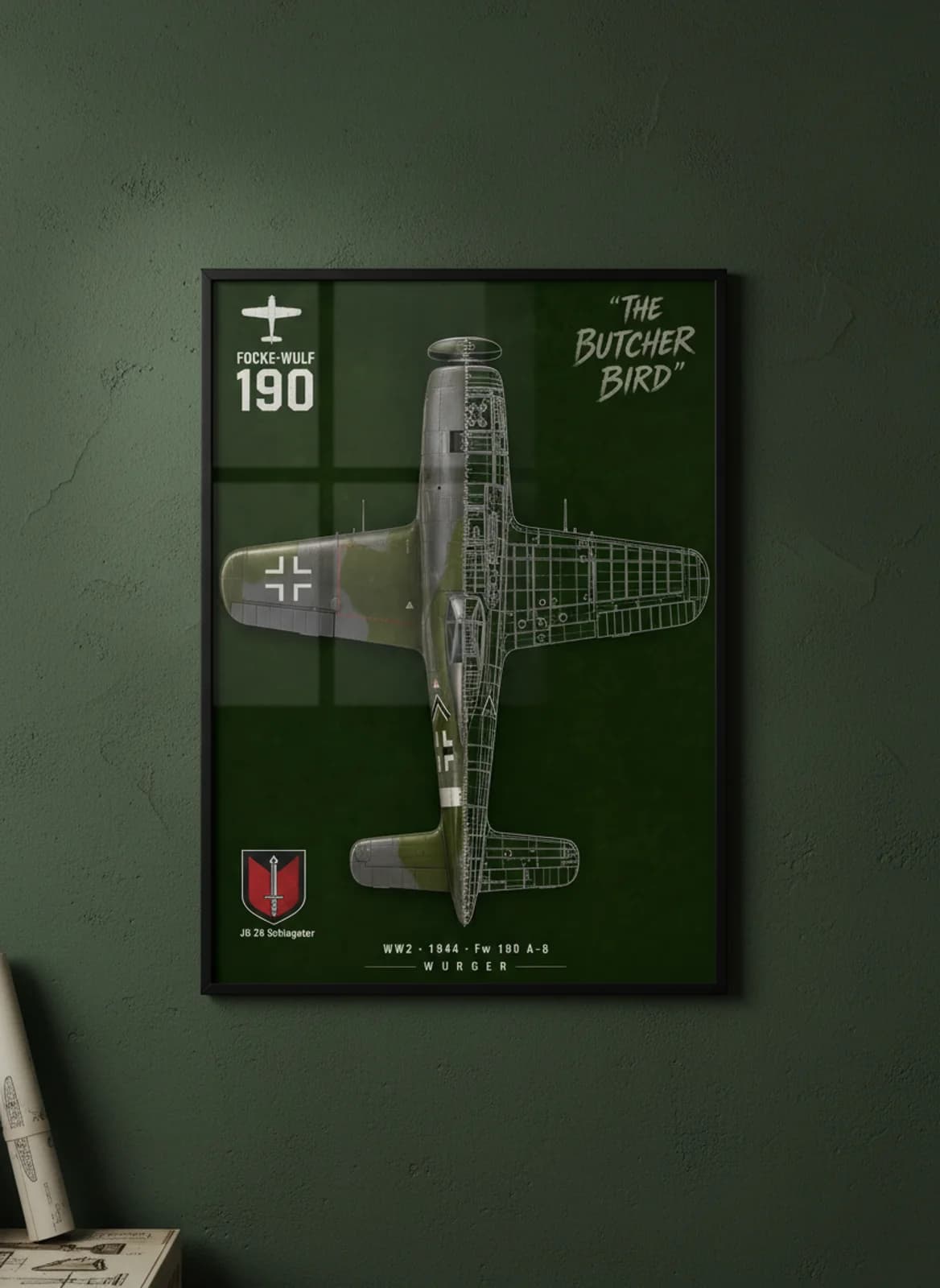
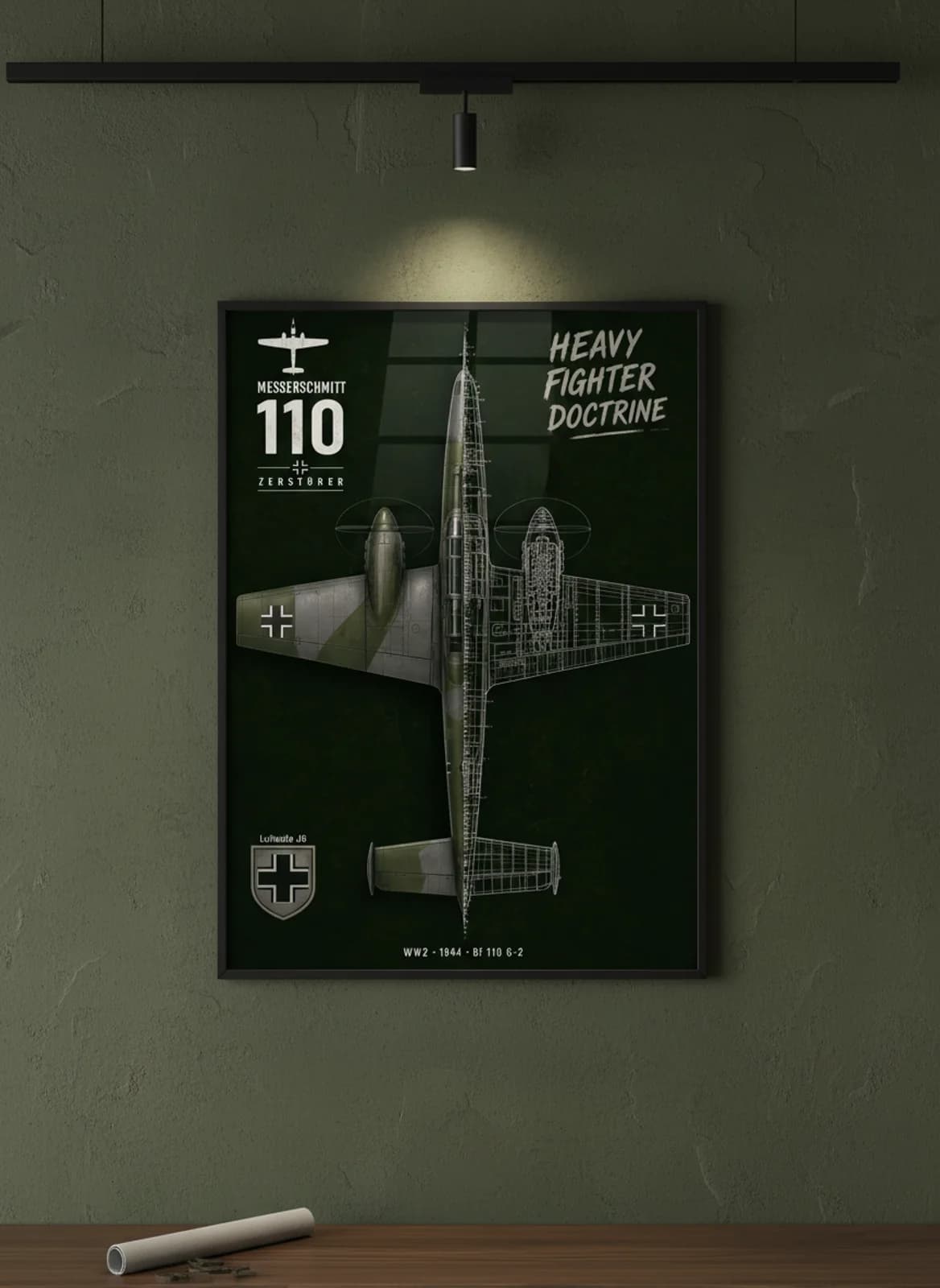
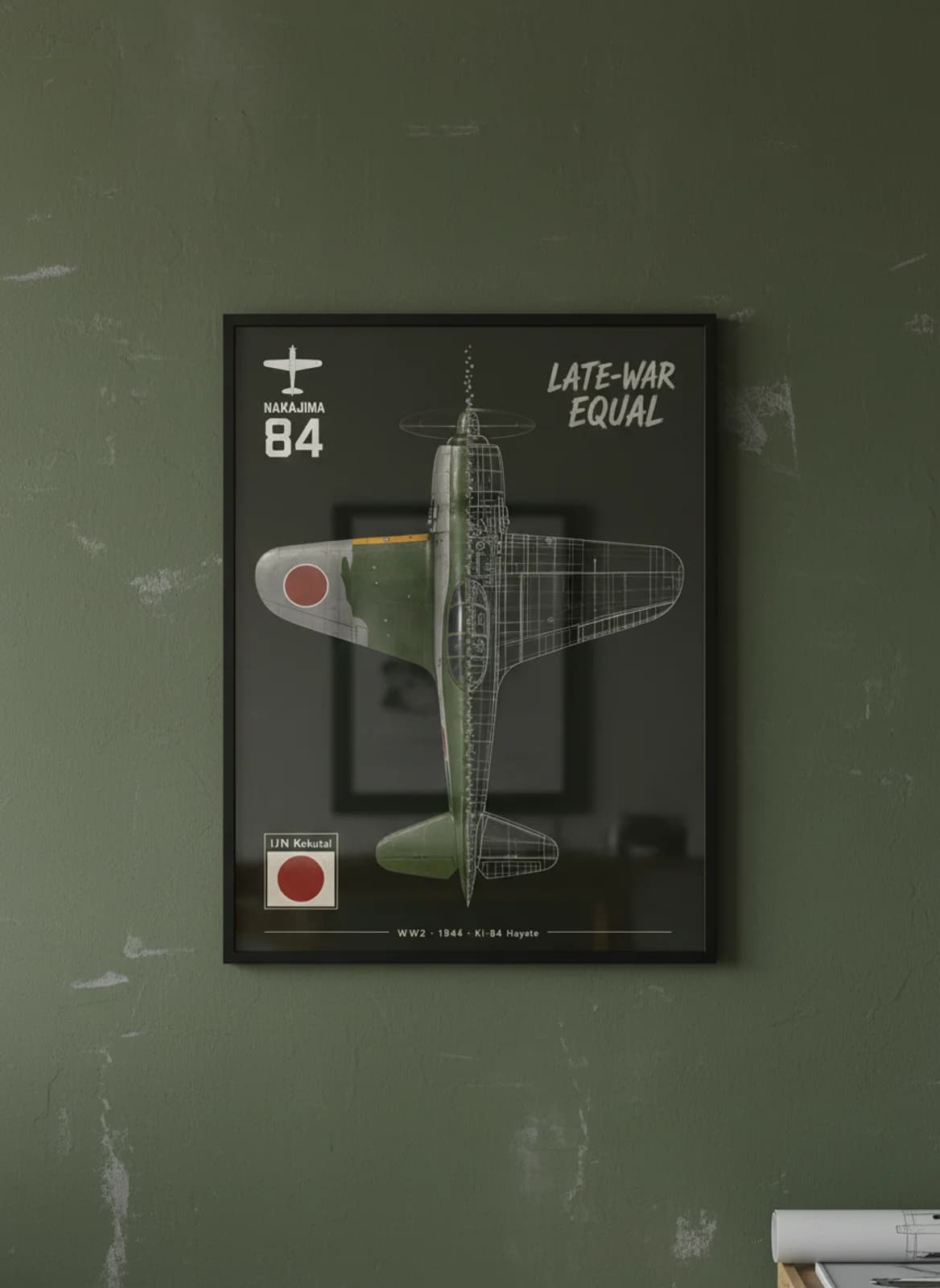
1944 Prestige — 4 museum-grade prints that set the mood. The Focke-Wulf Fw 190 became the Luftwaffe's most-produced fighter of World War II, entering service in 1941 and forcing immediate Allied respect for its roll rate, firepower, and wide-track undercarriage. JG 26 — Adolf Galland's old Geschwader — remained one of the premier Western Front units flying the Würger against RAF Circus operations and USAAF daylight raids. The Ki-84 Hayate represented Japan's most credible attempt to field a late-war fighter that could meet Allied escorts on equal terms — a design shift from the ultra-light Ki-43 philosophy toward armour and firepower American pilots already took for granted. Allied test reports of captured Frank airframes praised handling and climb when engines were properly maintained, even as homeland production chaos limited the type's operational impact. The F4U Corsair's inverted gull wing solved the propeller clearance problem that plagued early carrier fighter designs — a visual signature that became synonymous with Pacific naval aviation. Japanese pilots nicknamed the type 'Whistling Death' for the distinctive sound of its high-speed dives; American squadrons including VF-17 Jolly Rogers adopted skull insignia that matched the Corsair's aggressive reputation.