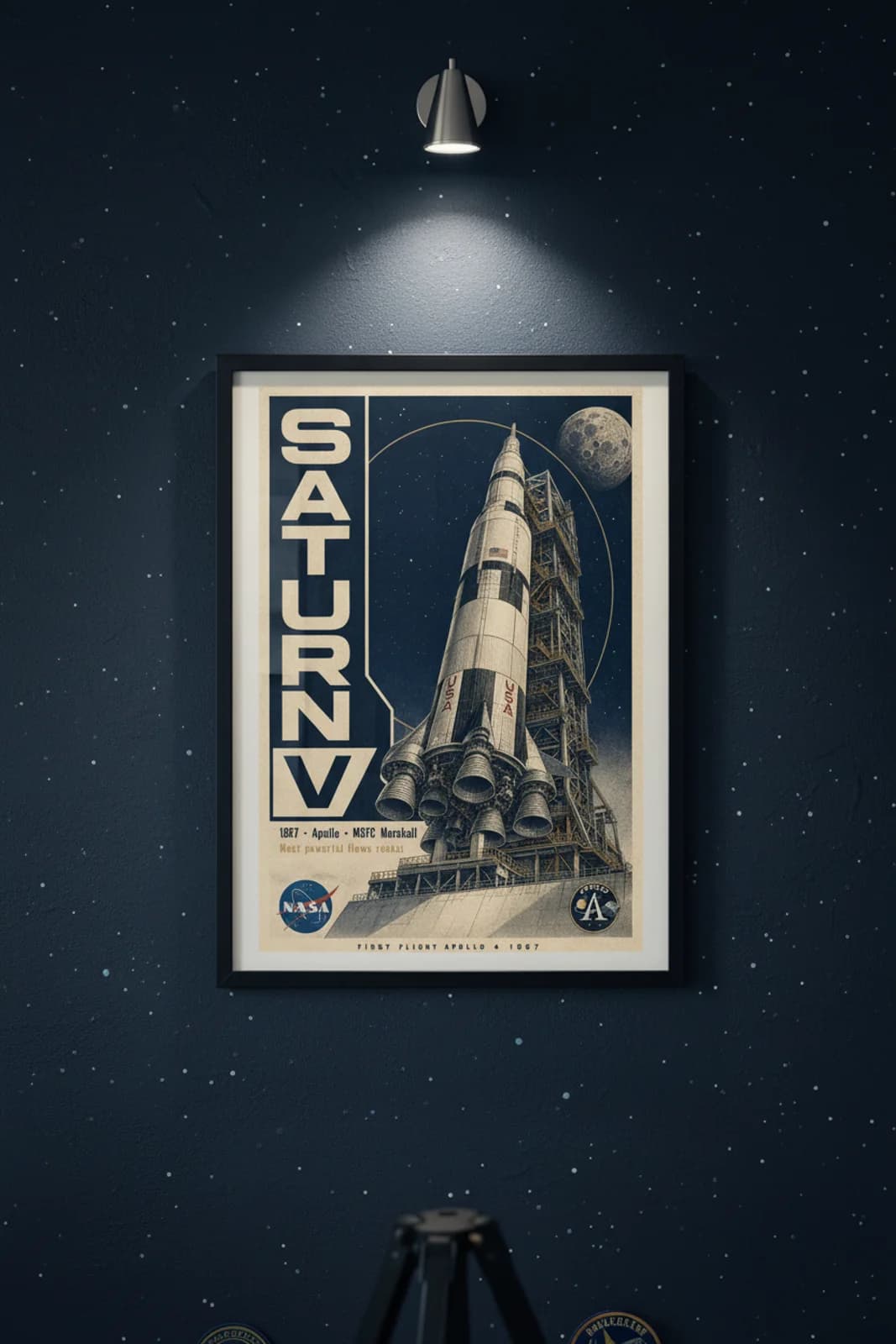
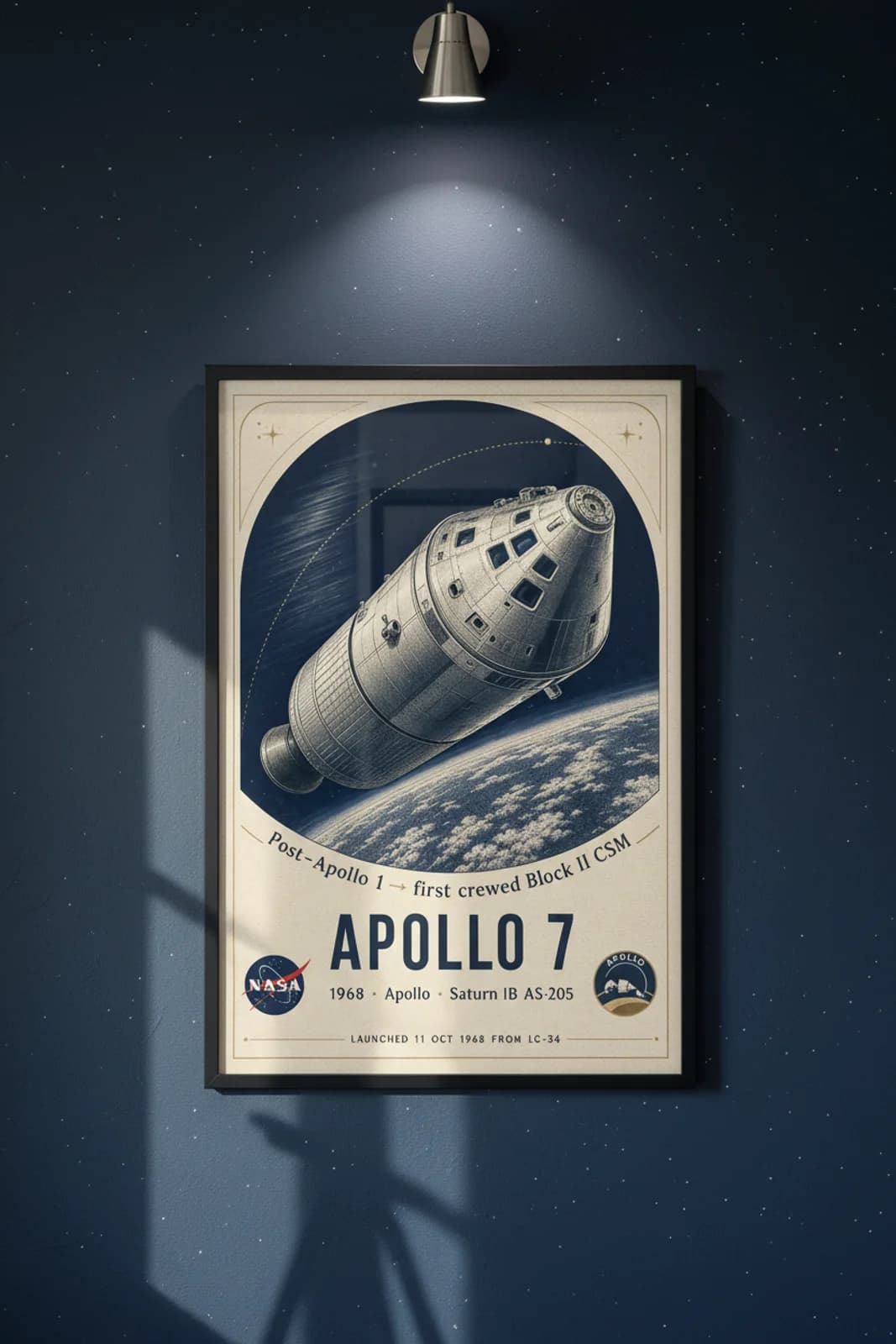
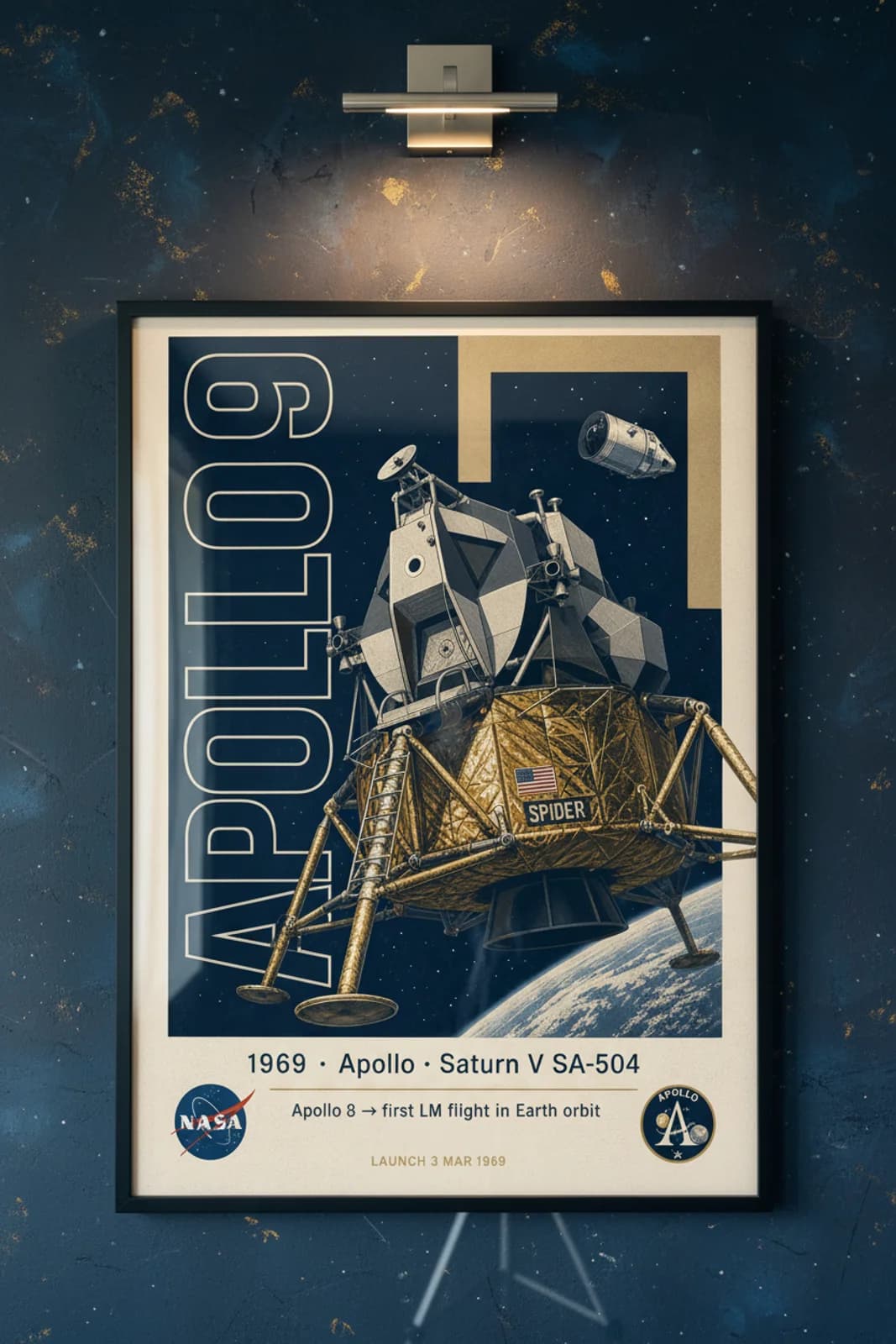
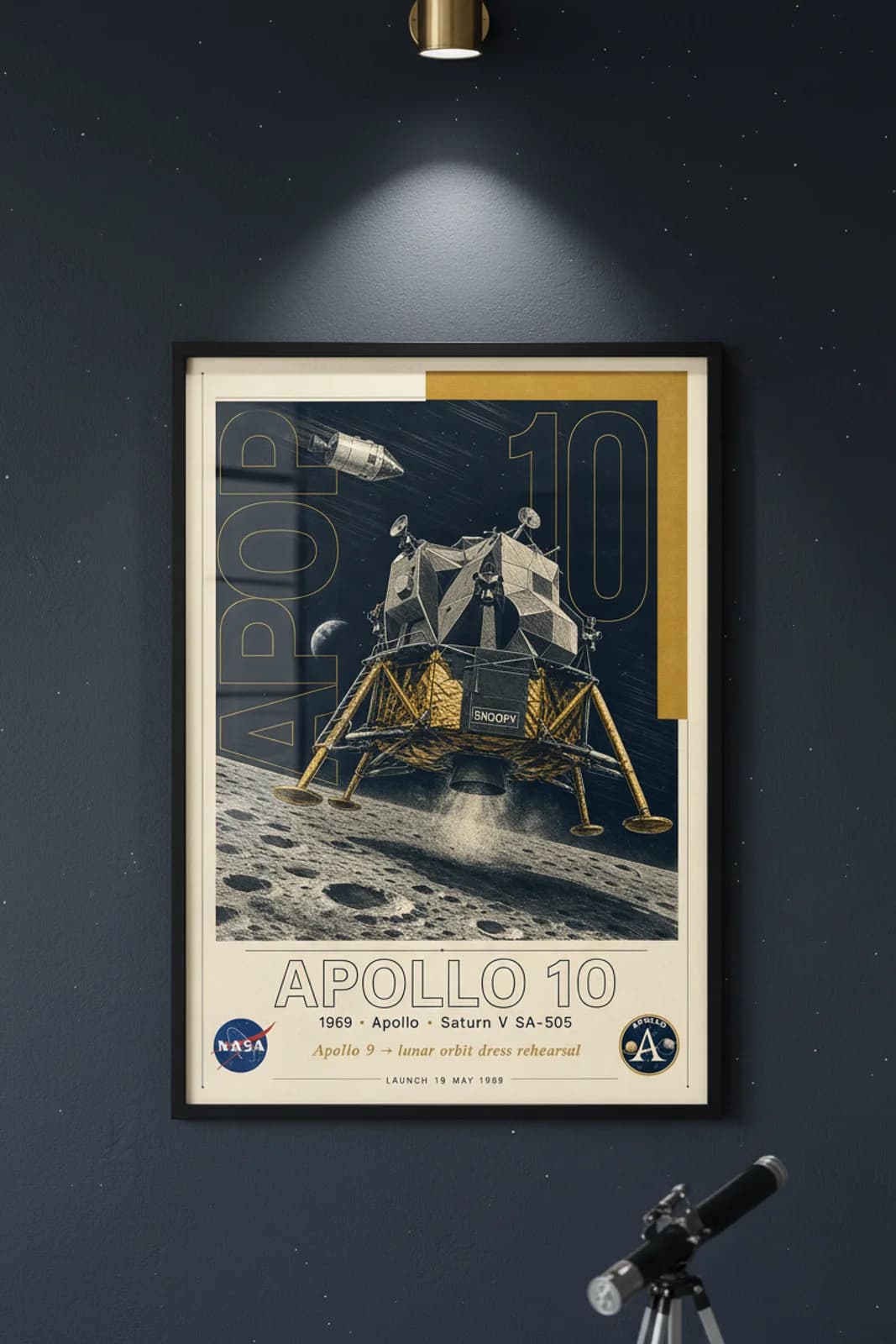
Apollo program era — 4 museum-grade prints from the period. Apollo 7 closed the gap between tragedy and triumph — twenty-one months after the Apollo 1 pad fire killed Gus Grissom, Ed White, and Roger Chaffee, Schirra's crew proved the redesigned Block II spacecraft could sustain a crew for the duration a lunar mission would demand. The mission's live television broadcasts brought orbital flight into American living rooms with an intimacy Mercury and Gemini had only hinted at. Apollo 9 answered the question Apollo 8 had deferred — could the Lunar Module operate as an independent spacecraft? Spider's flight demonstrated that the awkward gold-foil lander could separate from Gumdrop, fire its descent engine, and rendezvous again — the exact sequence Apollo 11 would need in lunar orbit. The Saturn V remains the benchmark for heavy-lift rocketry — taller than the Statue of Liberty and more powerful than any vehicle flown since. Its thirteen launches carried every Apollo lunar landing mission, lofted Skylab, and anchored the Marshall Space Flight Center legacy that began with Redstone and Jupiter rockets.