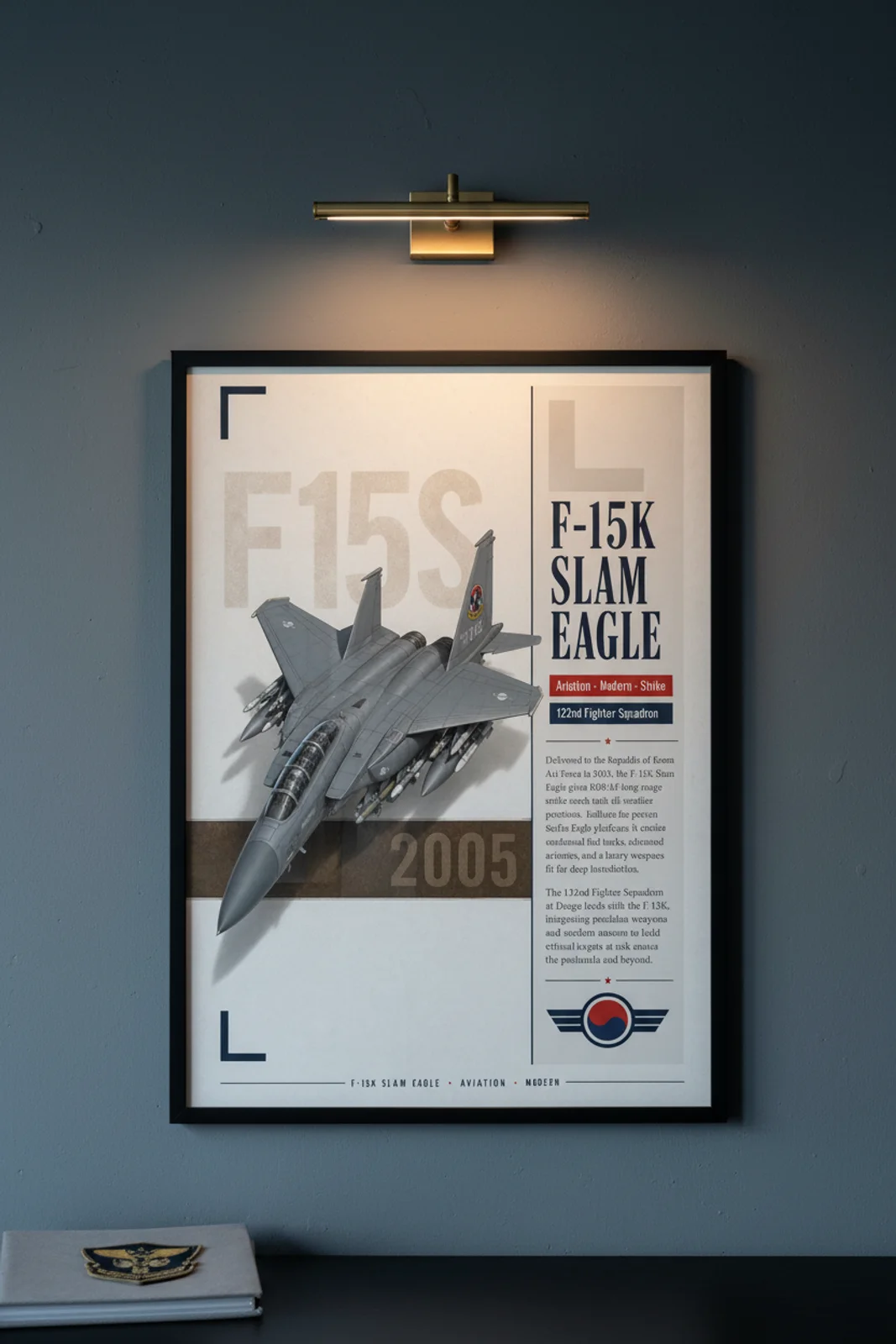
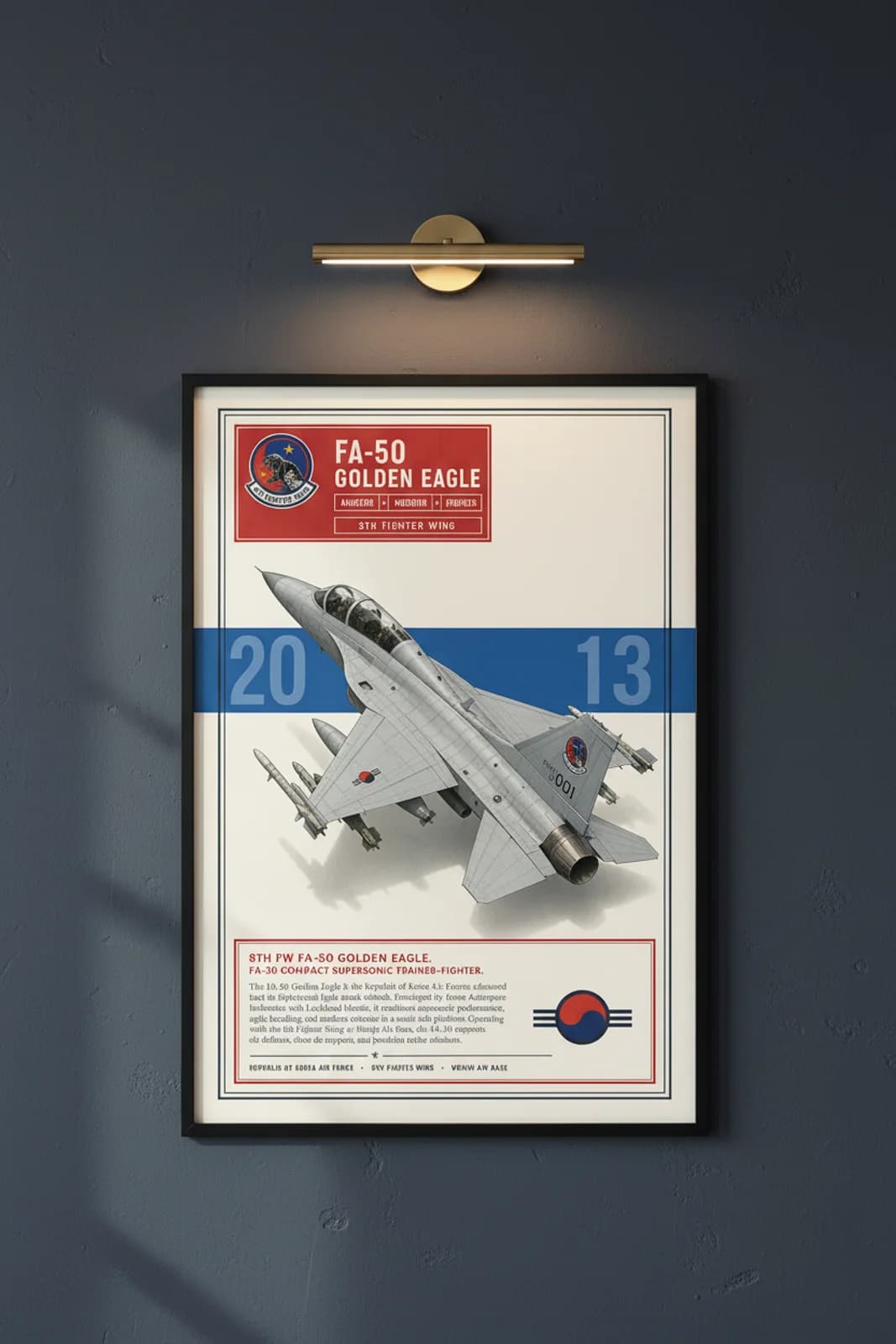
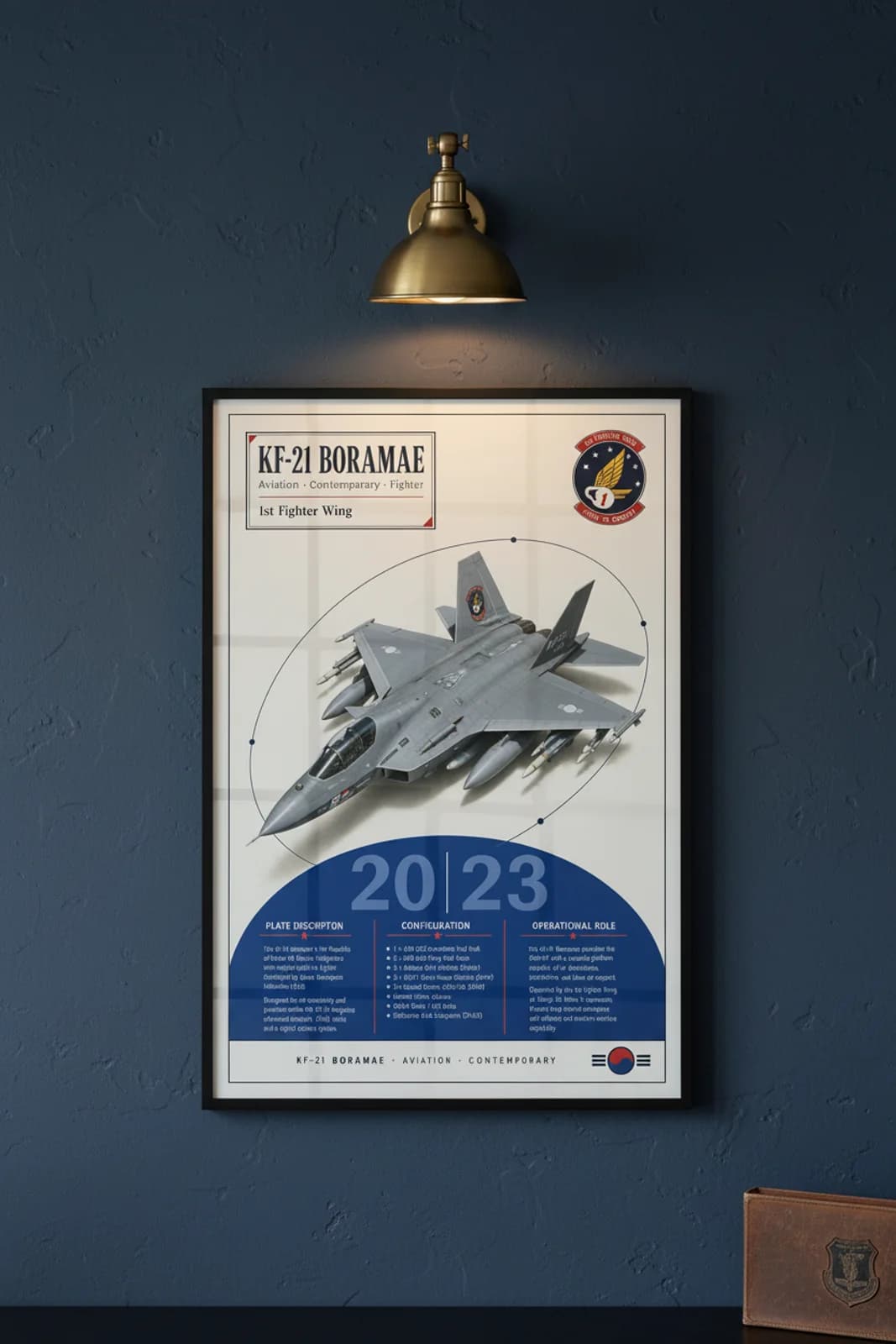
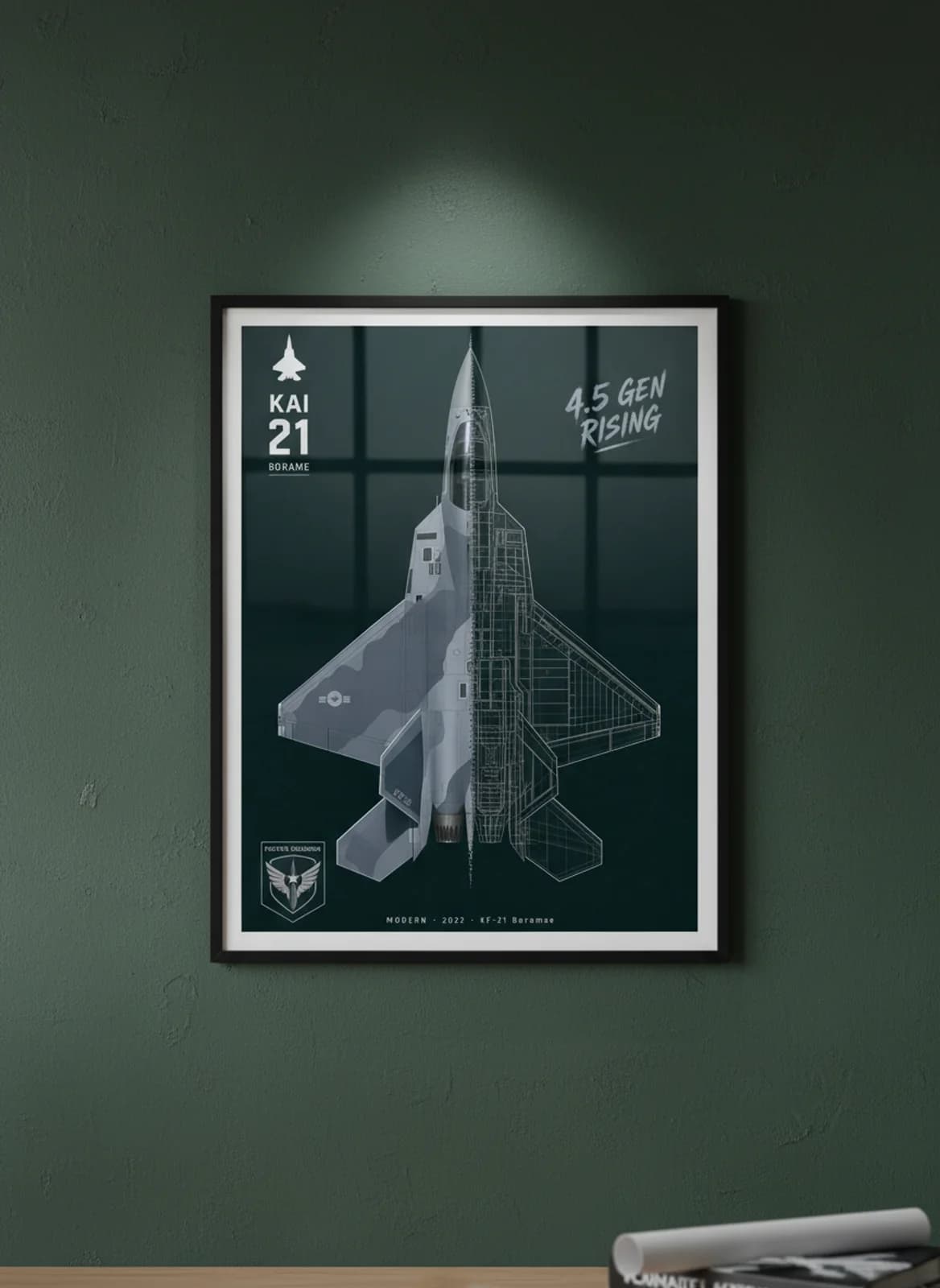
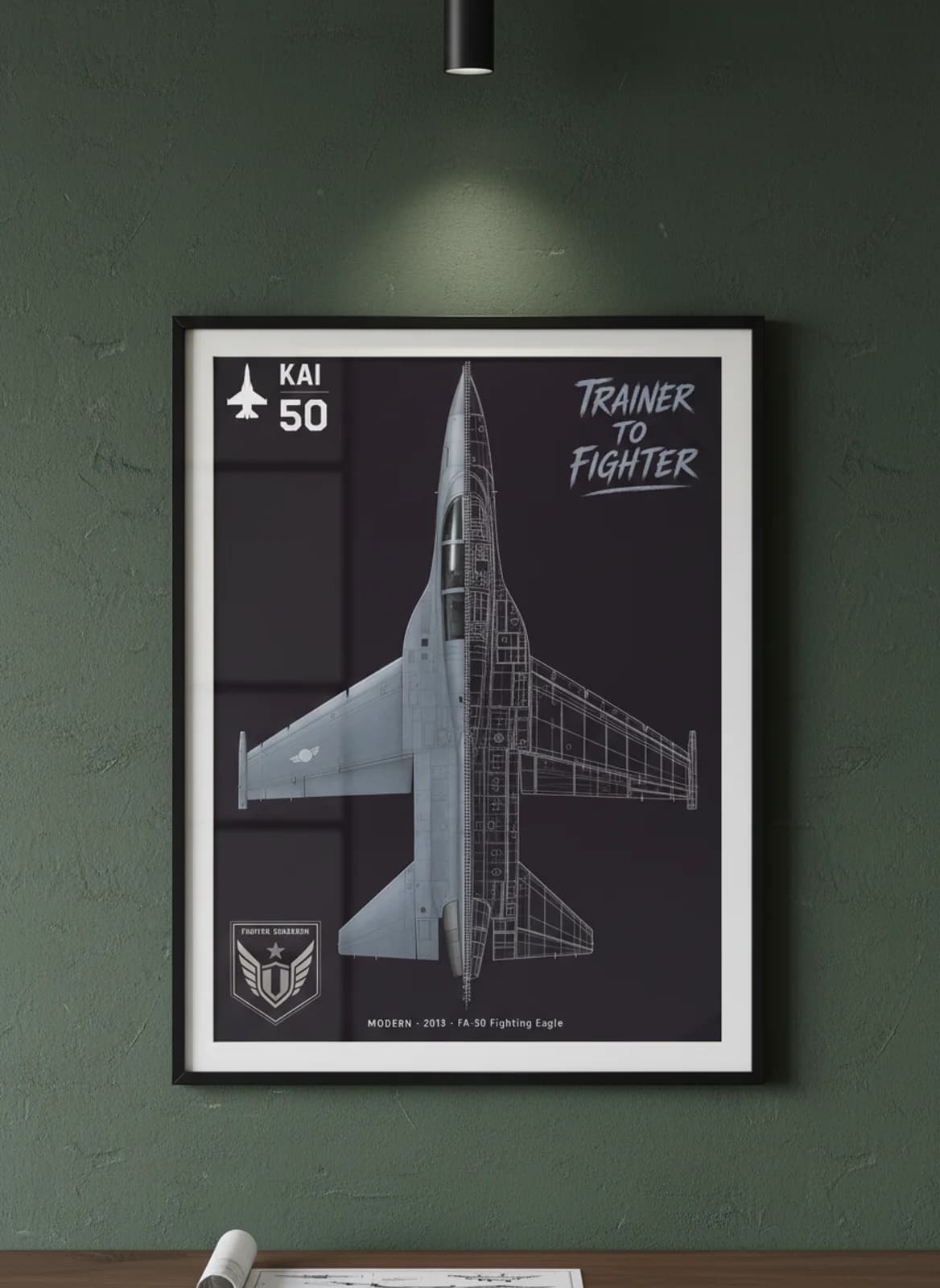
South Korea — 9 museum-grade prints drawn from its heritage. The F-15K Slam Eagle entered Republic of Korea Air Force service from 2005 as Boeing's export strike derivative of the F-15E — a twin-seat, twin-engine platform optimised for all-weather precision attack with SLAM-ER standoff missiles, JDAM, and later AESA radar upgrades. ROKAF operates Slam Eagles from Daegu Air Base under the 1st Fighter Wing, where the 102nd and 122nd Fighter Squadrons pool aircraft and aircrew for peninsula defence and coalition training events such as Red Flag and Buddy Squadron exercises with U. The KF-21 Boramae — formerly developed under the KF-X programme — is South Korea's second indigenous fighter after the FA-50/T-50 family and positions the nation among the few states capable of designing a twin-engine multirole airframe with semi-stealth avionic architecture. Korea Aerospace Industries and the Agency for Defense Development shaped a canard-less delta with partially embedded weapons carriage, AESA radar, and a defensive-aids suite aimed at air superiority and precision strike between Block I and future Block III internal-bay stealth goals. The FA-50 Fighting Eagle — marketed as Golden Eagle in export and community parlance — evolved from Korea Aerospace Industries' T-50 supersonic trainer programme, which Lockheed Martin helped shape so ROKAF pilots could transition cleanly into KF-16 and F-15K fleets. First flight came in 2011; ROKAF declared initial operational capability in 2013 and ordered sixty aircraft through 2016 to replace F-5E/F and A-37 Dragonfly light attack types.
Edition