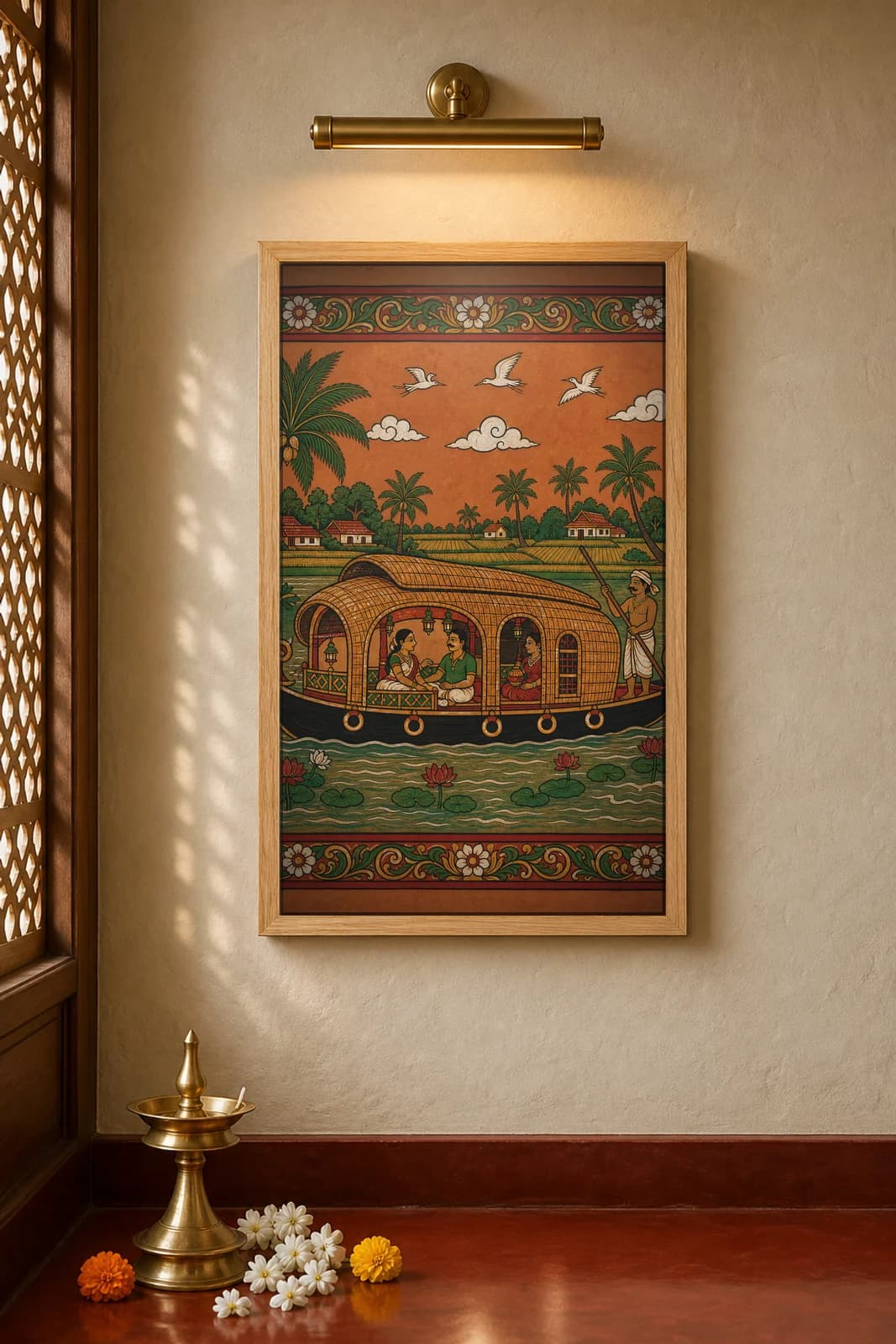
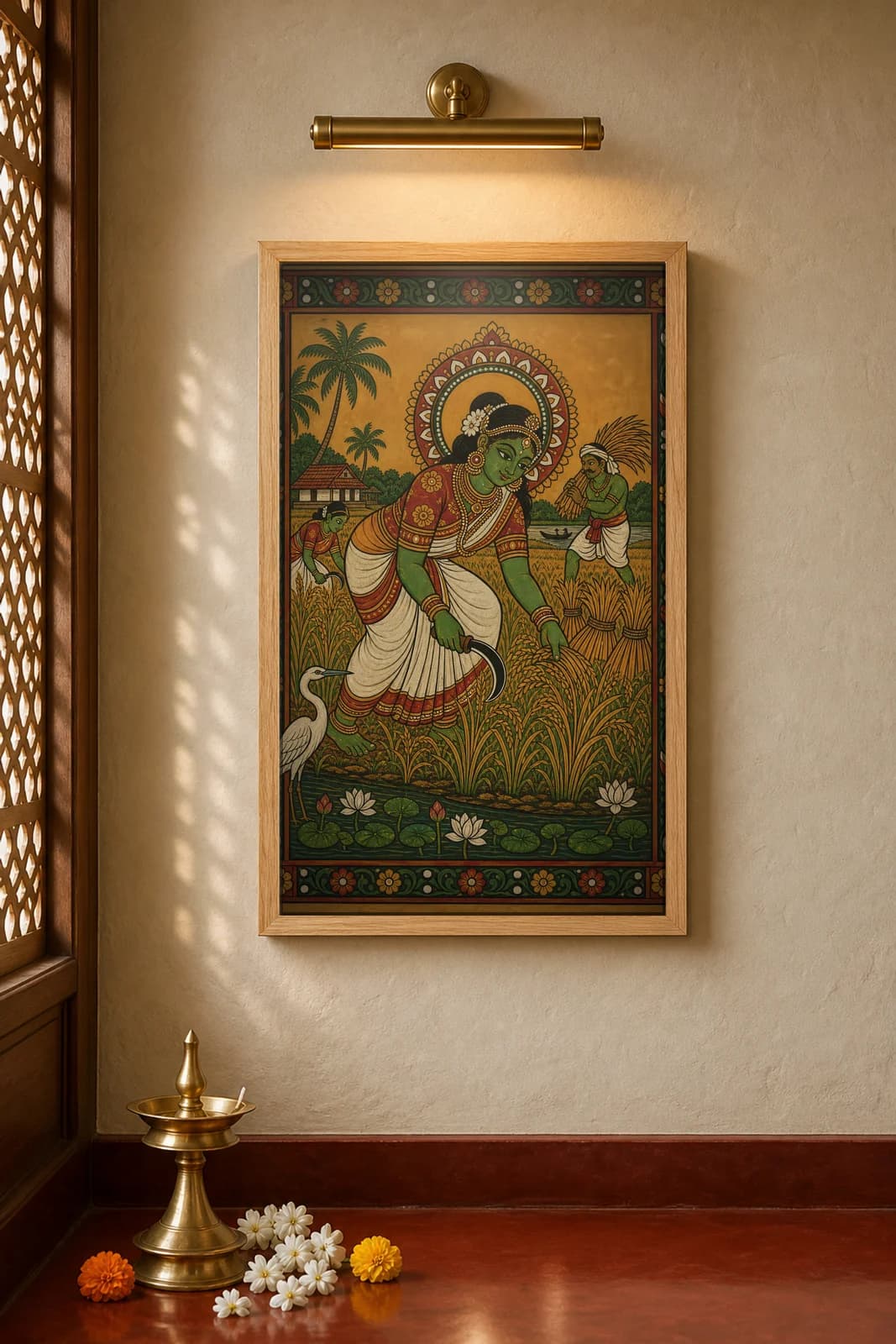
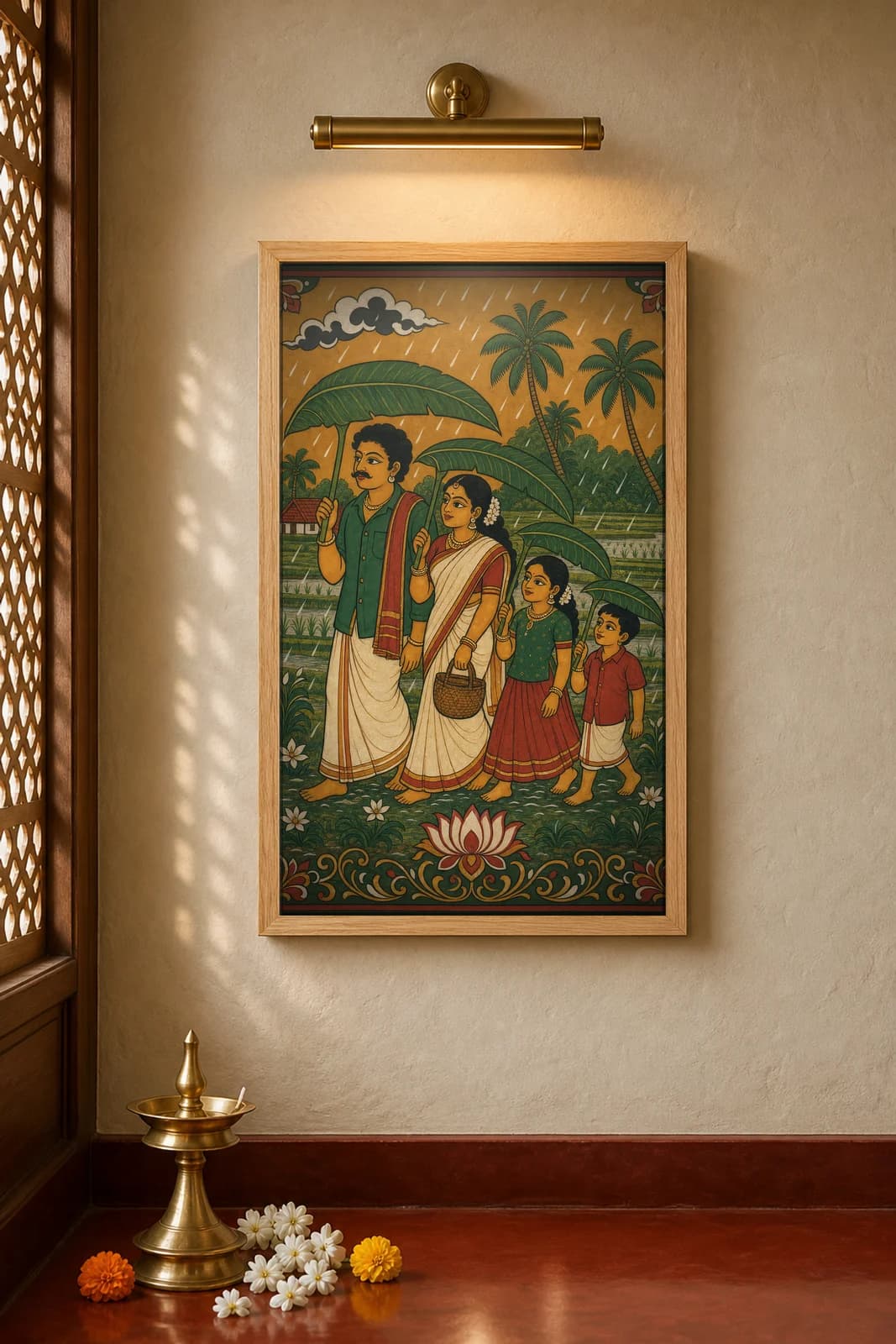
Paddy Green — 3 museum-grade prints in this palette. The kettuvallam — literally a 'boat tied with ropes', built without nails from planks lashed with coir — once carried rice and spices on Kerala's backwaters and now glides tourists through Alappuzha and the Vembanad-Kuttanad waterways under its arched thatch roof. This print sets it inside bhitti chitra, Kerala's temple-mural tradition that flourished roughly from the 16th to 19th century and is still painted today: flat panchavarna pigments (red, yellow, green, black, white over an ochre ground), a bold lamp-black outline and the school's elongated lotus-shaped eyes. Kerala's southwest monsoon — mazha — arrives in June and turns the paddy belt vivid green; the banana leaf held overhead is a genuine rural reflex, the broadest free umbrella the land offers. The picture is built in the idiom of bhitti chitra, Kerala's temple-mural tradition, which uses the panchavarna five-colour system — red, yellow, green, black and white over an ochre ground — in flat opaque fields bounded by a bold lamp-black outline, with the school's signature elongated lotus-shaped eyes. Kuttanad, in Alappuzha district, is one of the few farming regions in the world cultivated below sea level — a network of reclaimed backwater paddy fields, often called the rice bowl of Kerala. The harvest, koythu, is done by hand with curved sickles, and women have long carried much of the reaping.