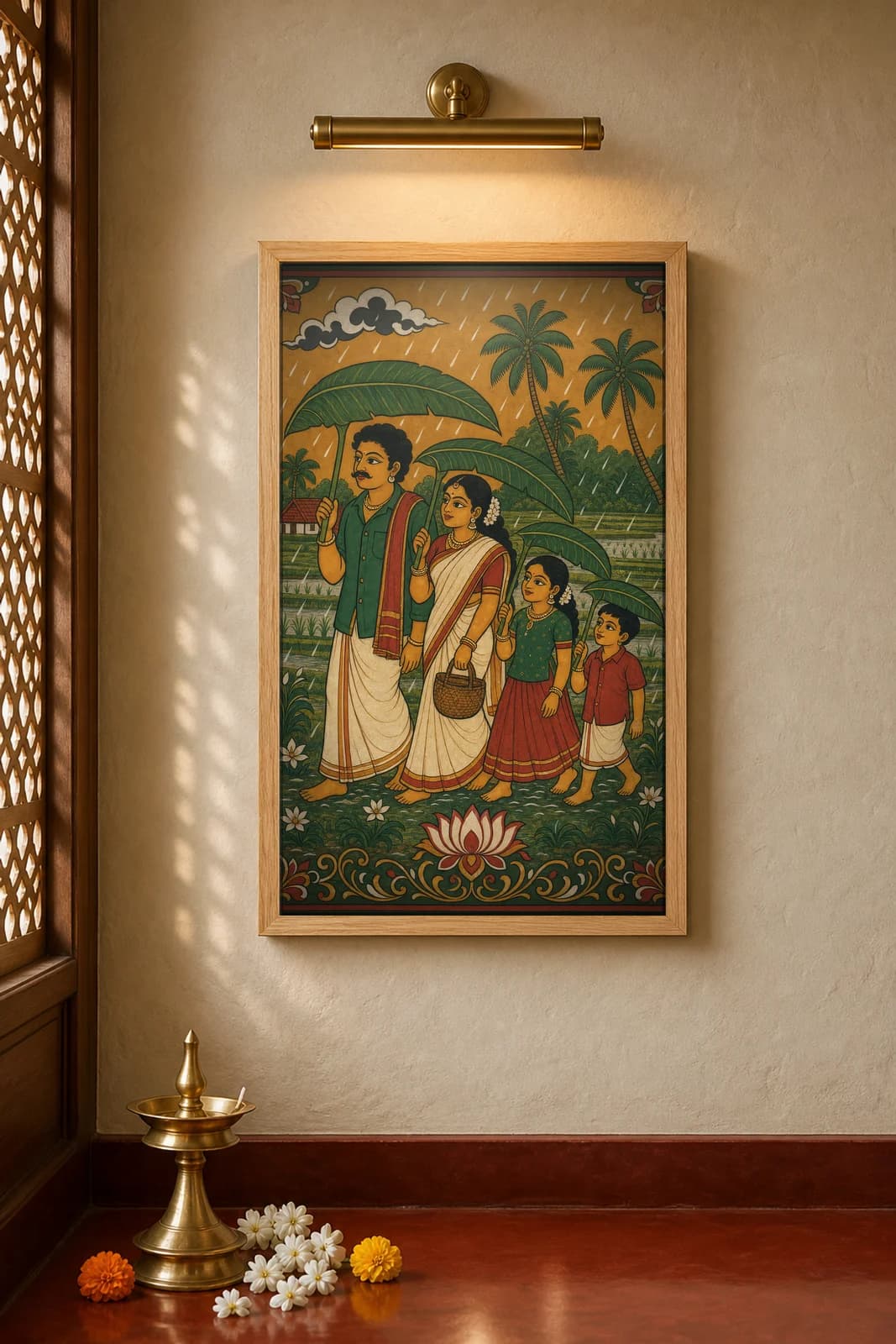
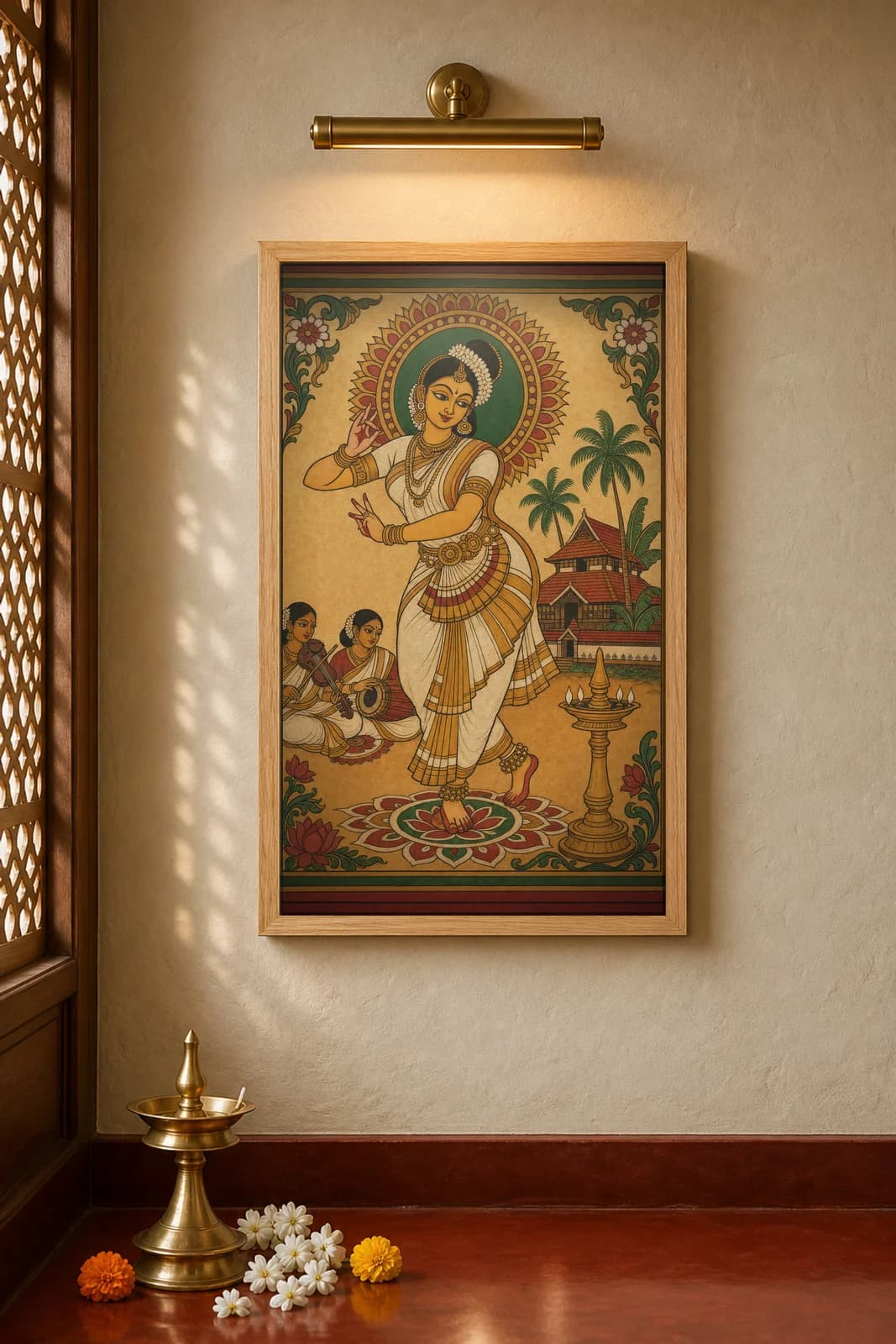
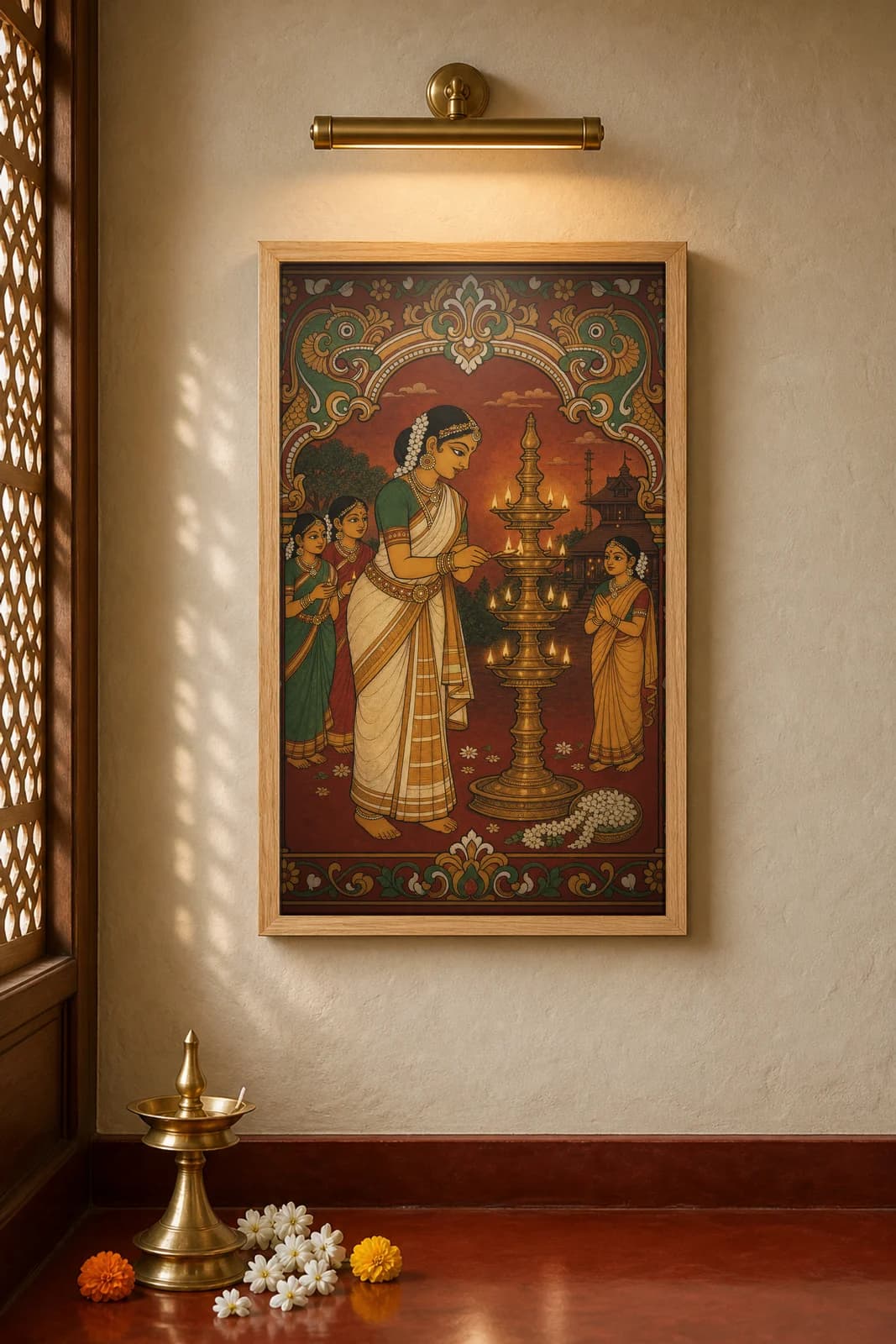
Off White Kasavu — 3 museum-grade prints in this palette. Mohiniyattam — the dance of the mohini, the enchantress — is one of Kerala's classical solo dance forms, marked by gentle swaying lasya movement, the half-seated araimandi stance, and the plain off-white-and-gold kasavu costume seen here; its modern repertoire was consolidated at Kerala Kalamandalam in the twentieth century. The picture is built in the idiom of bhitti chitra, Kerala's temple-mural tradition, which uses the panchavarna five-colour system — red, yellow, green, black and white over an ochre ground — in flat opaque fields bounded by a bold lamp-black outline, with the school's signature elongated lotus-shaped eyes. Kerala's southwest monsoon — mazha — arrives in June and turns the paddy belt vivid green; the banana leaf held overhead is a genuine rural reflex, the broadest free umbrella the land offers. The picture is built in the idiom of bhitti chitra, Kerala's temple-mural tradition, which uses the panchavarna five-colour system — red, yellow, green, black and white over an ochre ground — in flat opaque fields bounded by a bold lamp-black outline, with the school's signature elongated lotus-shaped eyes. The nilavilakku is Kerala's tall standing brass oil lamp, lit at dusk — the sandhya deepam — in homes and temples alike; the act of lighting it marks the threshold between day and evening and is a small daily devotion. The picture is built in the idiom of bhitti chitra, Kerala's temple-mural tradition, which uses the panchavarna five-colour system — red, yellow, green, black and white over an ochre or red ground — in flat opaque fields bounded by a bold lamp-black outline, with the school's signature elongated lotus-shaped eyes.