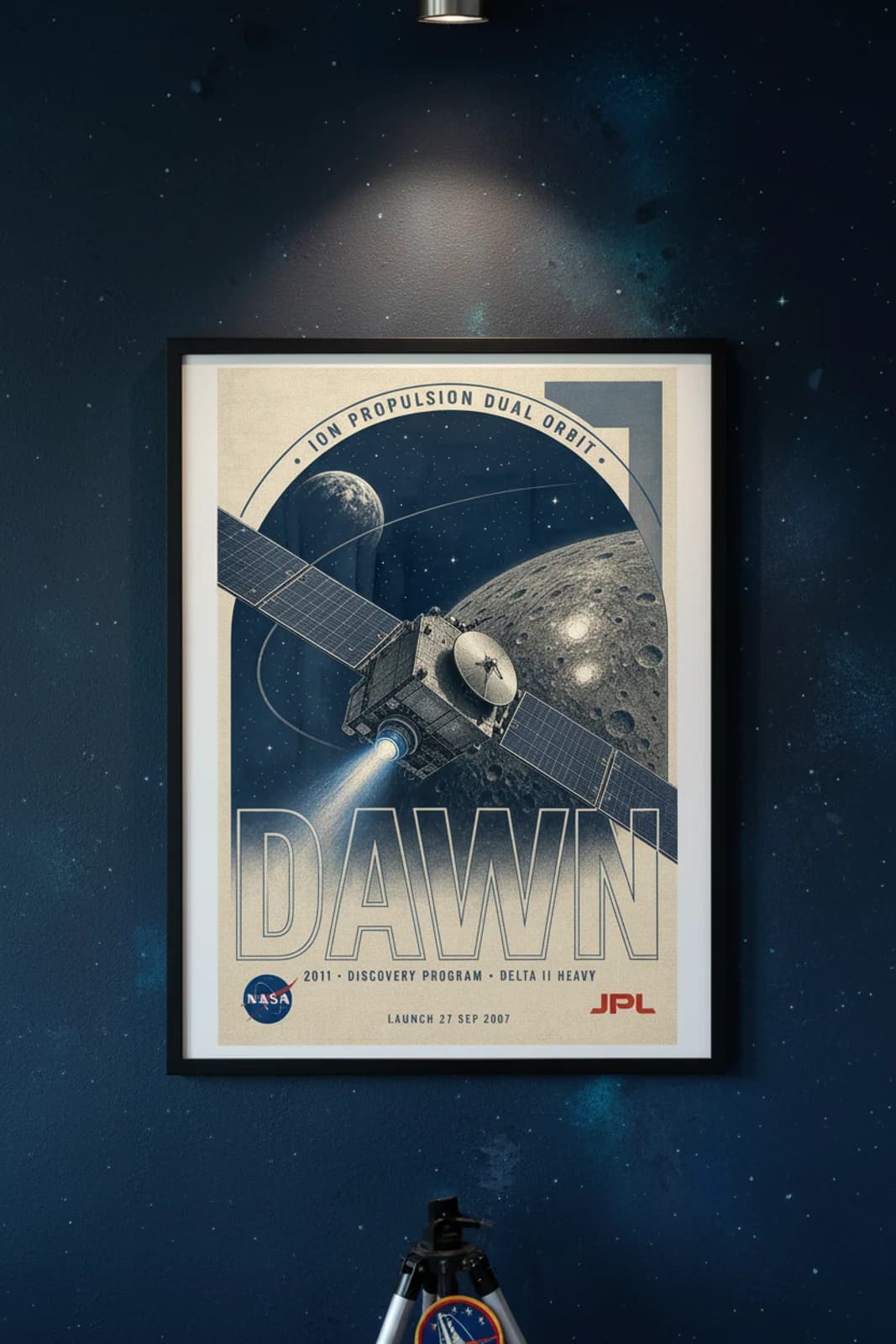
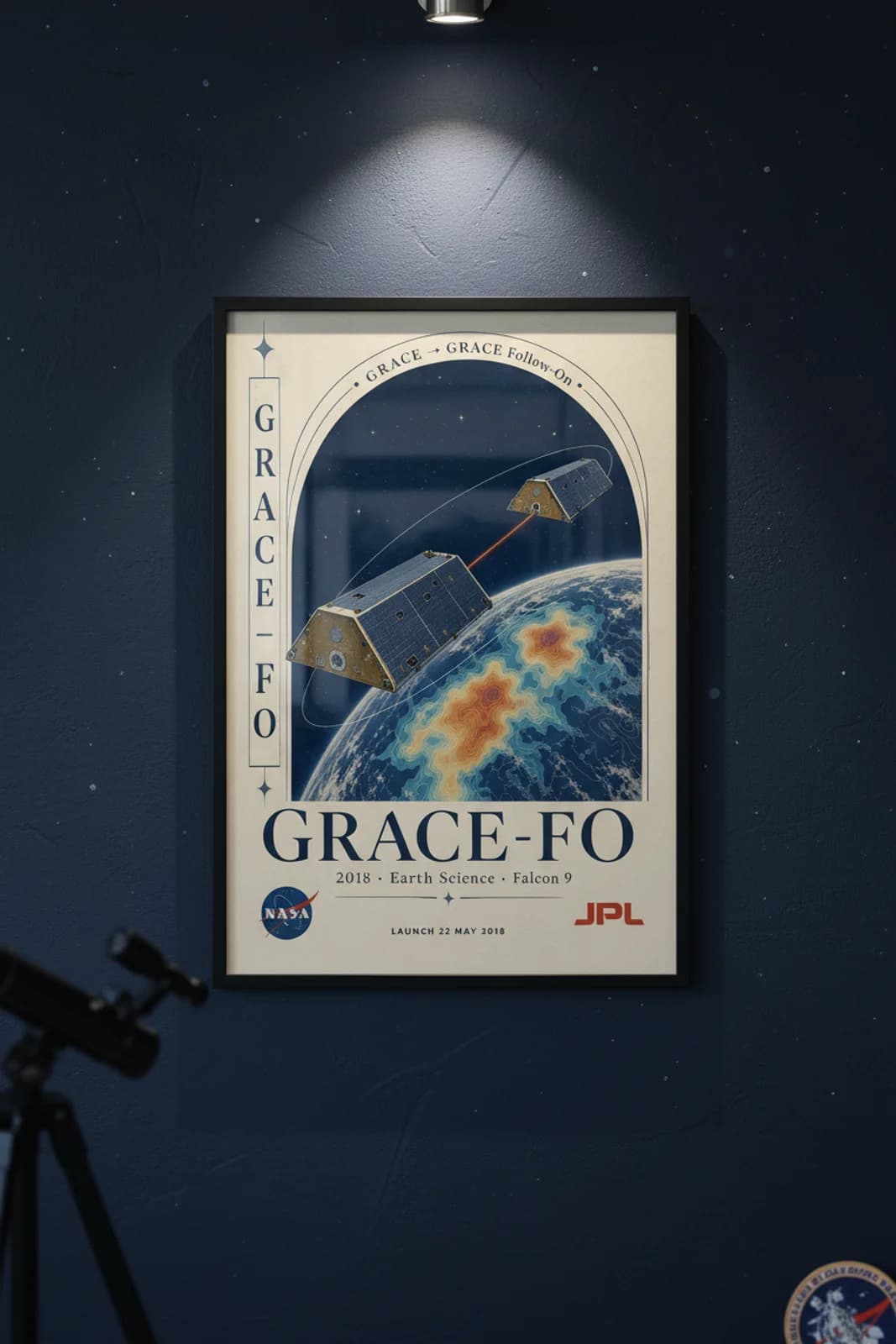
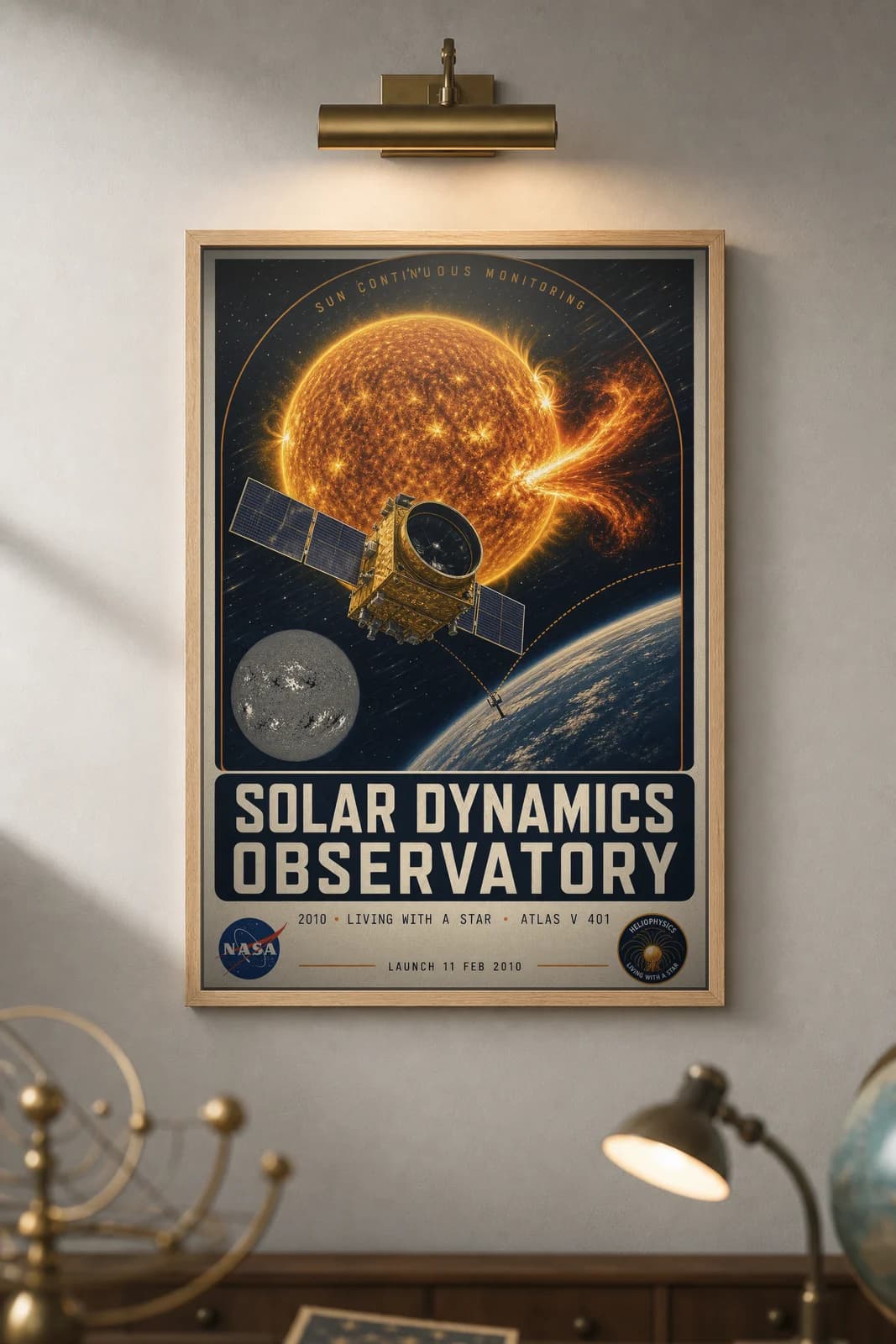
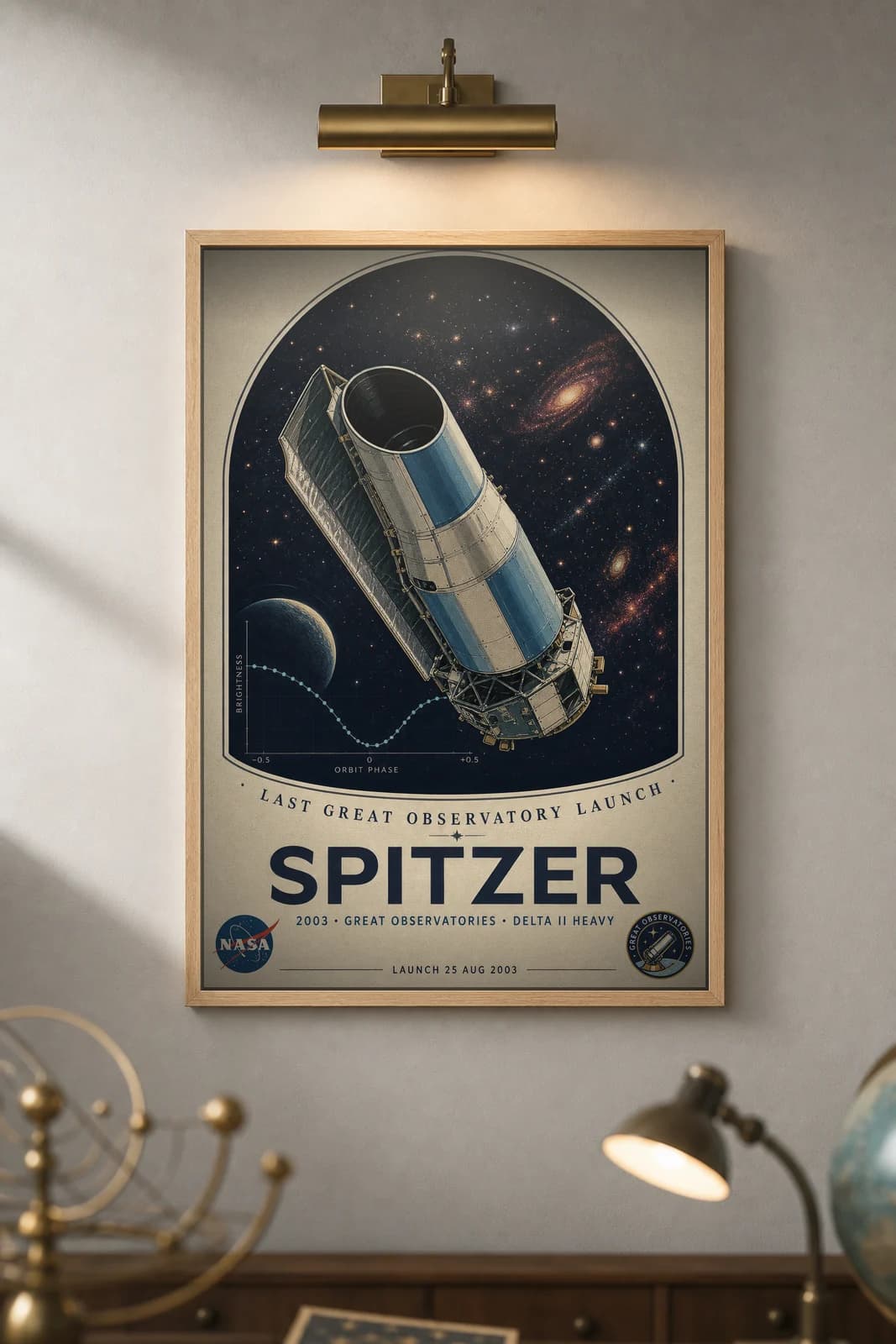
Navy Arch Frame — 4 museum-grade prints in this palette. GRACE transformed Earth science from snapshot measurements to continuous mass-balance monitoring — the mission whose maps appeared in IPCC reports, drought emergency briefings, and newspaper graphics explaining why California wells ran dry. GRACE-FO's laser ranging interferometer tested next-generation link technology for future gravity missions. Dawn proved ion propulsion could replace chemical big burns for multi-target Discovery missions — a template later missions studied for budget and schedule wins. Mapping Vesta and Ceres — the two most massive main-belt bodies — gave planetary scientists side-by-side comparisons of a differentiated protoplanet and a dwarf planet with brine reservoirs. SDO's public data policy turned solar physics into shareable culture — flare movies, eclipse transits, and prominence loops that circulate on social media and in planetarium shows worldwide. The mission arrived as the Space Shuttle programme approached retirement, symbolising NASA's pivot toward long-duration robotic observatories in geosynchronous orbit.