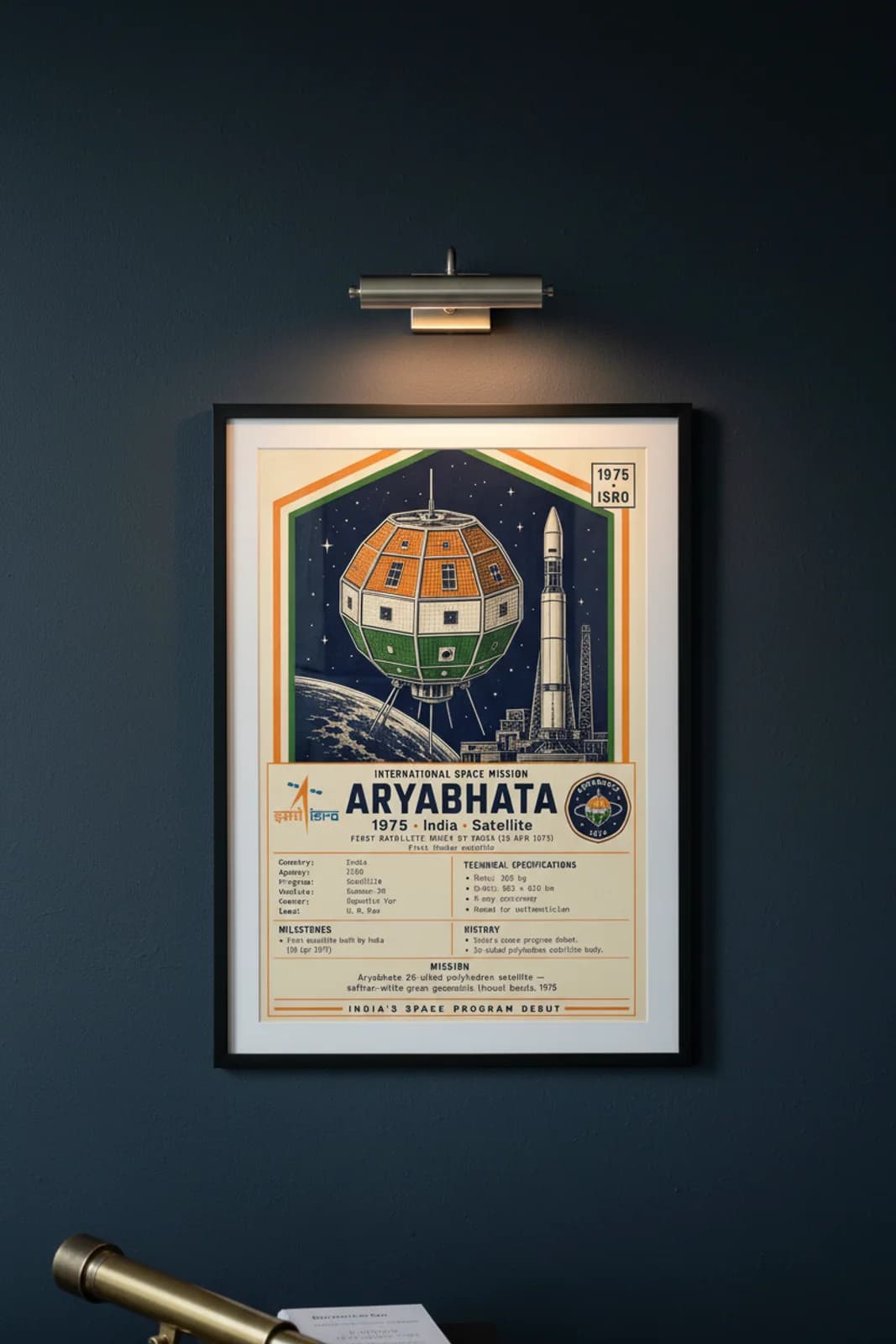
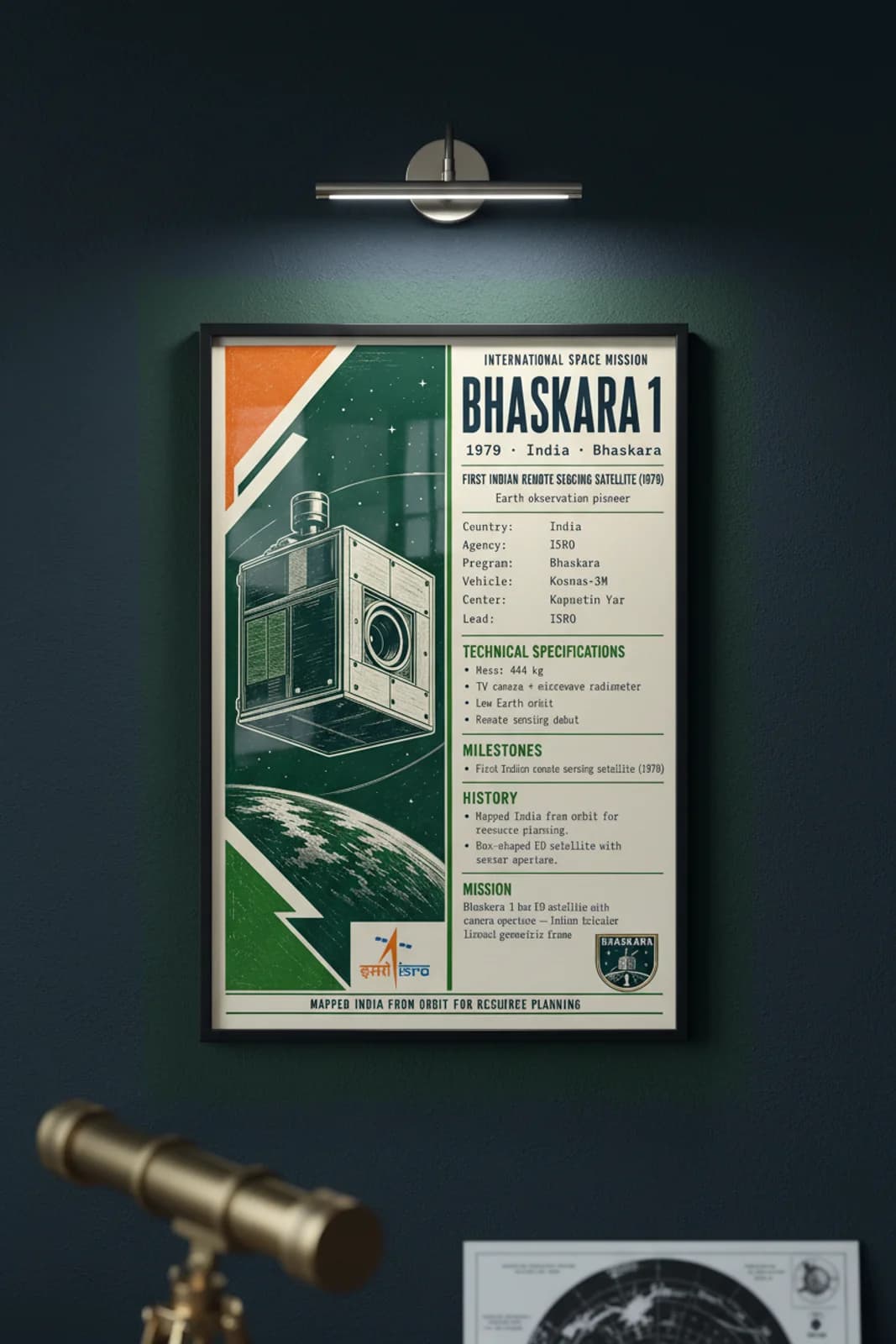
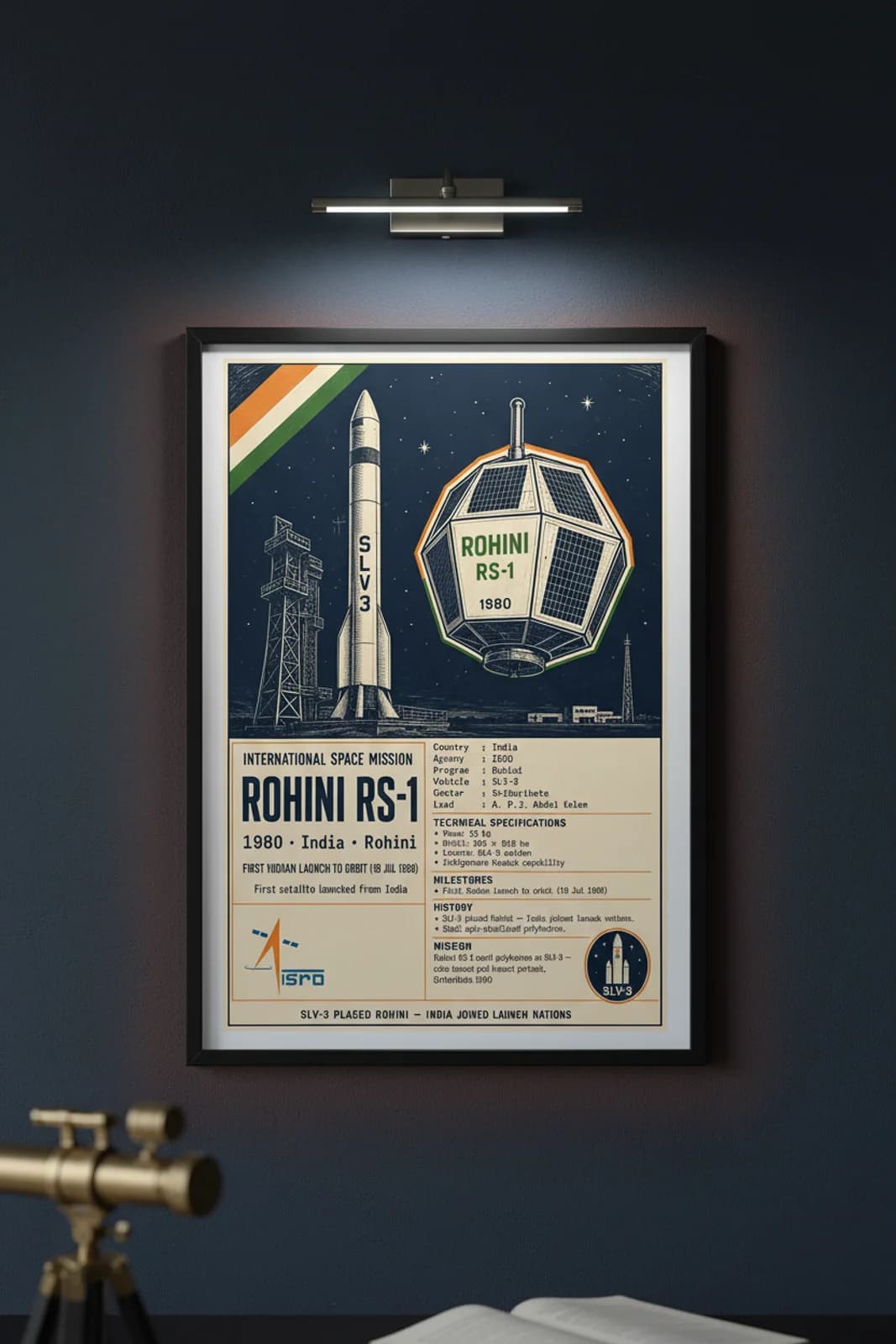
Isro Saffron Blue Logo — 3 museum-grade prints in this palette. Rohini RS-1 and SLV-3's successful maiden flight on 18 July 1980 made India the sixth nation — after the Soviet Union, United States, France, Japan, and China — capable of placing its own satellites in orbit. A. Aryabhata marked India's entry into the community of satellite-building nations — a domestically designed 26-sided polyhedron launched via Soviet Kosmos-3M cooperation that established ISRO's credibility before indigenous launch vehicles matured. Named for the ancient mathematician who calculated pi and planetary periods, the satellite carried X-ray astronomy instruments that operated for four days before power failure, yet its symbolic weight far exceeded its operational duration. Bhaskara 1 transformed ISRO from a satellite-building agency into an Earth observation power — delivering the first orbital imagery of India's landmass for agricultural planning, drought monitoring, and geological survey. The box-shaped bus with its prominent camera aperture became the visual template for subsequent IRS and Resourcesat platforms that now supply data to farmers, disaster managers, and urban planners across the subcontinent.

$49

$49

$49