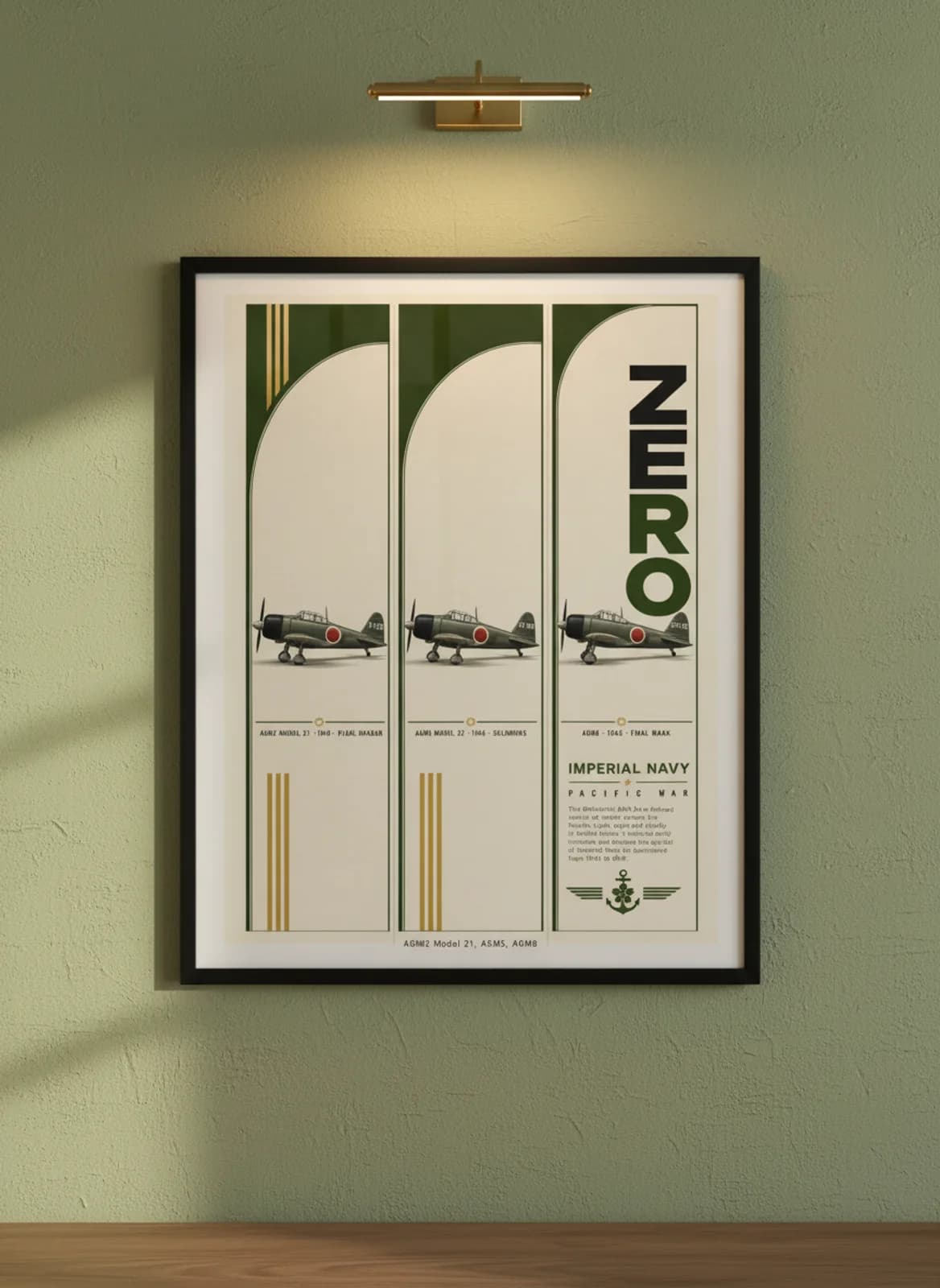
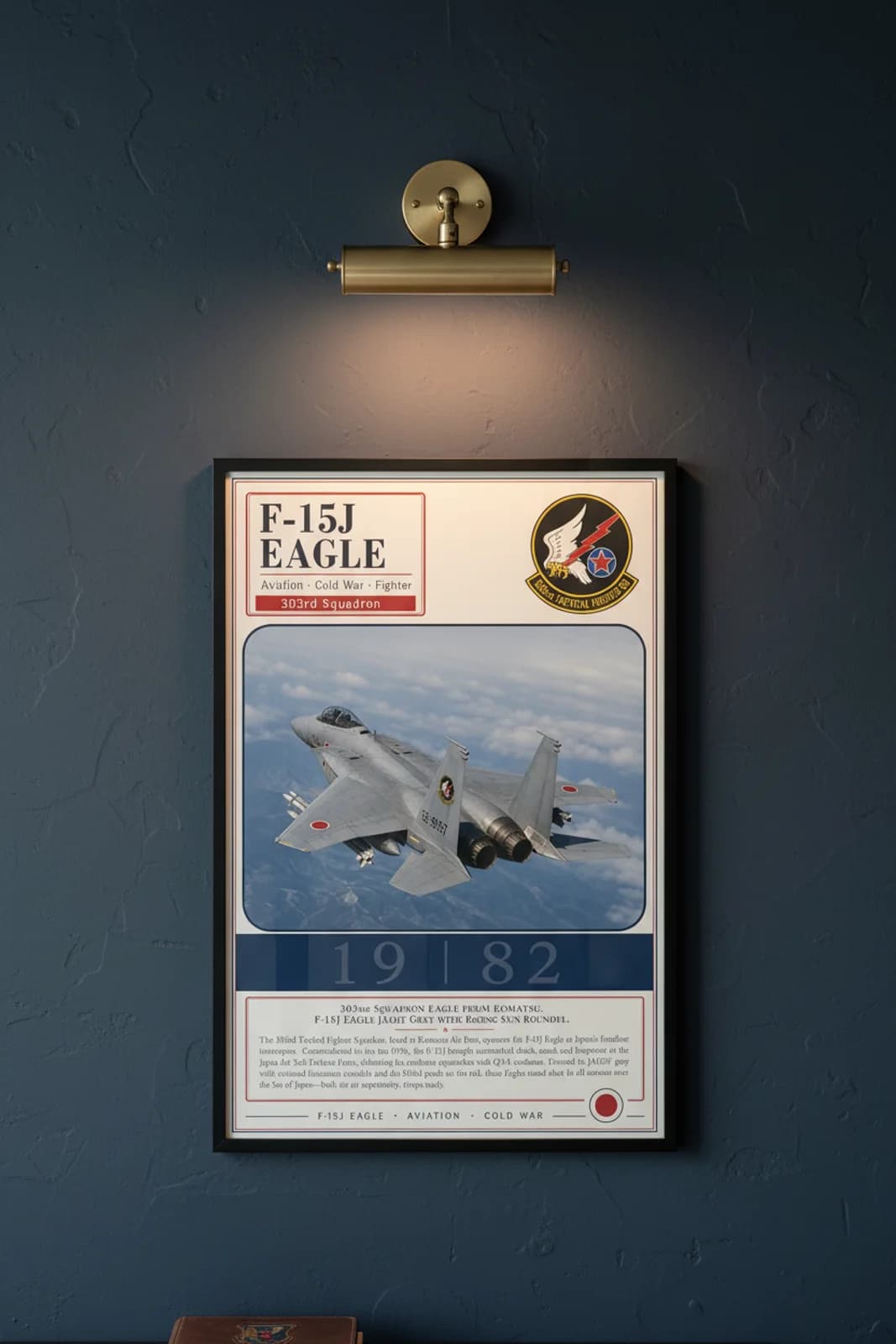
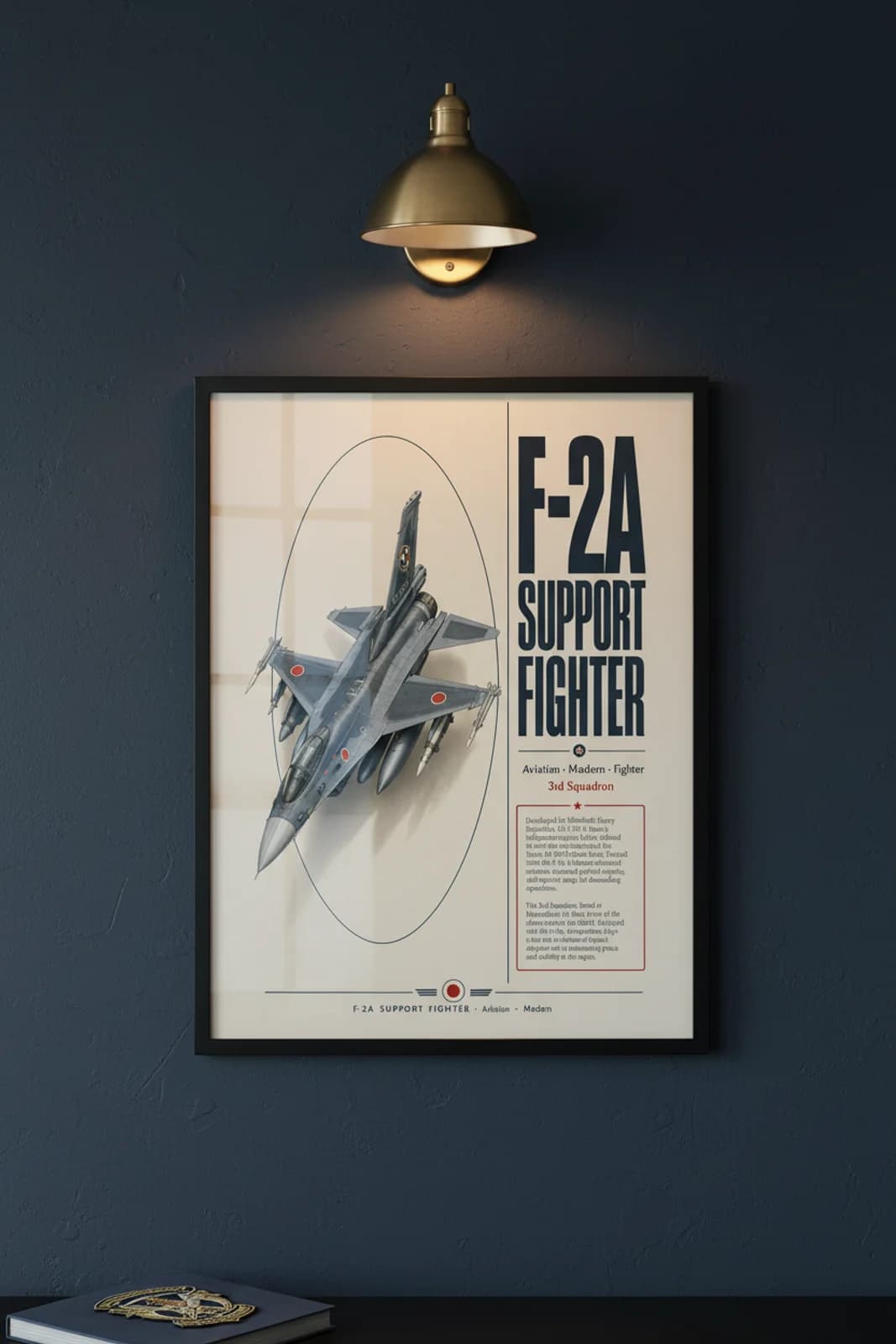
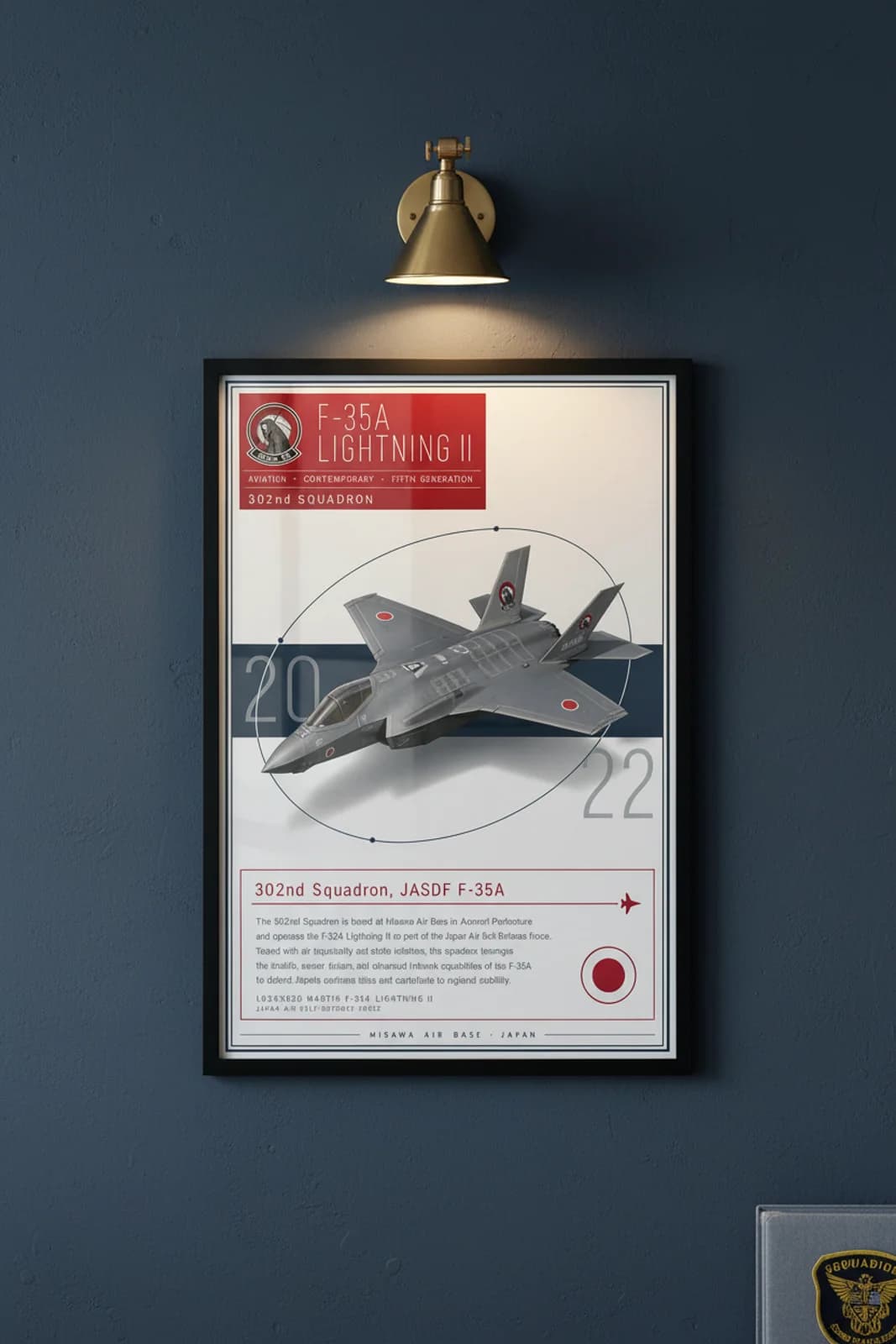
Hinomaru Red — 4 museum-grade prints in this palette. The Mitsubishi A6M Zero — known in Japanese service as the Reisen — entered combat in 1940 and became the Imperial Japanese Navy's signature carrier fighter, prized for extraordinary range and agility in the war's opening years. Allied pilots initially underestimated its turning performance until improved tactics, rugged airframes, and greater firepower shifted the balance in campaigns from the Coral Sea and Midway through the Solomons and beyond. The F-35 Lightning II emerged from the multinational JSF programme as a fifth-generation stealth fighter integrating sensor fusion, low observables, and internal weapons carriage across F-35A, B, and C variants. Japan selected the F-35A as the primary successor to its ageing F-4 Phantom fleet, with the 302nd Squadron at Misawa among the first JASDF units to transition after decades of Phantom operations from its 1974 stand-up at Chitose. The 303rd Tactical Fighter Squadron operates from Komatsu Air Base in Ishikawa Prefecture under the JASDF Northern Air Defense Force, maintaining quick-reaction interceptors for approaches over the Sea of Japan and the Tsushima Strait. Japan licensed F-15J production from McDonnell Douglas through Mitsubishi Heavy Industries beginning in 1981, making the JASDF the largest Eagle operator outside the United States; the F-15J retains domestic AAM-4 missile integration and JASDF-specific avionics while preserving the Eagle's unmatched climb and kinematic envelope.