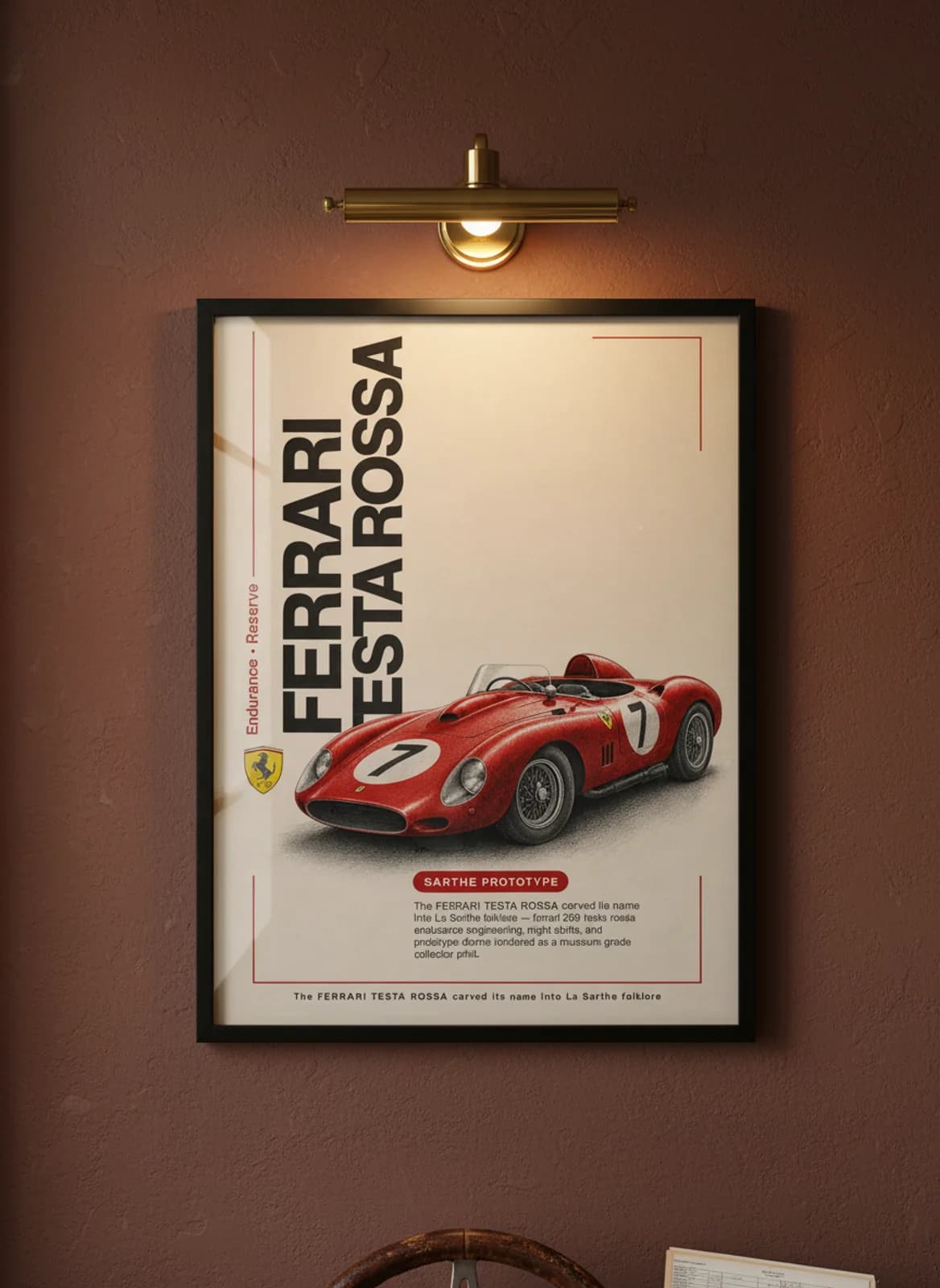
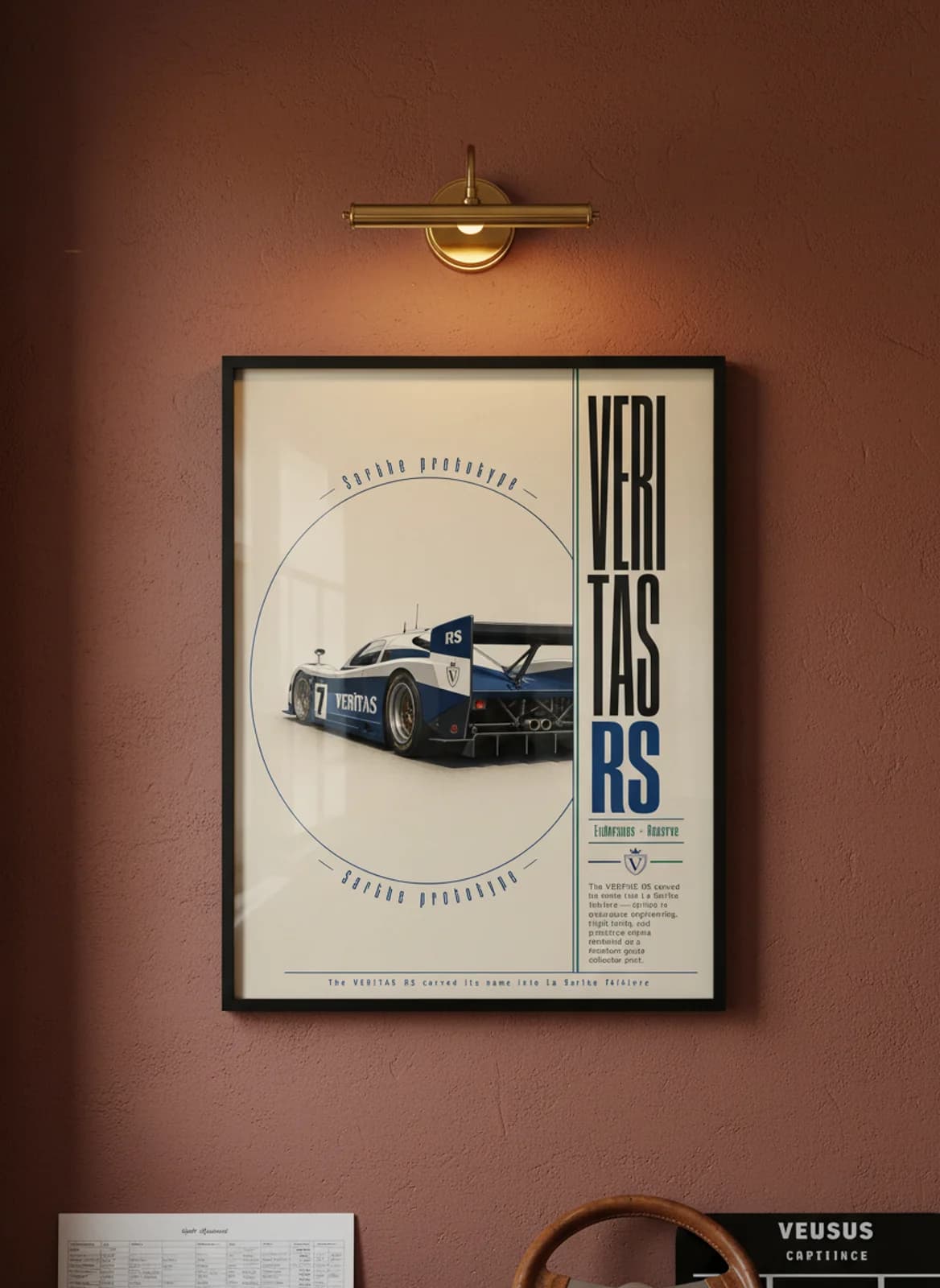
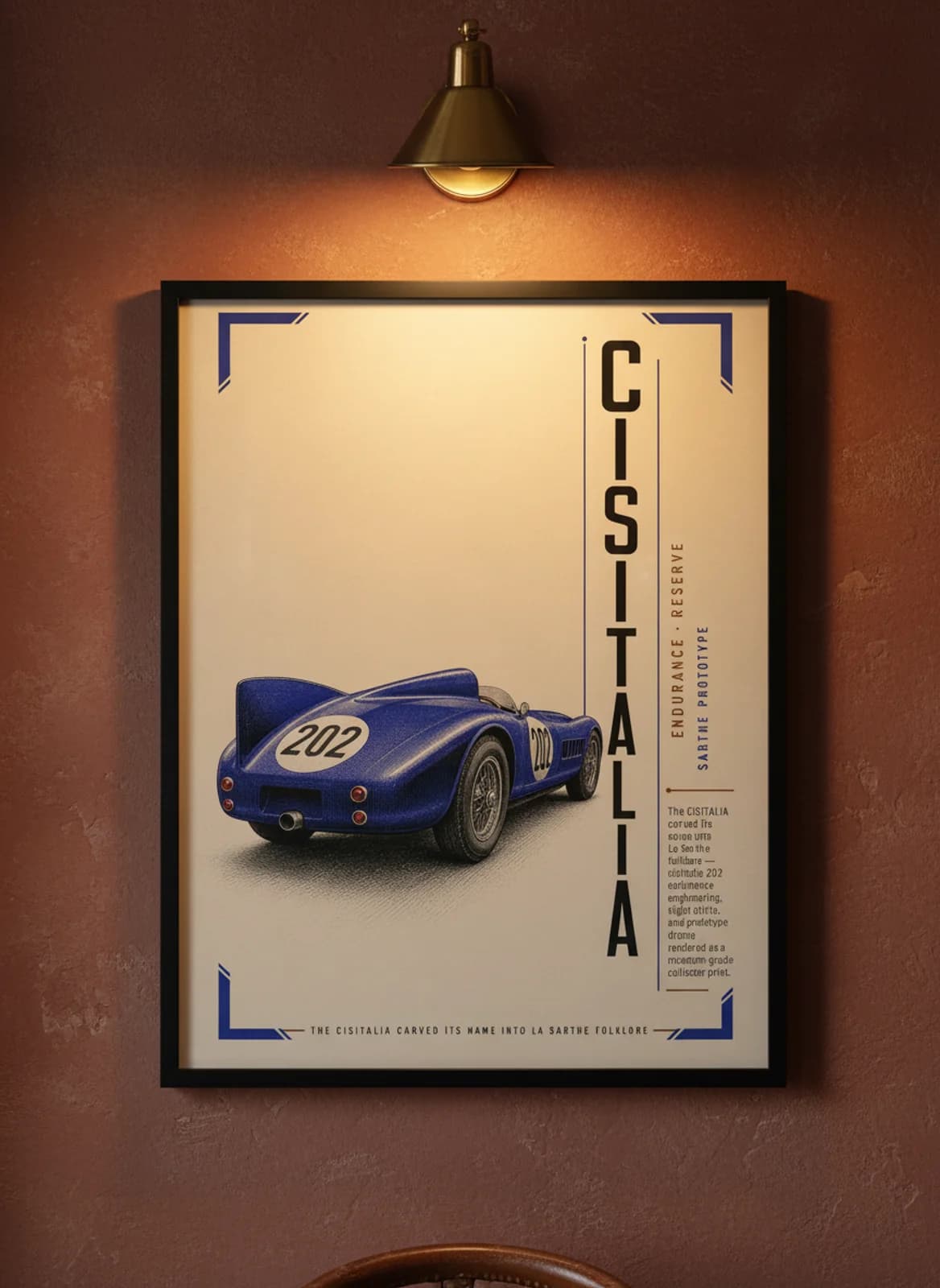
Black Vertical Title — 3 museum-grade prints in this palette. The Cisitalia 202 occupies a singular place in automotive design history — Pininfarina's sculptural language applied to competition machinery that influenced the Museum of Modern Art and every post-war Italian coachbuilder who followed. Piero Dusio's Cisitalia program bridged pre-war racing ambition and Ferrari's later dominance, proving that endurance prototypes could be art objects before they were trophy weapons. The Ferrari 250 Testa Rossa is among the most collectible and culturally resonant endurance racers ever built — a Scuderia Ferrari weapon whose pontoon-body evolution won Le Mans three times and whose auction values reflect its status as rolling sculpture. The name Testa Rossa refers to the red valve covers on Maranello's V12, and the open-cockpit silhouette became the template for 1950s motorsport romance before closed-cockpit safety arrived. Veritas emerged from the ashes of post-war Germany when BMW 328 engineers and Ernst Loof channelled Rennsport ambition into lightweight sports prototypes that competed across European endurance grids. The RS crown-and-shield identity and navy-white livery embody a nation rebuilding racing culture without factory dominance — honest engineering rendered as folklore rather than trophy certainty.